“Social Security” investments in major projects boost economic growth
Amman11 min read
Share
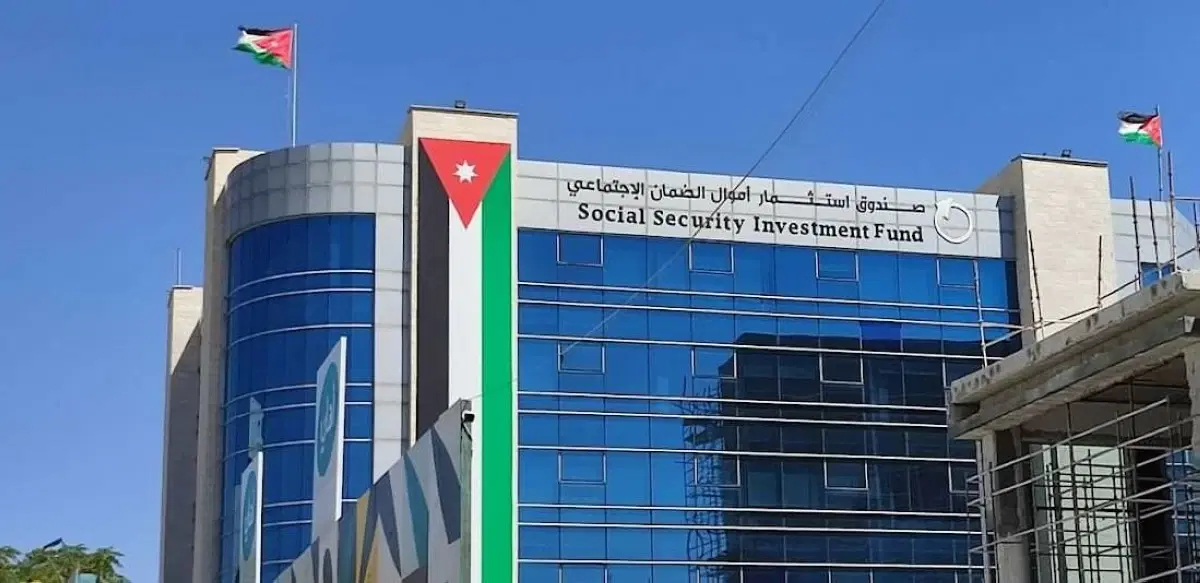
Experts confirmed that the rise in the assets of the Social Security Investment Fund to approximately 20.1 billion dinars at the end of the third quarter of 2026, compared to 18.7 billion dinars at the end of 2025, with a growth rate of nearly 8 percent, represents a positive indicator of the growth of its investment capacity and the enhancement of its role in supporting the national economy.
In statements to (Alrai), the experts pointed out that this escalating growth in the value of assets gives a clear indication of the soundness, stability, and sustainability of the Fund's financial position, and the maintenance of the diversity of its investment portfolios, which had a major impact on asset growth and achieving a net income exceeding 879 million dinars.
According to a statement issued by the Fund yesterday, Saturday, this growth came as a result of the Fund achieving a comprehensive income of about 1.37 billion dinars during the first nine months of the current year, in addition to the insurance surplus transferred from the Social Security Corporation, amounting to about 110 million dinars. Comprehensive income consists of the Fund's net income, amounting to 879 million dinars, and the net increase in the valuation of the strategic equity portfolio, amounting to about 492.4 million dinars.
The Fund's net income achieved a growth of 8.6 percent compared to the same period in 2025, and this income came mainly from the bond portfolio valued at 511.4 million dinars, the equity portfolio valued at 248.3 million dinars, and money market instruments valued at 86 million dinars, in addition to the income of other portfolios.
The Fund's assets were mainly distributed among the bond portfolio at 56.2 percent, the equity portfolio at 21.3 percent, money market instruments at 11.5 percent, real estate investments at 5.6 percent, the loan portfolio at 2.4 percent, and the tourism portfolio at 1.6 percent.
The Chairman of the Social Security Investment Fund Board, Omar Malhas, said that the Fund is a major part of the national economy, and bases its decisions on a prudent investment policy and institutional governance frameworks, evaluating investment opportunities according to the parameters of this policy in terms of return and acceptable risk levels, within an approach that balances investment feasibility and economic impact.
Financial and economic expert Dr. Mohammad Al-Hadab Al-Sarhan confirmed that the rise in the assets of the Social Security Investment Fund to approximately 20.1 billion dinars by the end of the third quarter of 2026, with a growth of nearly 8 percent since the beginning of the year, does not merely represent an increase in portfolio size, but coincides with an important shift in the nature of the Fund's investment role, moving from a greater focus on traditional financial instruments to well-studied entry into long-term assets and projects in the transport, water, energy, and mining sectors.
Al-Sarhan believes that the importance of this shift lies in the fact that the Fund, at its current size, has become capable of being a long-term institutional investor that contributes to financing projects that raise the economy's productive capacity, while simultaneously maintaining the primary goal of developing the funds of subscribers and retirees.
Al-Sarhan explained that what distinguishes the current trend is that it does not appear to be a hasty departure away from conservative investment, as bonds still constitute 56.2 percent of the Fund's assets, and money market instruments 11.5 percent, meaning that about 68 percent of the assets are still concentrated in instruments that provide a significant degree of stability and liquidity. In contrast, the Fund has begun building a larger arm in long-term strategic projects. This equation is particularly important for pension funds, because the requirement is not merely maximizing returns, but achieving an appropriate risk-adjusted return while maintaining liquidity and the ability to meet future obligations.
Al-Sarhan pointed out that the comprehensive income of about 1.37 billion dinars during nine months equals more than 7 percent of the Fund's assets at the end of 2025, which is a strong indicator of portfolio performance, while emphasizing the necessity of distinguishing between the realized net income of 879 million dinars and the increase in the valuation of the strategic equity portfolio amounting to about 492 million dinars. Moreover, more than half of the net income came from the bond portfolio, valued at 511.4 million dinars, confirming that expansion into new projects comes on top of a strong traditional income base, rather than as a substitute for it.
Al-Sarhan indicated that the deeper economic value appears in the quality of the projects the Fund enters and their ability to integrate with its existing investments. Its 7 percent participation in the Aqaba-Al-Shidiya-Ma'an railway project does not only provide it with a share in a transport project, but could in the future reduce transport costs and raise the efficiency of mining companies in which the Fund holds strategic investments, most notably the Phosphate and Potash companies. This is an important point in modern portfolio management, as an institutional investor does not view each asset separately, but rather looks at how a new project contributes to raising the value of other existing assets within the portfolio.
Al-Sarhan added that the same logic can be applied to the trend toward owning 15 percent of the National Water Carrier project company, 20 percent of the power generation project (IPP7), and 20 percent of the pure phosphoric acid production project, in addition to the Jordanian-Omani partnership with a volume of 100 million dollars. These investments link social security funds to sectors that represent major challenges or important opportunities for economic growth, namely water, energy, transport, and value-added mining industries. If these projects achieve viable investment returns while simultaneously reducing production costs, raising competitiveness, and generating new jobs, the return becomes dual: a portfolio return and an additional impact on the national economy.
Al-Sarhan emphasized that there is another important dimension to this trend related to the sustainability of social security itself, because investment in projects capable of creating new formal jobs can in the future expand the subscriber base and increase insurance revenues, while investment profits return to grow the assets. However, this relationship must not lead to confusing the Fund's investment role with the government's developmental role; the Social Security Fund is not a tool to finance any project simply because of its national importance, but rather every investment must be subjected to rigorous tests of feasibility, return, risk, and governance. The correct equation is that a project must first serve the interests of subscribers and retirees, and then its positive economic impact comes as added value on top of that.
Al-Sarhan concluded that the ongoing transformation places the Social Security Investment Fund before a more advanced stage of institutional investment, where success is measured not only by the growth of assets, but by the quality of the assets it owns, the long-term return they generate, and their ability to diversify income sources. If the Fund continues to combine a conservative financial base with selective participation in major productive projects with clear viability, it will be able to play an important role in financing part of the economic transformation targeted by the Economic Modernization Vision, and turn part of national long-term savings into infrastructure, industry, energy, and transport that raise economic productivity, while keeping the protection and sustainability of social security funds at the forefront of priorities.
Economic expert Wajdi Makhamreh pointed out that the rise in the assets of the Social Security Investment Fund to approximately 20.1 billion dinars at the end of the third quarter of 2026, compared to 18.7 billion dinars at the end of 2025, with a growth rate of nearly 8 percent, represents a positive indicator of the growth of its investment capacity and the enhancement of its role in supporting the national economy.
He added that this growth reflects the improvement in the Fund's investment performance, as comprehensive income reached about 1.37 billion dinars during the first nine months of the year, driven by a net investment income of 879 million dinars, an increase in the valuation of the strategic equity portfolio by about 492.4 million dinars, in addition to the insurance surplus transferred from the Social Security Corporation.
Makhamreh noted that the asset distribution shows diversity in investment instruments, with the continued dominance of bonds which constitute 56.2 percent of the portfolio, followed by equities at 21.3 percent, and then money market instruments at 11.5 percent. This distribution provides a mix of relative stability, returns, and growth opportunities, while stressing the necessity of continuing risk management and investment diversification.
He pointed out that the importance of the Fund is also highlighted by its participation in strategic projects, most notably the Aqaba-Al-Shidiya-Ma'an railway, the National Water Carrier, the power generation project (IPP7), alongside the Jordanian-Omani investment partnership worth 100 million dollars. These projects are expected to contribute to improving infrastructure, reducing transport and energy costs, enhancing water security, raising the competitiveness of the Jordanian economy, stimulating investment, and providing job opportunities.
Makhamreh added that employing the Fund's funds in long-term productive projects can achieve a dual benefit represented in generating investment returns and enhancing economic growth. However, the success of these investments requires precise feasibility studies, effective governance, and continuous evaluation of risks and returns, while maintaining the necessary liquidity to meet future social security obligations.
Makhamreh also recommended that the Fund move toward taking certain measures to maximize its economic and investment return, and achieve maximum benefit from asset growth. These measures consist of continuing to diversify the investment portfolio in a studied manner, without abandoning stable-income investments that provide the necessary liquidity, and adopting strict criteria for evaluating strategic projects, including net present value, internal rate of return, and risk sensitivity analysis.
He added that the required measures include strengthening partnerships with the private sector, as well as Arab and foreign investors, while ensuring clarity of responsibilities and risk distribution, and publishing more detailed performance indicators on achieved returns, cash flows, unrealized gains, and the performance of each portfolio. These measures also include conducting periodic financial stress tests, incorporating scenarios of market downturns, rising financing costs, and delays in major projects, and linking national investments to measurable economic indicators, such as sustainable job opportunities, export growth, reduced production costs, and increased local added value.
Economic expert Mounir Dayeh said that the value of the Social Security Investment Fund's assets rose to an unprecedented historical level, surpassing the 20 billion dinar barrier by the end of the third quarter of 2026, an increase of 8 percent, or approximately 1.5 billion dinars compared to the end of last year, when they stood at about 18.7 billion dinars.
He pointed out that this escalating growth in asset value provides a clear indicator of the fund's financial strength, stability, and sustainability, as well as the diversification of its investment portfolios, which had a major impact on asset growth and achieving a net income exceeding 879 million dinars.
He explained that the diversification of the fund's investment portfolios—whether the bond portfolio, which achieved an income of 511 million dinars; the equity portfolio, which achieved 248 million dinars; or the money market instruments portfolio, which achieved 86 million dinars, in addition to other portfolios—indicates that this diversity and the investment policies pursued by the fund have contributed significantly to bringing its assets to this record and unprecedented level.
Dayeh noted that the fund's future orientations are based on diversifying the investment base and entering into partnerships to finance major projects, notably the National Water Carrier project and the Aqaba Railway, entering into a partnership with the Oman Investment Authority to establish the Jordanian-Omani Investment Company with a capital of 100 million dollars, in addition to contributing a 20 percent ownership stake in the Combined Cycle Power Plant project company, and entering into a company for the production of pure phosphoric acid, which will be established in partnership with the Jordan Phosphate Mines and Arab Potash companies, alongside other projects in important and vital sectors.
He mentioned that this investment diversification and entering into partnerships to establish major, developmental, and promising projects would increase investment returns, push towards raising Jordan's Gross Domestic Product growth, create new job opportunities, increase confidence in the Jordanian economy, enhance its competitiveness, and contribute to achieving sustainable development in the Kingdom. It can also contribute to ensuring a better return for the fund with greater and safer diversification, within the highest international governance standards and a comprehensive, integrated investment plan that supports the fund's stability and sustainability, the continuous growth of assets, and the achievement of a net income that benefits subscribers and retirees of the Social Security Corporation.