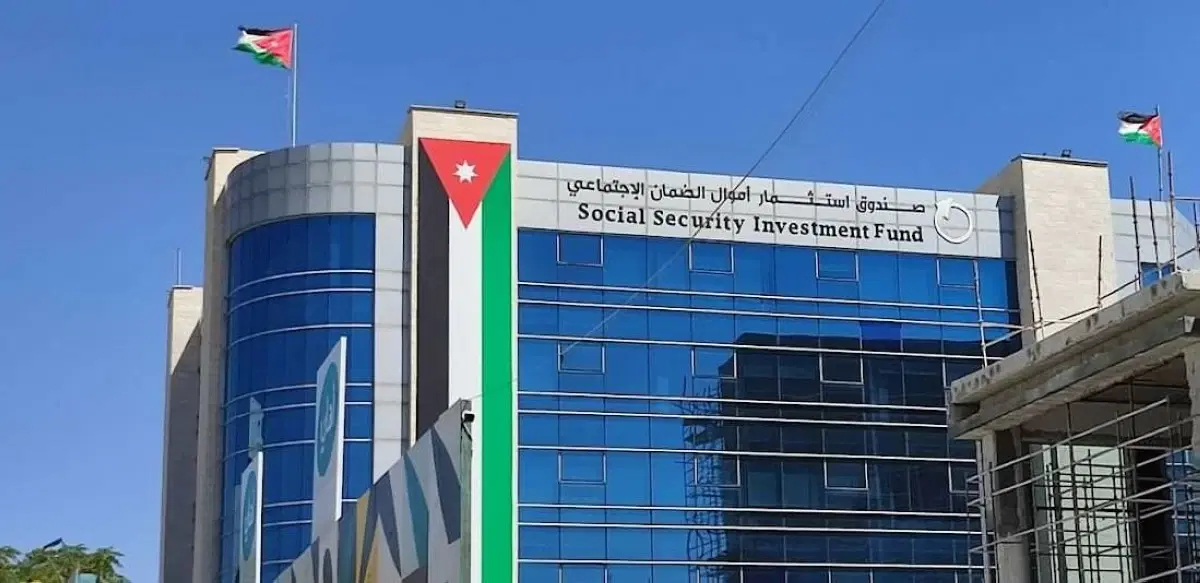
Social Security Fund assets rise to 20.1 billion dinars, a growth of 8% since the beginning of the year
8.3% return on assets rate at the end of the third quarter of this year
Follow Al Rai

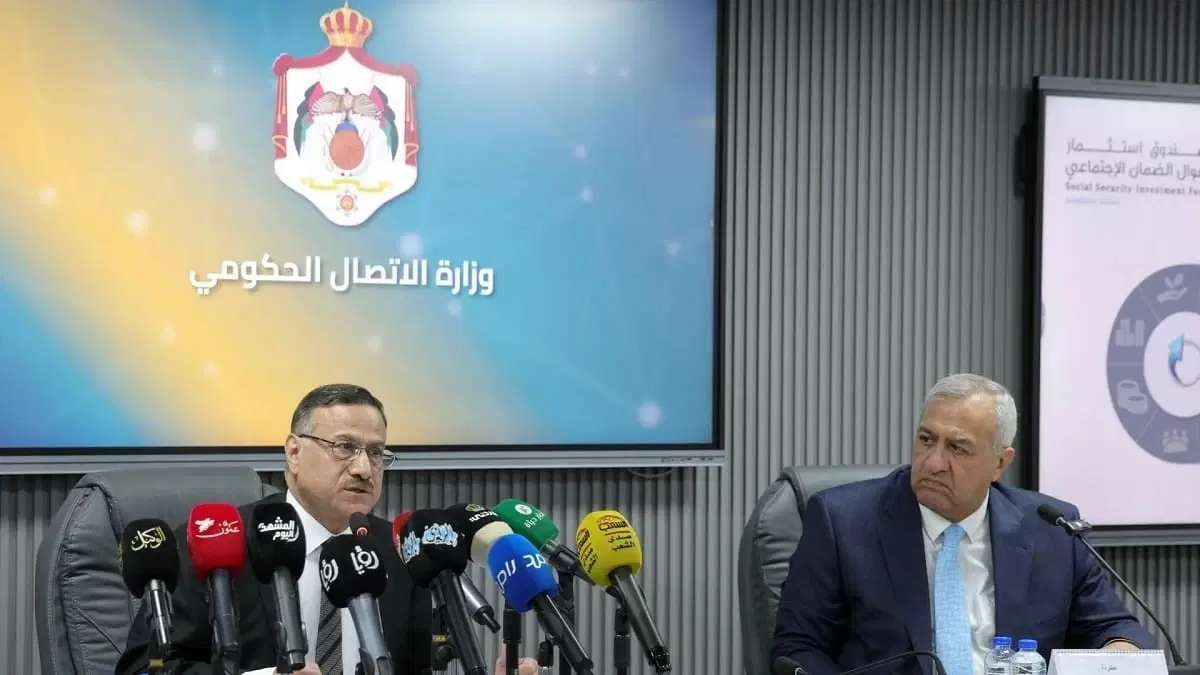
During a meeting at the Government Communication Forum
Social Security Fund assets rise to 20.1 billion dinars, a growth of 8% since the beginning of the year
8.3% return on assets rate at the end of the third quarter of this year
5.2 billion dinars in cumulative profits for the bond portfolio
A qualitative investment shift expands the Social Security presence in major projects
Strategic partnerships in water, energy, transport, and mining industries
Social Security investments enhance the competitiveness of the Jordanian economy
Expansion into major projects will reduce the percentage of bonds in the fund's portfolio over the coming years
Chairman of the Social Security Investment Fund (SSIF), Dr. Ezzeddine Kanakrieh, stated that the cumulative profits of the fund's investment activity reached 12.1 billion dinars from its inception in early 2003 until the end of September 2026. These profits, along with cash surplus transfers from the Social Security Corporation amounting to approximately 6.4 billion dinars, contributed to raising its assets from 1.6 billion dinars at inception to approximately 20.1 billion dinars.
This came during a meeting with media representatives at the Government Communication Forum, titled "Social Security Fund... A Qualitative Investment Shift," in the presence of the Secretary-General of the Ministry of Government Communication, Dr. Zaid Al-Nawaiseh, which addressed the fund's financial results at the end of the third quarter of 2026, and updates on its projects and directions for the coming phase.
Kanakrieh emphasized that the fund is witnessing a qualitative shift in its investment directions, embodied in expanding its contributions to major projects and building local, regional, and international strategic partnerships, which enhances the diversity of its investments and allows it to develop sources of long-term returns. He explained that the strength of the fund's financial position and the accumulation of its investment expertise form a basis for this expansion, enabling it to enter into partnerships that combine funding, specialized expertise, and the executive capabilities necessary to develop and manage projects.
Regarding the current year's performance, Kanakrieh revealed that the rate of return on the fund's assets at the end of the third quarter of this year reached 8.3%. The fund's assets recorded a growth of approximately 1.5 billion dinars from their level of about 18.7 billion dinars at the end of 2025.
This increase comes from comprehensive income, which reached approximately 1.37 billion dinars, and an insurance surplus transferred from the Social Security Corporation amounting to approximately 110 million dinars. Kanakrieh indicated that the comprehensive income consists of a net income of 879 million dinars, a growth of 8.6% compared to the same period in 2025, in addition to approximately 492.4 million dinars representing the net increase in the valuation of the strategic equity portfolio.
Kanakrieh confirmed that investment decisions are based on technical and financial studies that evaluate the feasibility of opportunities, expected returns, and associated risks, within an investment policy and corporate governance frameworks. The portfolio is managed with a perspective that considers the distribution of funds among different instruments, sectors, and maturities, while providing the necessary liquidity for the future obligations of the Social Security Corporation.
Kanakrieh indicated that government bonds are considered viable fixed-income instruments relied upon by pension funds and investment institutions around the world, due to the stable returns they provide at low risk levels. He pointed out that the cumulative returns of the bond portfolio reached 5.2 billion dinars, confirming the government's commitment to paying interest on its due dates.
Regarding the fund's investments in the real estate sector, Kanakrieh explained that the size of the real estate portfolio reached approximately 1.1 billion dinars, including land and commercial complexes in various governorates of the Kingdom. He stated that the fund aims to acquire land and hold it for the long term to benefit from the growth in its market value, and to conduct buying and selling operations that serve this goal, in addition to leasing and concluding contracts under the Build-Operate-Transfer (BOT) system, some of which last for up to 25 years. He noted that the valuation profits of real estate investments reached 291 million dinars compared to their acquisition cost.
He reviewed the fund's investments in companies listed on the Amman Stock Exchange, which amount to approximately 4 billion dinars and constitute more than 13% of the stock exchange's market value, distributed across the banking, mining, telecommunications, tourism, and services sectors.
Kanakrieh reviewed the most prominent projects and investment partnerships that the fund contributed to during the year, including a 7% contribution to the Aqaba-Shidiya-Ma'an railway project company, and the establishment of the National Water Investment Company for the purpose of owning a 15% stake in the National Water Carrier project company, in addition to the fund directly financing the project by participating in the alliance of Jordanian commercial banks, as well as establishing the Jordanian-Omani Investment Company in partnership with the Oman Investment Authority, and signing a memorandum of understanding with the Saudi-Jordanian Investment Fund. He pointed out that these projects and partnerships expand the fund's presence in vital sectors and provide opportunities for integration with its existing investments.
He added that future directions include studying new investment opportunities in the technology, real estate development, energy, mining, and transport sectors, and Economic Modernization Vision projects, and attracting strategic partners to develop them, in parallel with developing existing investments and improving their performance, to support the diversification of income sources, expand the asset base, and enhance the fund's role as a long-term institutional investor.
Kanakrieh stressed that the criterion of investment feasibility remains the governing factor for this expansion, and that the fund builds its portfolio with a long-term perspective that links the development of social security funds with viable and continuous returns within acceptable risk levels, and enhances its ability to serve the interests of subscribers and retirees and contribute to the growth of the national economy.
For his part, the Secretary-General of the Ministry of Government Communication, Dr. Zaid Al-Nawaiseh, confirmed that Jordan possesses institutional expertise that enables it to deal with economic variables.
He explained that the third-quarter results of the Social Security Investment Fund showed the success of the fund's policies and its governed investment choices, noting that these results demonstrate the Jordanian economy's ability to face the challenges imposed by regional conditions and circumstances, and to build investment institutions with an effective economic role.
He stressed that continuous communication with the media represents an important space for providing accurate and correct information.
Know more about this story?Send us a tip
Ask about this report — answers stay grounded in its text.