The project is based on a vision that transcends the concept of sport as a recreational activity, moving toward employing it to improve public spaces, enhance health and well-being, support social inclusion, empower children, adolescents, youth, women, and persons with disabilities, and strengthen community cohesion, in addition to building the capacity of local institutions to integrate sport and physical activity into urban development plans.
As part of the interventions scheduled for implementation in Ghor Al-Safi, a number of sports facilities will be developed at the Zaha Cultural Center, including a jogging track, an outdoor gym, a beach volleyball court, and a play area dedicated to early childhood children according to the (Urban 95) methodology. This contributes to providing safe, open, and inclusive spaces that allow members of the local community to practice sports and physical activity, and promotes the positive use of public spaces.
The Executive Director of the Zaha Cultural Center, Rania Sobeih, stated that the project represents an extension of the center's role in supporting local communities and providing safe and inclusive environments. She emphasized that developing sports facilities in Ghor Al-Safi constitutes an investment in people and society, contributing to enhancing the quality of life and providing broader opportunities for practicing sports for various segments of society.
She added, "Since the opening of the Zaha Cultural Center in Ghor Al-Safi in 2022, the center has been a safe and open space for community members, providing children, adolescents, youth, and women with opportunities for learning, participation, and development. Today, the Sport for Sustainable Urban Development project enhances this role by investing in sport and public spaces as tools for empowerment and improving the quality of life." Sobeih emphasized the importance of the partnership between national and international entities in achieving a sustainable impact, noting that the Ghor Al-Safi experience could serve as a model that can be developed and applied in other regions.
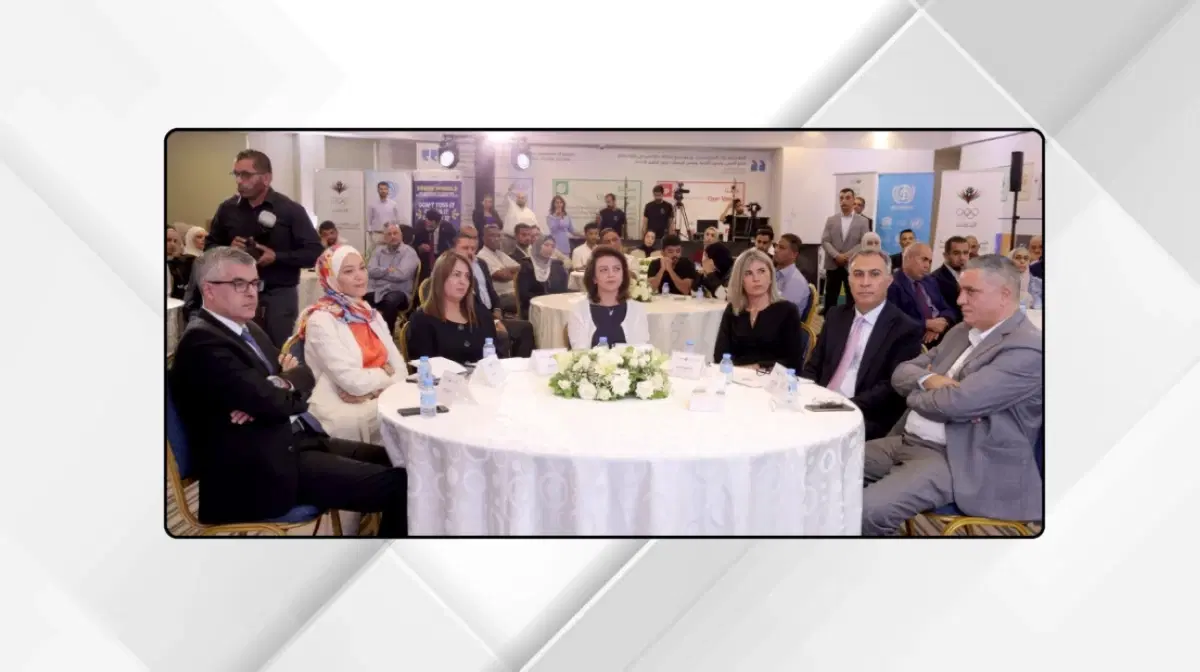
For her part, the UN-Habitat Jordan Program Manager, Engineer Dima Abu Thiab, said: "At UN-Habitat, we believe in the importance of strengthening the role of cities and local authorities in sustainable urban development, adopting evidence-based participatory planning, and involving the community in identifying its needs and priorities. This contributes to improving the quality of life, directing resources and investments to where they achieve the greatest impact, and creating opportunities to attract quality and sustainable investments that support local development." The launch ceremony included a presentation on the project in Ghor Al-Safi, as well as a review of the progress made and the preliminary results of the community and spatial assessment and analysis, and a discussion on the role of sport in urban planning and development opportunities, with the participation of representatives from the Ministry of Local Administration, the Zaha Cultural Center, the Jordan Olympic Committee, UN-Habitat, the Southern Ghor Municipality, and a number of relevant entities and partners.