Ministry of Labor signs two agreements to employ Jordanians in agriculture and food industries
Amman2 min read
Share
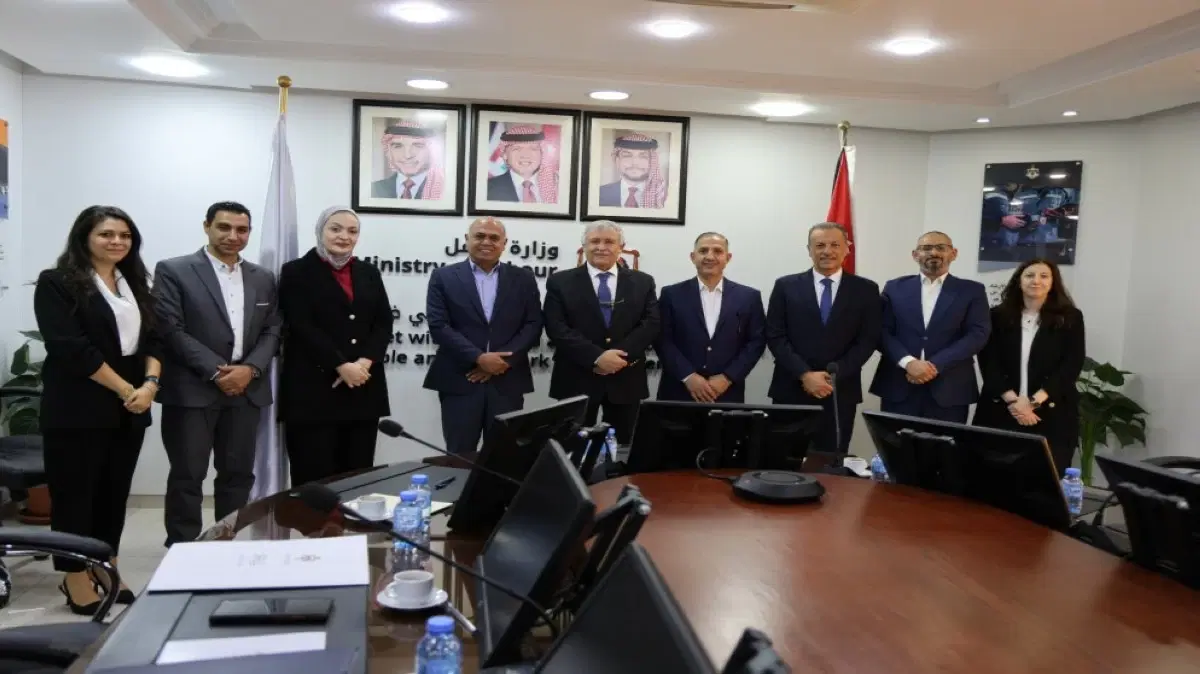
The Ministry of Labor signed two agreements on Tuesday with "Al-Alfia Agricultural Investments" and "Safe Food for Food Industries" companies, aiming to support the employment of 171 Jordanian men and women in the agricultural and food sectors, with a focus on increasing female employment.
The cooperation through the agreement also aims to raise awareness among job seekers and their families about the importance of a culture of commitment to work and the internal regulations of these companies.
The two agreements were signed by the Minister of Transport and Minister of Labor, Nidal Katamine, and on behalf of the companies by the General Manager of Al-Alfia, Ali Al-Madani, and Hassan Al-Qudah, General Manager of Safe Food for Food Industries, in the presence of the Ministry's Secretary-General, Abdul Halim Doujan.
The first agreement stipulates supporting the employment of 121 Jordanians at Al-Alfia company in the Wadi Araba region for one year, under the national labor support program; this contributes to creating new job opportunities and enhancing women's participation in the labor market through additional grants for hiring females.
The second agreement aims to support the employment of 50 Jordanians at the Safe Food company in the Agricultural Industrial Development Complex in the Southern Ghor, Karak Governorate, with wage support for three years, prioritizing local residents to reduce unemployment and leverage job opportunities provided by agricultural and food investments.
Under the two agreements, the Ministry's Vocational and Technical Education and Training and Skills Development Fund provides financial support according to approved regulations, including covering 50% of the minimum wage, a transportation allowance of 25 Dinars, and a social security subscription allowance of 25 Dinars per month for each worker.
The two agreements also obligate the companies to provide training and qualification programs, conclude written employment contracts, include workers in social security, and comply with labor legislation, while ensuring the sustainability of job opportunities after the support period ends.
This step comes within the framework of the Ministry of Labor's efforts to enhance partnership with the private sector and direct support toward sustainable job opportunities, ensuring the alignment of national labor outputs with labor market needs and contributing to stimulating economic development in the targeted areas.