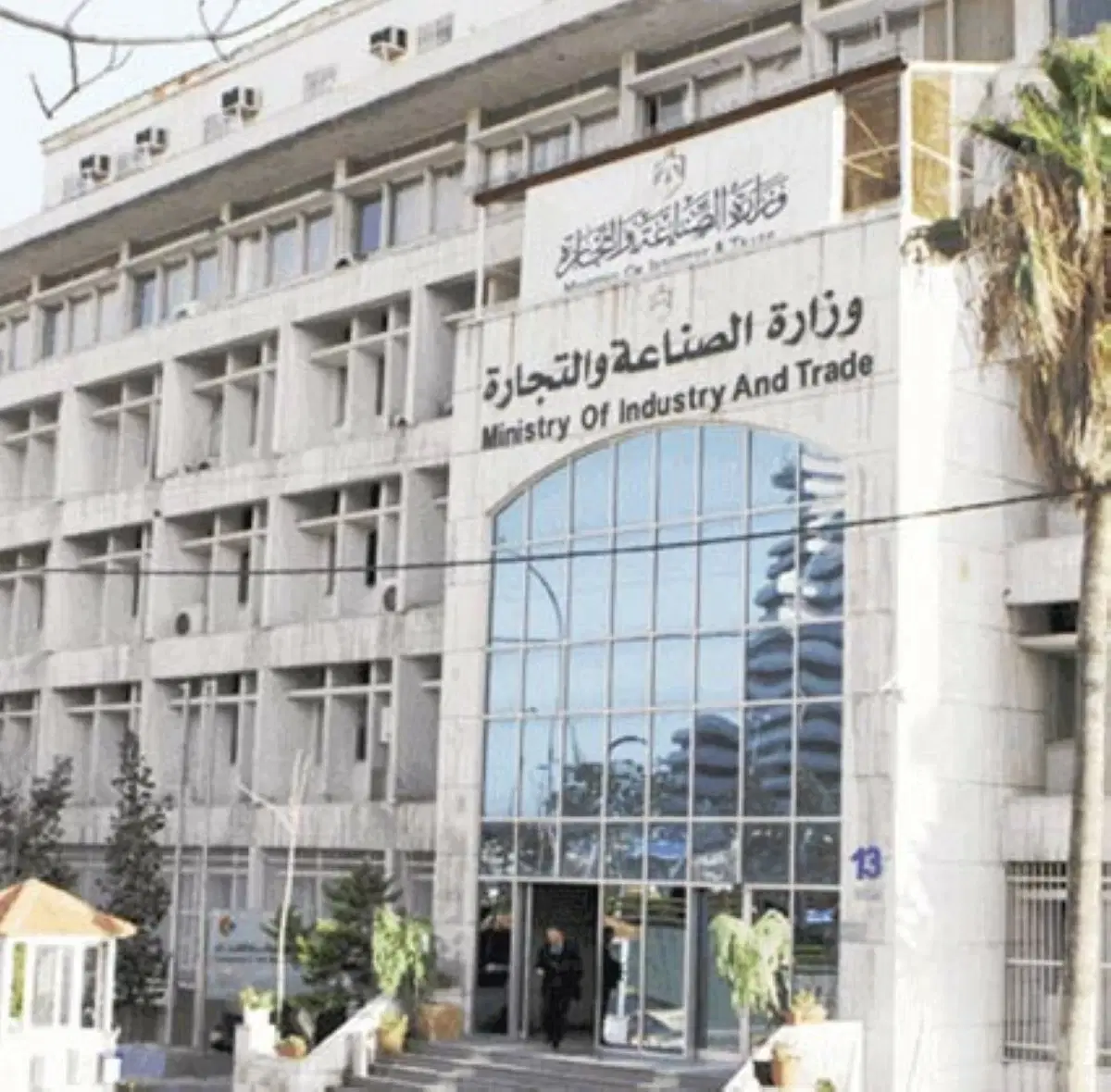
Minister of Industry: Jordan Expands Free Trade Agreements to Build a Strong Production Base
Amman5 min read
Share
The Minister of Industry, Trade and Supply, Engineer Yarub Al-Qudah, said that Jordan is expanding free trade agreements with the aim of overcoming the limitations of the local market and building a strong production base.
According to a ministry statement today, Wednesday, Al-Qudah, during his participation in a session titled "Industry Integration and Regional Value Chains", within the activities of the "Made in the Gulf 2026" forum and exhibition held in Bahrain from October 6 to 8, pointed out that the Kingdom's agreements with Britain, the European Union, the United States, Canada, and the Greater Arab Free Trade Area, represent a competitive advantage that can be used to serve regional industrial integration, according to the rules of origin and the conditions for benefiting from these agreements.
He emphasized the importance of utilizing the resources, potential, and financial capabilities of the region's countries to establish high-value-added joint regional industrial projects, thereby enhancing their presence in advanced industries and moving them from a stage of self-sufficiency and localizing industry to competing in global markets.
He explained that the competition between economic poles is increasingly focused on rare minerals, semiconductors, and high value-added industries.
He added that the region possesses the raw materials, potential, and financial capabilities that qualify it to build quality partnerships in these fields, pointing to the possibility of establishing regional projects that benefit from the comparative and competitive advantages enjoyed by the region's countries.
Al-Qudah presented a vision for a regional project that invests Jordan's silica reserves, starting with their purification and the production of high-purity silicon and the manufacture of silicon wafers, and then linking these inputs to specialized manufacturing stages in the region according to their comparative and competitive advantages.
He explained that this integration would establish interconnected industries that include semiconductors, computers, cells, and solar panels, alongside the development of a silica-based optical fiber industry, thereby contributing to increasing the value added and expanding investment and export opportunities.
He pointed out the possibility of building these partnerships between Jordan and the region's countries, including the UAE, Bahrain, Saudi Arabia, and Kuwait, achieving integration between resources, financing, industrial expertise, and specializations within a shared production chain.
Al-Qudah affirmed that the development of these industries could make the region a key link in the data and technology industry in light of the growing global interest in data and investment in it, noting that this model represents one of the projects capable of enhancing the region's position in the global economy.
He said that integration between the region's countries in production stages up to the consumer allows for achieving self-sufficiency at the regional level and benefiting from the advantages each country possesses to enhance the competitiveness of the final product.
He explained that the food industry is a practical example of this integration by directing regional investments to the Jordanian agricultural sector and using its products as inputs for food industries in the region, thereby linking agriculture to manufacturing and export and increasing the value added at the regional level.
In the field of transportation and logistics services, Al-Qudah emphasized the importance of building an interconnected supply and distribution chain system and providing alternative ports and routes to ensure the continuity of trade movement in the event of the disruption of any of them.
He confirmed that the Port of Aqaba is operating beyond its capacity, and that about 70 percent of its activity serves the region, noting that a large portion of the goods destined for the Gulf countries pass through the port, reflecting the importance of strengthening the link between it and the regional markets.
He touched on the railway link project between the Port of Aqaba and the phosphate and potash mines, considering it a nucleus for regional integration in supply chains, and the opportunities it provides to enhance the competitiveness of exports in these sectors, alongside the possibility of linking it later to the Ma'an land port to serve the region's trade movement.
He explained that the next phase involves developing a national railway network linking the south of the Kingdom to the north, reaching the Syrian border, paving the way for integration with the railway system in the Gulf and the region.
He affirmed that the link between the GCC countries and the Levant within a multi-port regional system, including the Mediterranean, the Red Sea, the Arabian Gulf, and the Indian Ocean, enhances the flexibility of the region's economies and the robustness of supply chains, and limits their exposure to external disturbances.
The session was attended by the Minister of Oil and Environment and the Special Envoy for Climate Affairs in the Kingdom of Bahrain, Dr. Mohammed bin Mubarak bin Dina, the CEO of the Economic Cities and Free Zones Sector at the Abu Dhabi Ports Group, Abdullah Al-Hamli, and the Chairman of the Board of Directors of Bahrain Steel Holding Company, Meshari Al-Jadeem.