Jordan Maritime Authority: Railway Project Enhances Jordan's Position as a Regional Logistics Hub
Aqaba4 min read
Share
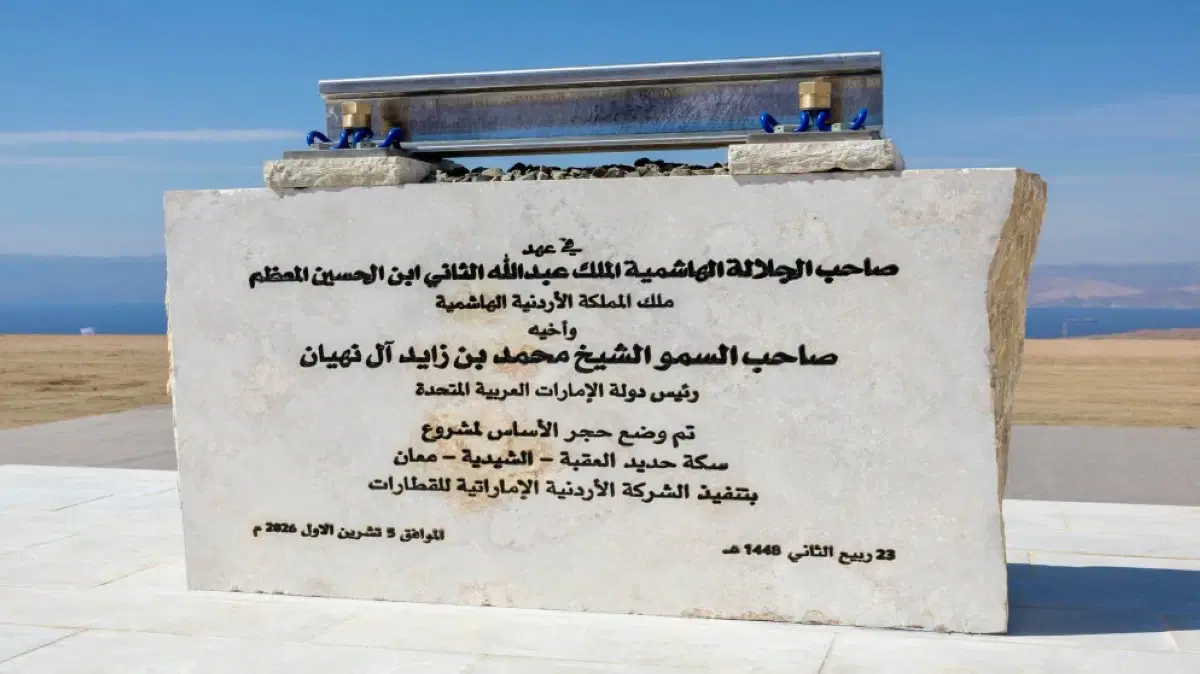
The Jordan Maritime Authority confirmed that the laying of the foundation stone for the railway project between Aqaba, Al-Shudeifat, and Ma'an represents a strategic milestone in the Jordanian-Emirati partnership journey, and an important step towards building an integrated and flexible transport system that enhances Jordan's position as a regional logistics hub.
The Director General of the Authority, Ahmed Al-Asasla, said in a statement on Tuesday that these projects directly impact the efficiency of Jordanian ports by improving the regularity of ship schedules, reducing ship waiting times, increasing berth turnover, enhancing handling efficiency, and boosting the competitiveness of Jordanian ports and the markets for Jordanian phosphates and potash, as well as alleviating pressure on the road and truck transport network.
He added that Aqaba is moving towards an integrated model where ports become a key connection point within interconnected transport chains, including maritime, land, and rail transport, logistics centers, and dry ports, such as the Ma'an land port, enabling the movement of goods within an integrated operational chain extending from production areas to the port and markets, reaching the concept of door-to-door transport.
He stressed that the railway does not aim to replace or exclude truck transport, but rather to add a more efficient link to the transport system, distributing transport roles according to the economic and operational efficiency of each mode, thereby reducing pressure on roads and ports, and increasing Aqaba's capacity to receive, handle, and distribute goods to local and regional markets.
He pointed out that this transition requires moving from the concept of separate transport to the concept of multimodal transport, where a single journey can include maritime, rail, and land transport, along with handling, storage, and associated logistics services, within clear contractual arrangements that define the responsibilities of the parties during various stages of the journey, and support the use of electronic transport documents when they meet legal and technical requirements.
He noted that the project represents a first step towards building an integrated national railway network linking Aqaba to various regions of the Kingdom, and opening future prospects for connecting with neighboring Arab countries, thereby enhancing the possibility of linking Aqaba port with Mediterranean ports through regional corridors, and strengthening Jordan's position on the regional trade and transport map.
He explained that the importance of these projects is enhanced by linking production and mining areas, particularly phosphate and potash mines, to Jordanian ports, thereby enhancing the efficiency of supply and export chains, and supporting Aqaba port's ability to handle large quantities of goods and mining materials, as the new transport system aims to transport about 13 million tons of phosphate and 2.6 million tons of potash, stressing the importance of developing the legislative and regulatory framework that accompanies this shift in transport patterns, and pointing out that the United Nations Convention on Contracts for the International Carriage of Goods Wholly or Partly by Sea, known as the "Rotterdam Rules", represents one of the important international references in this field, due to its response to the developments witnessed by international transport, particularly the expansion of container transport, the increasing demand for door-to-door transport services under a single contract, the development of electronic transport documents, and the establishment of a legal framework for maritime transport contracts that may include transport stages by other means.
Al-Asasla explained that the integration of ports with railways and the land transport network and logistics centers does not merely represent the development of transport means, but rather the reconstruction of the national supply chain on more efficient, flexible, and competitive bases, thereby enhancing Aqaba's role as a key regional trade hub, supporting the vision of economic modernization, and consolidating Jordan's position as a logistics center capable of serving local and regional markets.