Minister of Environment: Jordan Continues Efforts to Protect the Ozone Layer and Promote the Transition to Sustainable Cooling
Amman6 min read
Share
Minister of Environment Dr. Ayman Sulaiman confirmed that Jordan is continuing its national efforts to protect the ozone layer and promote the transition to sustainable cooling technologies, contributing to addressing climate change challenges, improving energy efficiency, supporting the green economy, and enhancing the competitiveness of the national industry.
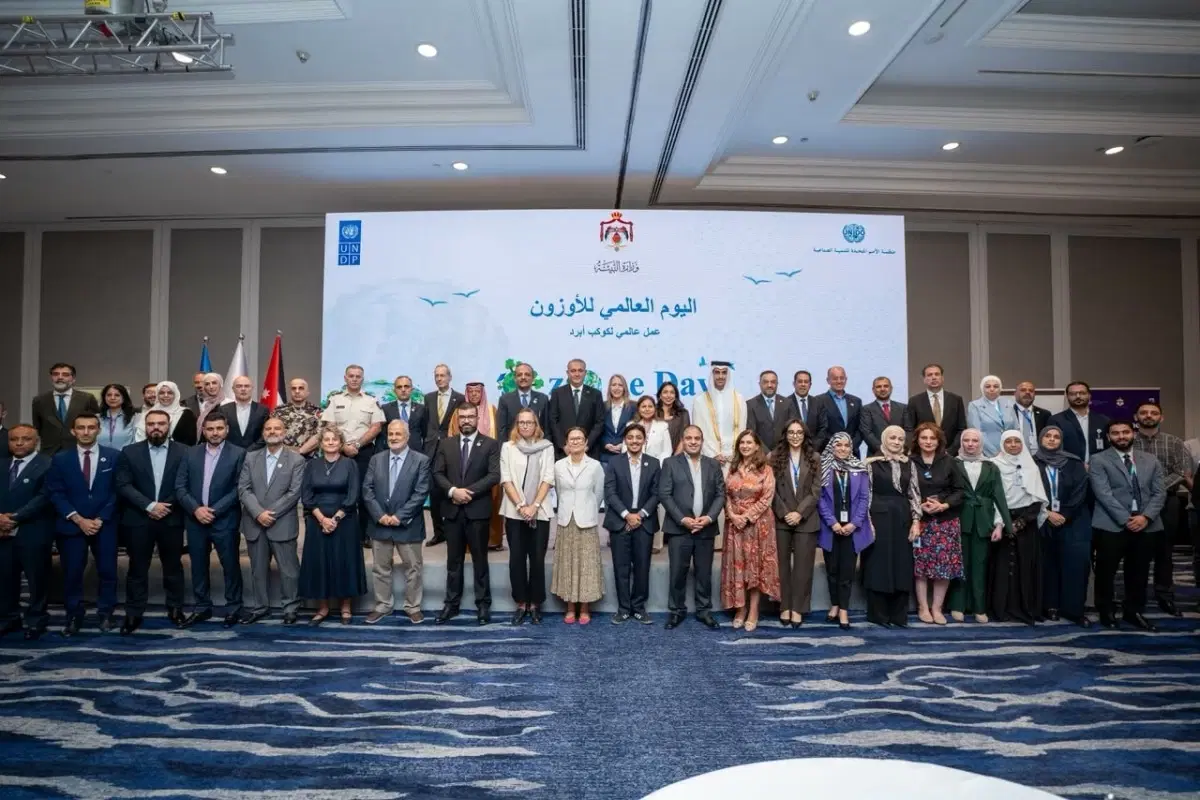
This was stated during his patronage, on Wednesday, of the celebration of the World Day for the Preservation of the Ozone Layer, which falls on the 16th of September each year, under the theme 'Global Action for a Cooler Planet', coinciding with the 10th anniversary of the adoption of the Kigali Amendment to the Montreal Protocol, with the participation of international partners in the United Nations Industrial Development Organization (UNIDO), the United Nations Development Programme (UNDP), the United Nations Environment Programme (UNEP), and representatives of the industrial sector and national partner entities. In the presence of a number of ambassadors
Dr. Ayman Sulaiman said that the Montreal Protocol represents a global success story of international cooperation in environmental protection, pointing to the importance of continuing to implement the Kigali Amendment and support the transition to more sustainable and energy-efficient cooling solutions, in line with national orientations in climate action and sustainable development.
He added that Jordan views its international commitments as an opportunity to modernize productive sectors, develop the capabilities of national cadres, encourage innovation and technology transfer, and enhance the competitiveness of the Jordanian industry, affirming that the Ministry of Environment will continue to implement programs and projects aimed at protecting the ozone layer and reducing the use of environmentally and climatically impactful materials.
Dr. Ayman Sulaiman pointed to the importance of partnering with the private sector, national institutions, and international entities in developing the cooling and air conditioning sector, enhancing training and capacity building, expanding the use of alternatives and modern technologies, achieving a balance between environmental, economic, and development needs.
Dr. Ayman Sulaiman concluded by affirming that Jordan, under the leadership of His Majesty King Abdullah II ibn Al-Hussein, continues its approach in supporting environmental and climate action and fulfilling its international commitments, relying on national and international partnerships that have contributed to achieving tangible achievements in the field of ozone layer protection.
Ms. Sherry Ritsema-Anderson, the United Nations Resident Coordinator in Jordan, said in her speech, 'The progress made by Jordan in protecting the ozone layer reflects a strong national will and a close partnership between the government, the United Nations system, the private sector, and development partners. This experience proves that joint work can achieve tangible results for people and the planet. We must build on this success to accelerate climate action and expand access to affordable sustainable cooling solutions, for a more sustainable future for Jordan and the world.'
The celebration witnessed a high-level dialogue session, which included the Secretary-General of the Ministry of Environment, Dr. Omar Arabiyat, the representative of the United Nations Industrial Development Organization (UNIDO) Engineer Sulafa Madanat, the Deputy Resident Representative of the United Nations Development Programme (UNDP) in Jordan, Engineer Magda Al-Assaf, the UNDP representative Randa Abu Al-Hassan, along with representatives of the industrial sector and national partner entities.
The session discussed Jordan's experience in implementing the Montreal Protocol, the future of sustainable cooling, energy efficiency, innovation and technology transfer, as well as funding opportunities and partnerships supporting the green transition.
In his intervention during the session, Secretary-General of the Ministry of Environment Dr. Omar Arabiyat emphasized the importance of building on the national achievements Jordan has made in implementing the Montreal Protocol, and enhancing the transition to a more advanced stage in the field of sustainable cooling, through expanding partnership between national institutions, the private sector, and international organizations, supporting innovation, technology transfer, and building national capabilities.
Dr. Arabiyat pointed to the importance of enhancing integration between ozone layer protection, climate action, and energy efficiency, and leveraging national expertise and international support to develop sustainable technologies and practices, in line with environmental and economic requirements and enhancing the competitiveness of the national industry.
Engineer Sulafa Madanat, representative of the United Nations Industrial Development Organization (UNIDO) in Jordan, affirmed the organization's pride in being a reliable strategic partner of the Hashemite Kingdom of Jordan for decades in implementing the commitments of the Montreal Protocol and the Kigali Amendment.
She said that the organization will continue to employ its accumulated expertise to support Jordan in the transition to more efficient and sustainable technologies, through technology transfer, factory modernization, technical capacity building, alongside attracting and attracting green financing to support national industries in the transition to cleaner and more competitive production.
Magda Al-Assaf, Deputy Resident Representative of the United Nations Development Programme in Jordan, said, 'Our ambition is for sustainable cooling solutions to be widely available to companies. We are working with the Jordanian government and our partners to build on pilot projects and establish financing mechanisms that help companies invest in these solutions, contributing to reducing energy consumption and emissions and supporting the green transition in Jordan.'
Al-Assaf added, 'The experiences of the Aqaba Marine Protected Area and the new Amman Customs Center in Al-Maduna provide a practical model for the use of natural cooling materials. The next step is to link these applications with the necessary financing, skills, and partnerships to expand their adoption.'
Participants in the session affirmed that the achievements Jordan has made in protecting the ozone layer were the result of an integrated national and international partnership, which contributed to the gradual elimination of ozone-depleting substances, modernizing technologies and production lines, building the capacities of workers in the cooling and air conditioning sector, and strengthening the system of supervision, training, and application.
The session also addressed the importance of implementing the Kigali Amendment and expanding the use of more efficient and less climate-impactful cooling alternatives and technologies, linking ozone layer protection efforts with climate action goals, energy efficiency, and enhancing the competitiveness of the national industry, as well as the importance of transitioning from adopting modern technologies and alternatives to enhancing local knowledge, innovation, and technological application.
At the conclusion of the celebration, a representative of the Minister of Environment, Secretary-General Dr. Omar Arabiyat, honored a number of institutions, companies, and national partner entities that contributed to supporting and implementing the Montreal Protocol programs and projects in the Kingdom, in appreciation of their role in supporting national efforts in the fields of technological transformation, training and capacity building, supervision, specification development, and support for the industrial sector.
The Ministry of Environment affirmed that this honor embodies the partnership approach adopted by Jordan in implementing the Montreal Protocol, reflecting the importance of the integration of roles of government institutions, United Nations agencies, the private sector, and technical and training institutions in preserving national achievements and continuing to fulfill the Kingdom's international commitments.
The Ministry emphasized that the next phase will work to expand these partnerships and link ozone layer protection with sustainable cooling, energy efficiency, and climate action, contributing to supporting the green economy, enhancing the competitiveness of the Jordanian industry, and encouraging investment and innovation in sustainable technologies