Jordan Continues Progress in Protecting the Ozone Layer and Eliminating Ozone-Depleting Substances
Amman5 min read
Share
Jordan continues to implement its international commitments to protect the ozone layer by gradually eliminating ozone-depleting substances, enhancing legislation, and regulating related sectors, thereby reinforcing the Kingdom's move towards a green economy and sustainable development.
Through the Ozone Depleting Substances (ODS) phase-out project, executed from 2013-2024 with support from the World Bank Group, Jordan made significant progress by completely eliminating two major types of hydrochlorofluorocarbons (HCFCs) and avoiding over 240,000 tons of carbon dioxide equivalent emissions.
This environmental impact is equivalent to removing over 50,000 gasoline vehicles from the roads for a full year, reflecting the importance of national measures in reducing emissions and protecting the environment, alongside fulfilling the Kingdom's obligations under the Vienna Convention and the Montreal Protocol.
According to an awareness bulletin by the Ministry of Environment on the occasion of the World Ozone Day on September 16th, Jordan is implementing a package of internationally supported technical and legislative measures as part of a national strategy to phase out ozone-depleting substances, enhance regulatory oversight of related sectors, and provide technical and training assistance.
The Ministry noted that the National Ozone Unit played a key role in implementing policies related to ozone-depleting substances, monitoring industrial and commercial compliance, developing national legislation to control the import and use of these substances and their alternatives, ensuring the sustainability of achieved accomplishments. This is in parallel with ongoing cooperation between the Ministry of Environment and the Jordan Customs Department to train specialized staff on refrigerant detection and diagnostic devices, enhancing border control and reducing illegal trade in ozone-depleting substances.
The Ministry of Environment also provides technical and financial support to local factories to help them transition from harmful gases to environmentally and climate-friendly alternatives, particularly in the refrigeration, air conditioning, and insulation sectors, and encourages the use of natural, low-climate impact alternatives. It organizes training workshops for technicians and engineers in related sectors and conducts awareness campaigns on the occasion of World Ozone Day to raise awareness of the importance of protecting this natural shield, which is the Earth's first line of defense against harmful ultraviolet rays.
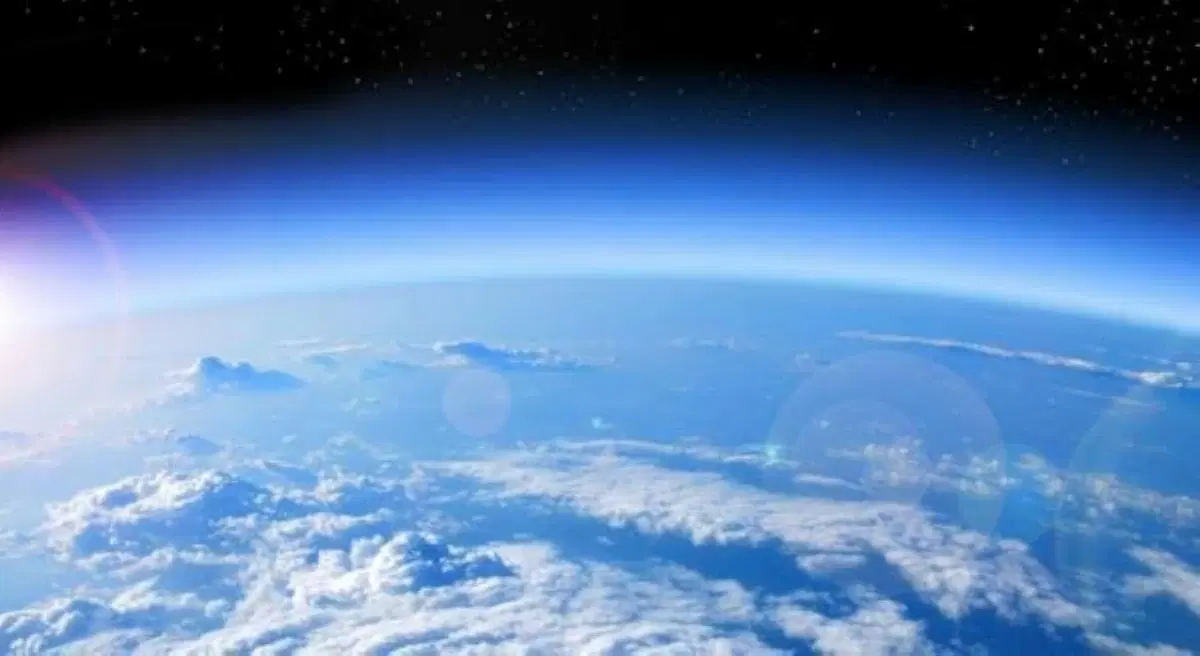
The ozone layer is located in the stratosphere at an altitude of 15-35 kilometers above the Earth's surface, consisting of ozone gas, which contains three oxygen atoms. It plays a fundamental role in absorbing most of the harmful ultraviolet rays coming from the sun, especially UVB rays.
The importance of this layer is directly reflected on human health and the environment, as its presence helps reduce the risk of skin cancer and eye diseases, maintains the integrity of the immune system, and protects agricultural crops and marine ecosystems, including plankton, which form the base of food chains in the seas.
The risks to the ozone layer began with the widespread use of chlorofluorocarbons (CFCs) and other chemicals in refrigeration, air conditioning, insulation, and aerosol cans, before scientific studies revealed their impact on ozone depletion.
This prompted the international community to take action through the Vienna Convention for the Protection of the Ozone Layer in 1985, which provided a global framework for scientific cooperation and information exchange, leading to the Montreal Protocol in 1987, which established binding procedures for the phase-out of ozone-depleting substances, becoming one of the most prominent examples of international cooperation in addressing environmental challenges.
In 2016, the Kigali Amendment expanded the scope of work to include the gradual reduction of hydrofluorocarbons (HFCs), which do not deplete the ozone layer but have a strong impact on global warming, reinforcing the link between ozone protection and climate change mitigation.
According to international scientific assessments, the ozone layer is on the path to recovery, with predictions of returning to 1980 levels by 2040 in most parts of the world, and by 2066 over the South Pole, due to continued international commitment to eliminating ozone-depleting substances.
Jordan ratified the Vienna Convention and the Montreal Protocol in 1989, and was among the first countries to ratify the Kigali Amendment in 2019. It established the National Ozone Unit within the Ministry of Environment to monitor the implementation of international commitments and coordinate with government agencies and the industrial and commercial sectors.
The Ministry emphasized that the success of Jordan's experience in this field is based on continuous partnership with the World Bank, the United Nations Industrial Development Organization (UNIDO), and the private sector, which has contributed to enhancing national capacities, modernizing industrial practices, improving safety standards, increasing productivity, and reducing waste, in addition to opening new export markets for establishments that have transitioned to more environmentally compliant technologies and alternatives.
Globally, about 98% of ozone-depleting substances have been eliminated compared to 1990 levels, and the implementation of the Montreal Protocol has also helped avoid an additional increase in global surface temperatures estimated between 0.5°C and 1°C, due to the reduction in greenhouse gas emissions associated with these substances.
Jordan continues its path to complete the elimination of HCFC gases by 2030, in line with its commitments under the Montreal Protocol, and in harmony with its direction towards a green economy, enhancing the competitiveness of the industrial sector, and achieving sustainable development goals.
The United Nations designated World Ozone Day in 1995, commemorating the anniversary of the signing of the Montreal Protocol on September 16, 1987. The celebration of this occasion underscores the importance of science, scientific research, and international cooperation in protecting the environment and addressing emerging challenges.