Likud seeks to prevent two Arab lists from participating in Knesset elections
Agencies3 min read
Share
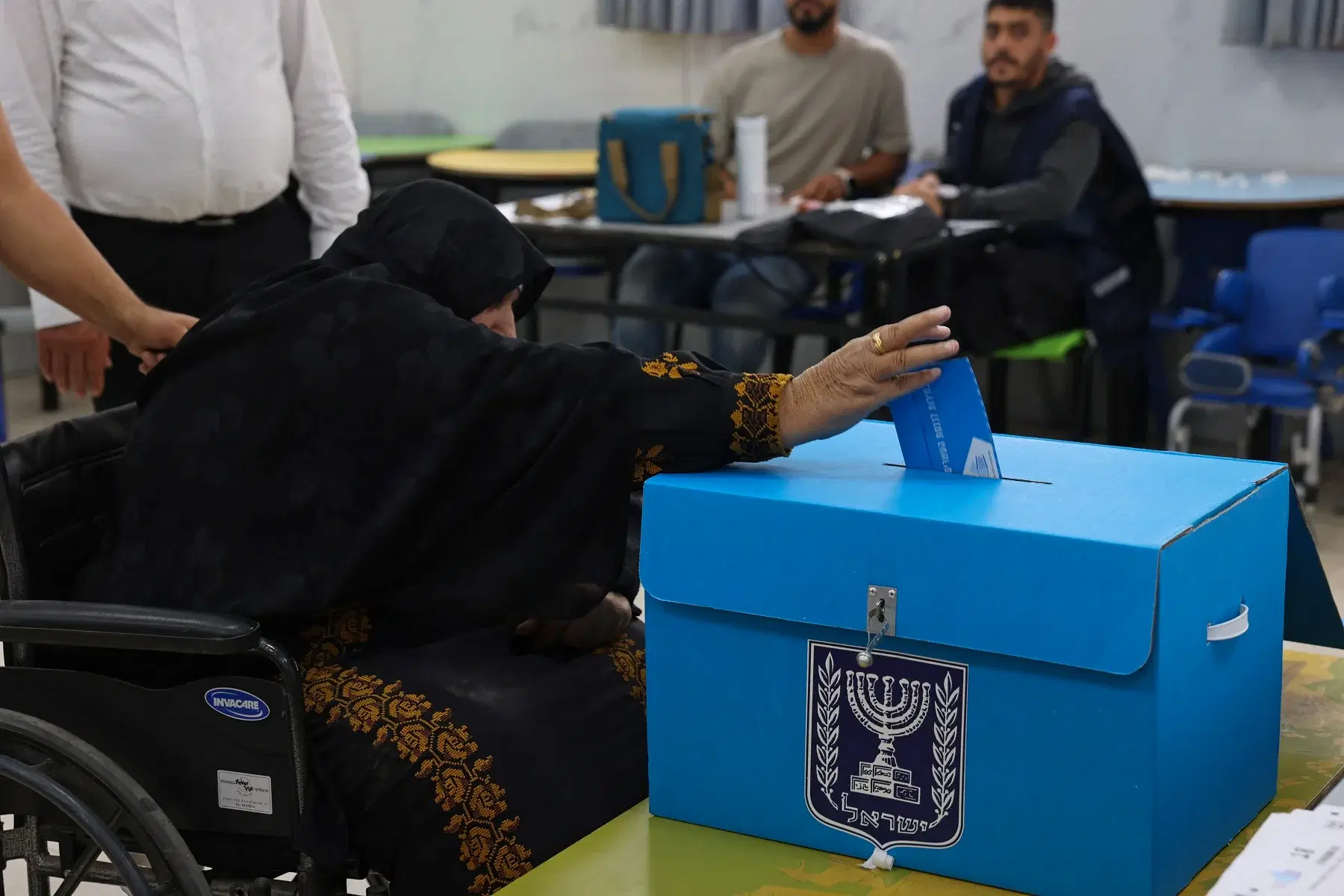
The Israeli Likud party, led by Prime Minister Benjamin Netanyahu, announced on Sunday its intention to submit requests to prevent the "Joint List" and the "United Arab List" (Ra'am) party from participating in the upcoming Knesset (parliament) elections, scheduled for October.
The party said in a statement: "Likud will submit requests to prevent the Joint List and Ra'am from participating in the elections".
It claimed that "there is no place in the Knesset for those who insult the soldiers of the Israeli army, and who cannot say that Hamas and Hezbollah are terrorist organizations".
Likud also described the two Arab lists as "supporters of terrorism", as part of its attack on the head of the "Yesh Atid" party, Gadi Eisenkot.
It claimed that the two lists represent the "natural partners" of Eisenkot, and that he wants to form a government with them alongside Yair Golan and Avigdor Lieberman.
The party concluded its statement by saying: "This must not be allowed to happen".
The "Joint List" was established in 2015 as an electoral alliance that included four major Arab parties in Israel, namely the Democratic Front for Peace and Equality, the National Democratic Assembly, the Arab Movement for Change, and the United Arab List, before its alliances witnessed divisions and changes in the following years.
The "United Arab List" (Ra'am) is an Arab party in Israel led by Mansour Abbas, with roots in the Islamic Movement (Southern Branch), and was one of the components of the "Joint List" before it separated from it and ran in the Knesset elections independently. In 2021, it became the first Arab list to join an Israeli government coalition.
Likud's statements come amid heated electoral competition between Netanyahu and Eisenkot, the former Chief of Staff, who has emerged in recent months as the main challenger to the Prime Minister in the Knesset elections scheduled for October 27.
Recent opinion polls indicate a close race between the two parties, with most showing "Yesh Atid" ahead of "Likud".
Despite Eisenkot's lead in several polls, no clear majority has yet emerged for either camp to secure the 61 seats needed to form a government, giving Arab parties potential weight in the equation for forming the next coalition.
In this context, Likud has intensified its attacks on Eisenkot in recent months, particularly regarding the possibility of relying on Arab party votes to form a government, while Israeli analyses suggest that the party's focus on him reflects its consideration of him as Netanyahu's main rival in the elections.