According to the results, the tally for "Yashar," led by the former Chief of Staff Eisenkot, increased by one seat compared to the channel's previous poll, making it the largest party out of the 120 seats in the Knesset.
Conversely, "Likud" fell by two seats to 21.
The "Ma'an" party, led by former Prime Minister Naftali Bennett, received 13 seats, dropping by two seats to its lowest level.
The "Democrats" party, led by Yair Golan, maintained 11 seats.
Meanwhile, the "Yisrael Beiteinu" party, led by Avigdor Lieberman, dropped by one seat to 8.
The ultra-Orthodox "United Torah Judaism" party, led by Yaakov Asher, received 8 seats, and the religious "Shas" party, led by Aryeh Deri, received 7 seats.
The right-wing "Religious Zionism" and "Zehut" alliance, led by Bezalel Smotrich and Moshe Feiglin, received 6 seats.
The "Amach Yisrael" (Your People Israel) party, led by Ofer Winter, received 4 seats.
On the Arab front, the "Joint List," led by Yousef Jabareen, received 7 seats, and the "United Arab List," led by Mansour Abbas, received 4 seats.
In contrast, several parties failed to cross the 3.25 percent electoral threshold, including "Blue and White," led by Benny Gantz, and "Noam Yisrael," led by Avi Maoz.
At the bloc level, the opposition bloc received 68 seats, including 57 for Jewish parties and 11 for Arab parties.
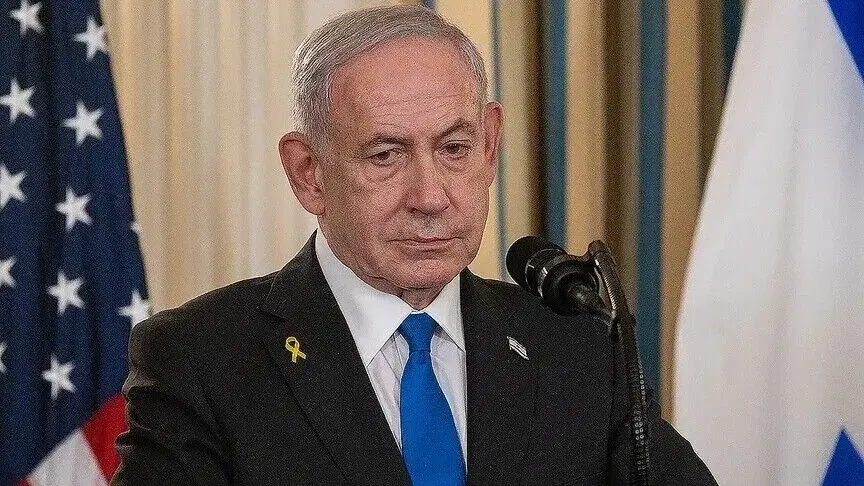
In contrast, Netanyahu's bloc received 52 seats, an increase of two seats after the parties of Bezalel Smotrich and Ofer Winter crossed the threshold.
Forming a government requires the confidence of at least 61 out of the 120 Knesset members.
When asked who is most suitable for the premiership, Eisenkot continued to lead Netanyahu by a 7-percentage-point margin.
Eisenkot received 42 percent, compared to 35 percent for Netanyahu.
The poll results come ahead of the Israeli general elections scheduled for October 27.
Earlier on Monday, Israeli parties submitted their candidate lists for the elections before the deadline on Tuesday.
The submission of lists came amid divisions in alliances, most notably Eisenkot's decision not to merge with Bennett's party.
Winter also decided to run in the elections alone, without joining Smotrich's party.