"Leader of the Day"... A Japanese experience that enhances learning and responsibility
Amman10 min read
Share
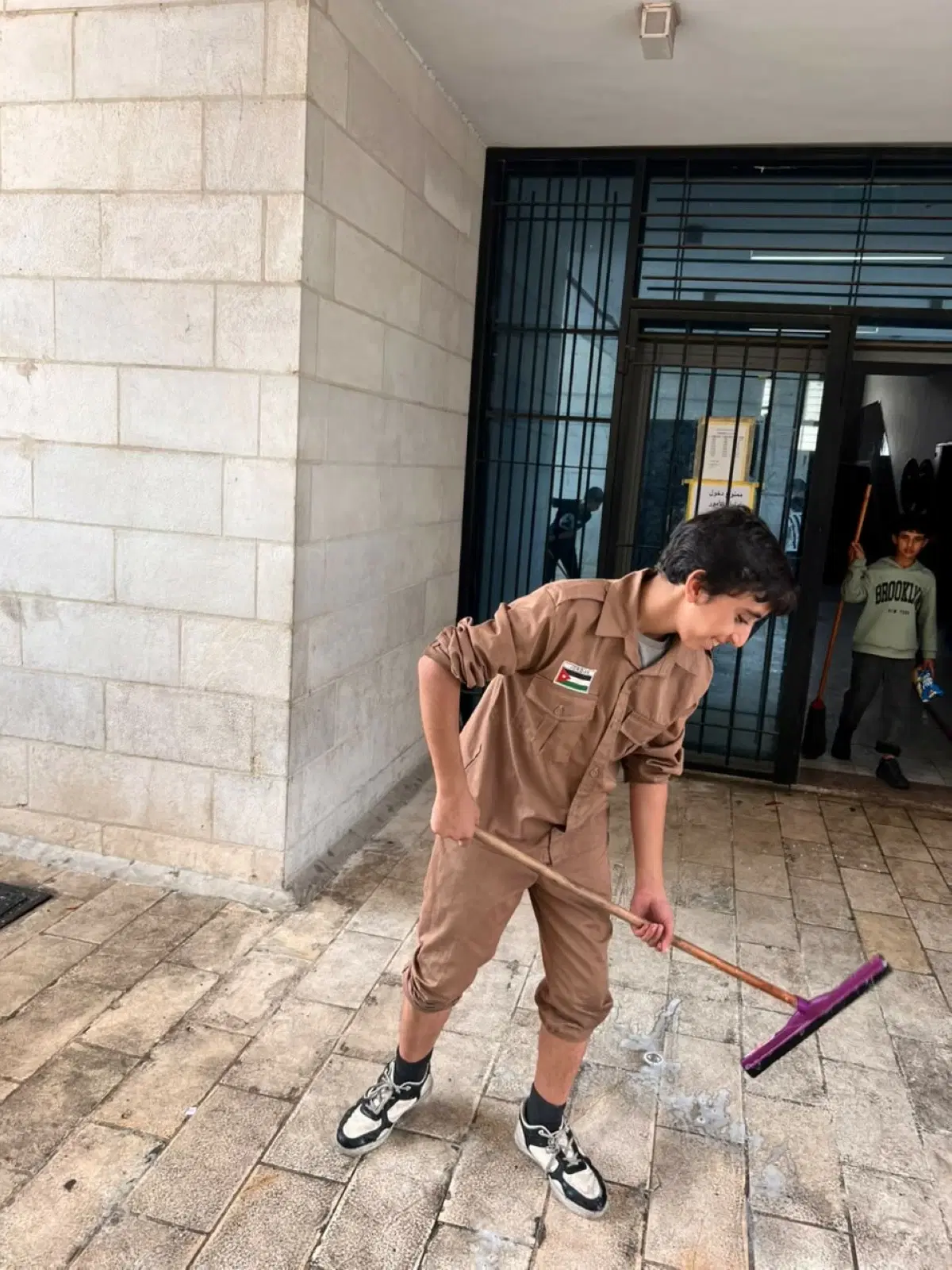
The "Leader of the Day" experience gives students an active role in managing classroom discussions, organizing learning, and participating in cleaning the school and maintaining its facilities, which enhances self-confidence, responsibility, and teamwork, and extends the impact of learning to the family and daily life.
The experience is part of the "Promoting a Positive Learning Environment for All School Students" (PLEAC) project, one of the Japanese Official Development Assistance (ODA) projects, which is jointly implemented by the Ministry of Education and the Japan International Cooperation Agency (JICA), with support from the Government of Japan.
The project focuses on integrating the "TOKKATSU" methodology, the Japanese model for holistic education, into Jordanian schools. According to the introductory brief, the implementation of this methodology came at the request of His Majesty King Abdullah II, with the aim of developing a safe, inclusive, and stimulating educational environment that supports the holistic growth of children.
The Embassy of Japan, by facilitating direct communication between the media and beneficiary institutions, seeks to highlight the impact of Japanese development cooperation in supporting education reform, enhancing public understanding of the value of official development assistance, and mobilizing the support of stakeholders to ensure the sustainability and scaling up of successful educational practices.
One student is appointed daily as the class leader, who proposes a topic for discussion and manages the dialogue with the teacher's support. Discussions may address social issues or daily matters related to the school and the students' feelings toward it, while the teacher guides the dialogue and ensures that different opinions are respected.
Students also rotate classroom responsibilities and participate in cleaning the school and maintaining its facilities and common areas, which fosters a sense of belonging, cooperation, and respect for the surrounding environment.
The principal of Nadim Al-Mallah Primary School for Boys, Dr. Raafat Al-Sakarna, said that the project has had a positive impact on students and teachers and enhanced cooperation with parents, explaining that the student has become more capable of expressing his opinion, listening to others, discussing, and taking responsibility, as well as participating in leading work within the classroom.
He indicated that organizing the student's notebook allowed the parent to know what their child covered in the previous lesson, the goal of the current lesson, and the assignments required of them, which facilitates follow-up and enhances cooperation between the family and the school.
He added that the project provided an organized framework for the teacher's work; many ideas and practices existed previously, but they were rearranged in an easier and more effective way within the classroom. He pointed out that the school has been implementing the project for four years, and the implementation included all its students and teachers.
Arabic language supervisor Saeed Al-Ajouri said that the impact of the project appeared in two main aspects: teaching strategies and classroom management, explaining that the training enhanced the teachers' experience and their ability to deal with students with respect, develop thinking skills, and achieve learning outcomes.
He added that following up on students and providing them with support and assistance helps in acquiring the planned knowledge and skills, so that the student is able at the end of the lesson to achieve the targeted learning outcome.
Regarding classroom management, he pointed out that leadership tasks contribute to building the student's personality by welcoming attendees, introducing the lesson and its objectives, stating the numbers of those present and absent, and discussing learning outcomes with colleagues.
He emphasized that the class project and cleanliness activities enhanced students' love for their classroom environment and encouraged them to maintain school property and share what they learned with others.
In turn, supervisor Omar Al-Momani, from the Zarqa II Directorate, said that the training brought about a noticeable development in teachers' performance, especially in lesson planning, time management, and using formative assessment more effectively.
He added that the teacher has become more capable of reflecting on their performance after each lesson, identifying strengths and reinforcing them, and monitoring opportunities for improvement and working on them.
The supervisor for the first three grades in the Zarqa III Directorate, Dr. Hana Najm, said that the project provided a positive educational environment in which mistakes became an opportunity for learning and a means to help the student develop their understanding.
She explained that the blackboard now displays the story of the lesson, from its objectives and beginning to the conclusion and what the students learned, while notebooks now reflect their different expectations and ideas, instead of being limited to identical answers.
She added that the clarity of the notebooks helped parents follow up on lesson objectives, the questions raised, their children's answers, and what they learned during the day, noting that students rotating in the role of class leader enhanced their ability to take responsibility and make decisions, and increased their boldness and self-confidence.
For his part, science teacher Mahmoud Yaghl said that the training provided practices related to organizing the blackboard, taking notes, and communicating with parents through the student's notebook, and helped in distributing tasks and involving students in carrying out some classroom responsibilities.
He explained that the class leader can introduce the goal of the lesson and participate in clarifying some activities, in addition to tasks handled by classroom committees, including those related to notebooks, which eased some burdens on the teacher and expanded student participation.
He indicated that organizing the blackboard made the lesson steps clear, so that anyone entering the class after five or ten minutes can know what has been covered and the stage the teacher has reached, noting that arranging the content from top to bottom, and from right to left, helps in following the sequence of the lesson.
He added that assigning the role of class leader to the student gives them the responsibility of dealing with a group that may include 20 or 30 students, and enhances their self-confidence and ability to participate.
He pointed out that some students faced difficulty at the beginning and thought they were unable to understand the lesson or draw conclusions themselves, but over time they gained greater confidence in their ability to carry out activities, try, and reach results.
He said that he noticed a major change in their participation at the end of the school year; the student who used to be content with saying they did not know the answer began to research, carry out the activity, and try to reach the result, especially in science.
He emphasized that the focus was on the value of trying, without requiring the answer to be correct from the beginning, then discussing the results collectively to reach the correct or most accurate answer, provided that each student writes a summary of what they learned in their own style.
He added that the clarity of the notebooks and learning steps helped families follow up on their children, and allowed the student to explain what they wrote and understand it in their own words, while enhancing their role in producing and extracting knowledge.
In student testimonies, the impact of the new practices on learning and daily behavior stood out; one of them said that organizing and arranging the blackboard helps him understand the lesson better, while another indicated that he has become more cooperative with his family and helpful to his parents. A student added that he learned to tidy up his home, maintain its cleanliness, and cooperate with his father and mother.
According to the introductory material, the practices contributed to improving the understanding of lessons, focus, organizing ideas, and taking notes, and enhancing students' abilities to work individually, in pairs, and in groups, and respect different points of view.
Cleanliness activities also enhanced their sense of belonging and cooperation, and allowed teachers to discover aspects of students' personalities that do not usually appear during lessons.
The introductory brief indicates that the project implementation began in October 2021, while the introductory material for the first phase specifies its period from December 2021 to December 2025. This phase included training teachers, principals, and supervisors on organizing writing on the blackboard, improving questioning, activating cooperative learning, distributing classroom responsibilities, and enhancing communication with parents.
The brief mentions that the project's pilot activities included 37 schools and worked on enhancing the capabilities of teachers and school principals, developing Standard Operating Procedures (SOPs) for schools and education directorates, and establishing a framework for nationalizing the experience.
According to data from the two implementation groups, the first group included seven schools, seven directorate supervisors, 12 principals, 91 teachers, and about 4,550 students, while the second group included 30 schools, 29 supervisors, 39 principals, 233 teachers, and about 11,650 students.
The material clarifies that the numbers of principals are cumulative and may exceed the number of schools due to job transfers and the participation of more than one principal for the school during the project period, while the numbers of students are estimates and were calculated assuming 50 students per class.
JICA project coordinator at the Ministry's Projects and Follow-up Unit, Mariana Al-Nimri, said that the Ministry is preparing for the second phase, in preparation for starting its implementation next year, with expansion to directorates in the north and south of the Kingdom, confirming the continuation of the program and building on its impact in schools.
She praised the partnership with the Japanese side and thanked the Japanese Ambassador and JICA for the fruitful cooperation during the first phase, noting the multiplicity of projects implemented by the agency in cooperation with the Ministry.
She added that the impact of the project prompted the Ministry to adopt a plan for its sustainability for three years and to expand in the directorates and train teachers, according to a clear plan that began to be prepared last year, expressing her hope for the continuation of the partnership and the enhancement of its results in schools.
She pointed out that the cooperation with JICA also includes a project related to mental health, implemented in various directorates in the Kingdom in cooperation with the Ministry of Health, emphasizing the importance of continuing cooperation and ensuring the sustainability of its results.
According to the introductory brief, the Ministry plans, starting from the current year, to implement the positive learning environment model and generalize it at the level of the Kingdom.
The introductory material outlines a plan for expansion and sustainability during the 2026–2028 period, led by the Ministry and the Human Resources Department, and relying on its own budget, to expand the scope of implementation from nine directorates to all 18 directorates in the Central Region.
The plan includes training, mentoring, guidance activities, managers' meetings, and open classes, supporting the continuity of practices within schools.
As for the directions of the second phase, for the period 2027–2032, they include expanding the target groups from grades one through six to include students from Kindergarten 1 (KG1) up to the ninth grade, and expanding geographically from the Central Region to all parts of the Kingdom, in accordance with a vision that provides every child with a safe, inclusive, and participatory school environment that enhances their academic, social, and emotional growth.
The beginning of the anticipated second phase coincides with the continuation of the expansion and sustainability plan during 2027 and 2028, supporting the transition of the experience into a sustainable national educational reform initiative that gives the student a broader opportunity to lead dialogue, organize their learning, and take responsibility for their classroom and school.