King Hussein Cancer Foundation and Jordan Phosphate Mines Company Launch Mobile Clinic Project in Southern Governorates
Amman3 min read
Share
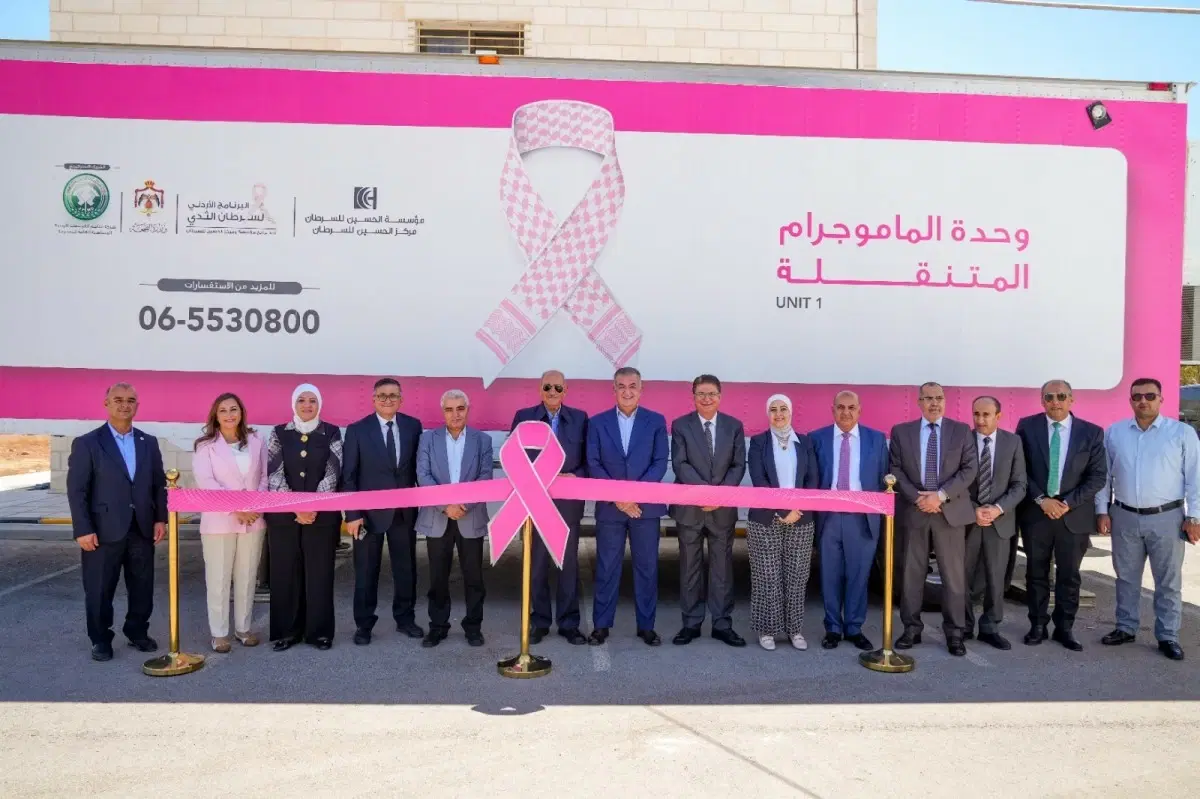
The King Hussein Cancer Foundation (KHCF), in strategic partnership with the Jordan Phosphate Mines Company (JPMC), has launched a mobile clinic project for the early detection of breast cancer, aiming to enhance access for women in the southern governorates to screening and early diagnosis services.
The launch of the project comes within the framework of an agreement previously signed by the Foundation and the Company, under which JPMC became a strategic partner in supporting the project, contributing to the expansion of breast cancer early detection services and delivering them to women in the southern governorates.
The project was launched in Ma'an Governorate in the presence of Governor Khaled Al-Hajjaj, Chairman of the Board of Directors of JPMC Dr. Mohammad Thneibat, CEO of the company Eng. Abdul Wahab Al-Rawad, Director General of the King Hussein Cancer Center (KHCC) Dr. Asem Mansour, Director General of KHCF Nisreen Qatamish, and a number of representatives from official, local, and relevant authorities.
Dr. Thneibat emphasized that the company's support for the project stems from its national responsibility and its belief in the pioneering and humanitarian role played by the King Hussein Cancer Foundation in providing comprehensive care for cancer patients.
He pointed to the company's readiness to continue supporting the Foundation and assisting it in implementing its plans aimed at expanding the provision of healthcare and therapeutic services for cancer patients in various regions of the Kingdom.
Dr. Thneibat expressed the company's pride in its partnership with the King Hussein Cancer Foundation and its contribution to supporting the Foundation's efforts to provide a suitable health environment for cancer patients, stressing the importance of concerted national efforts to provide treatment and care opportunities for patients and to support those who are less fortunate.
He praised the role played by the King Hussein Cancer Foundation as a leading national institution and a humanitarian landmark in caring for and treating cancer patients, and for the advanced and specialized medical services it provides according to the highest international standards, commending the efforts of its management and staff and their dedication to performing their humanitarian mission and serving patients.
For her part, Qatamish expressed the King Hussein Cancer Foundation's appreciation to the Jordan Phosphate Mines Company for its support of the project, confirming that this partnership embodies the importance of integrating national efforts to enhance early detection of breast cancer and expand access to screening services, especially in the southern governorates, which contributes to detecting the disease in its early stages and increasing the chances of treatment and recovery.
The support of the Jordan Phosphate Mines Company for the project includes equipping the KHCF mobile clinic with a mammogram machine, allowing screening services to be delivered to women in the southern governorates.
The project targets approximately 334,000 women in the governorates of Ma'an, Tafilah, Karak, and Aqaba, and allows nearly 700 women to undergo high-quality mammogram screenings through a mobile clinic that tours the four governorates.
The project also includes implementing awareness and community activities to promote the importance of early detection and encourage women to undergo periodic examinations, in addition to supporting the capabilities of local health and community staff, enhancing health awareness and education efforts, and providing reliable data that contributes to planning and developing health policies related to early breast cancer detection.
The launch of the project is an extension of joint efforts aimed at enhancing prevention and early detection of breast cancer, expanding access to screening and diagnostic services, and delivering specialized health services to women in the southern governorates.