Bangkok meetings coincide with the approaching sixth review of the Extended Fund Facility and the third for the Resilience and Sustainability Facility
The World Bank approved two financings for Jordan worth $1.1 billion last June
Follow Al Rai

Bangkok meetings coincide with the approaching sixth review of the Extended Fund Facility and the third for the Resilience and Sustainability Facility
The World Bank approved two financings for Jordan worth $1.1 billion last June
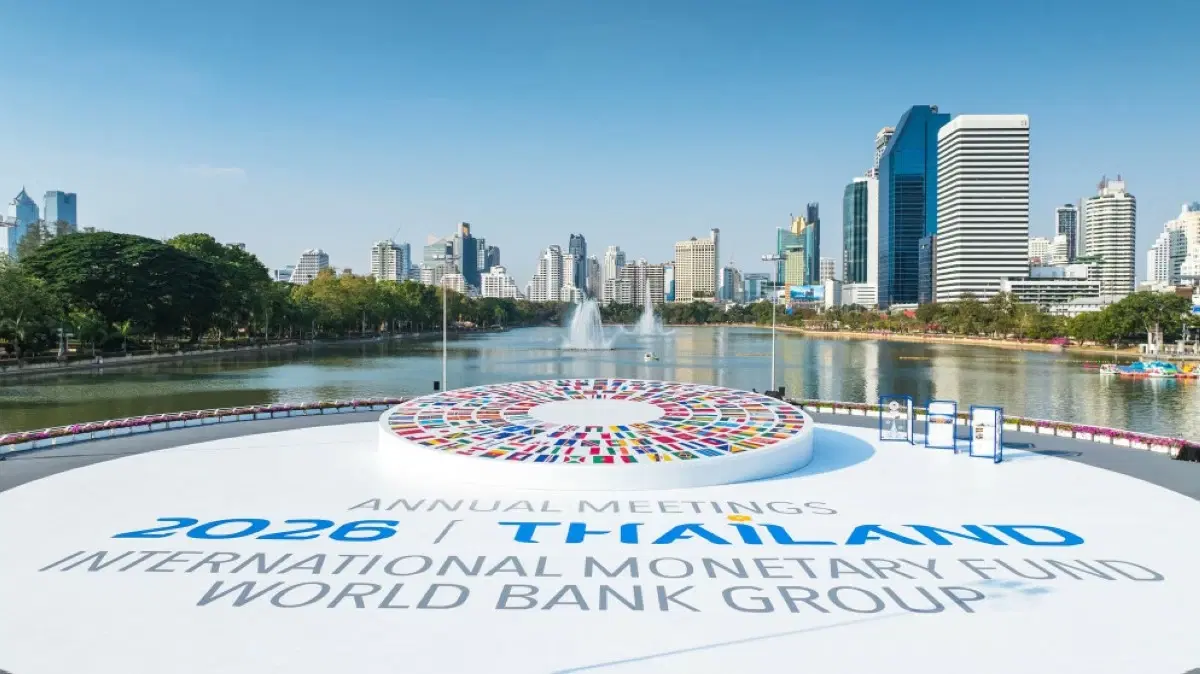
Jordan is participating in the annual meetings of the International Monetary Fund and the World Bank Group, which began on Monday in the Thai capital, Bangkok, and will continue until October 18, with a delegation including Minister of Planning and International Cooperation Zeina Toukan, Minister of Finance Abdel Hakim Al-Shibli, and Governor of the Central Bank of Jordan Adel Al-Sharkas.
The Jordanian participation comes at a time when Jordan is anticipating the start of the sixth review of the economic reform program supported by the Fund's Extended Facility, and the third review of the Resilience and Sustainability Facility, in conjunction with continued financial and development cooperation with the World Bank, which approved two financings for Jordan last June with a total value of $1.1 billion.
The meetings constitute an opportunity to follow up on the developments of economic and financial cooperation programs with the two international institutions, and to discuss priorities for reform, growth, and investment, in light of the continued economic challenges resulting from regional tensions and their repercussions on energy prices and transport and trade costs.
- Two upcoming reviews with the International Monetary Fund
The meetings coincide with the due date of the sixth review of the Extended Fund Facility, which the IMF approved for Jordan in January 2024 worth approximately $1.3 billion, and the third review of the Resilience and Sustainability Facility, which the Fund approved in June 2025 worth approximately $700 million.
According to the latest disbursement schedules published by the Fund, the completion of the sixth review is linked to making available about 97.8 million Special Drawing Rights units (approximately $132 million), while the next review of the Resilience and Sustainability Facility is linked to evaluating the implementation of reform measures aimed at strengthening the economy's ability to face long-term challenges, particularly in the water, energy, and health emergency preparedness sectors.
The availability of funding associated with the two reviews remains conditional on completing the necessary requirements and procedures and obtaining the approval of the Fund's Executive Board.
The IMF Executive Board had completed, on June 17, the fifth review of the Extended Fund Facility and the second for the Resilience and Sustainability Facility, which made available to Jordan a total financing of approximately $188 million.
The Fund affirmed at the time that Jordan continues to maintain macroeconomic stability, despite the repercussions of the war in the Middle East, noting the progress in implementing economic and financial reforms, and the importance of continuing to reduce public debt, stimulate growth, and create job opportunities.
- Recent financings from the World Bank
The Jordanian participation also comes after the World Bank's approval of two financings for Jordan during June 2026, with a total value of $1.1 billion, to support economic reforms and the health sector.
On June 12, the World Bank approved financing for the health sector reform program worth $400 million, including $349 million from the International Bank for Reconstruction and Development and $51 million from the Global Concessional Financing Facility.
The program aims to improve the efficiency of government health spending and the quality of primary healthcare services, develop financial and administrative governance systems in government hospitals, and enhance the digital transformation of health services.
On June 30, the World Bank approved another loan worth $700 million, as part of the second phase of the Development Policy Financing program for growth and competitiveness in Jordan, to support private sector-led investment, expand access to finance, create job opportunities, and accelerate digital and green transformation.
The importance of the meetings for Jordan lies in following up on the implementation of these programs and financings, and discussing priorities for future cooperation with the World Bank Group, in line with the objectives of the Economic Modernization Vision, particularly stimulating investment, enhancing economic competitiveness, and providing job opportunities.
- Meetings discussing global economic challenges
The annual meetings bring together finance ministers, central bank governors, senior economic officials, and representatives of international financial institutions to discuss global economic prospects, financial stability, debt, and development financing.
The meeting program includes ministerial discussions and sessions addressing private sector investment mobilization, job creation, and the role of technology and artificial intelligence in development, in addition to the release of IMF reports on global economic prospects, financial stability, and fiscal policies.
The meetings provide a framework for consultation on the economic challenges facing developing countries, ways to enhance economic and financial stability, and mobilizing the resources necessary to finance development priorities in light of the uncertainty witnessed by the global economy.
It is expected that the American-Israeli war against Iran, which has entered its eighth month, and the inflation and living hardships it has caused, will dominate the agenda and side discussions during the annual meetings of the IMF and World Bank, which are being held outside Washington for the first time in three years.
World Bank President Ajay Banga told Reuters that while global growth held up better than expected when Iran closed the Strait of Hormuz, causing about 20% of global oil supplies to stop, pressures are beginning to mount again.
He added that the sharp rise in diesel and fertilizer prices, along with the expected super El Niño phenomenon, which experts say could lead to the death of 450,000 people due to extreme heat, are all coinciding at the same time.
Know more about this story?Send us a tip
Ask about this report — answers stay grounded in its text.