Al-Fakhoury: Discussions with Toukan to enhance water security, infrastructure, and stimulate investment in high-value sectors
Al-Fakhoury: The International Finance Corporation has been a trusted partner for Jordan for over half a century
Follow Al Rai

Al-Fakhoury: Discussions with Toukan to enhance water security, infrastructure, and stimulate investment in high-value sectors
Al-Fakhoury: The International Finance Corporation has been a trusted partner for Jordan for over half a century
The World Bank's Regional Director for the Middle East, Dalia Khalifa, said on Tuesday that Jordan is rapidly transforming into a prominent powerhouse in entrepreneurship and a digital hub for the Middle East and North Africa region.
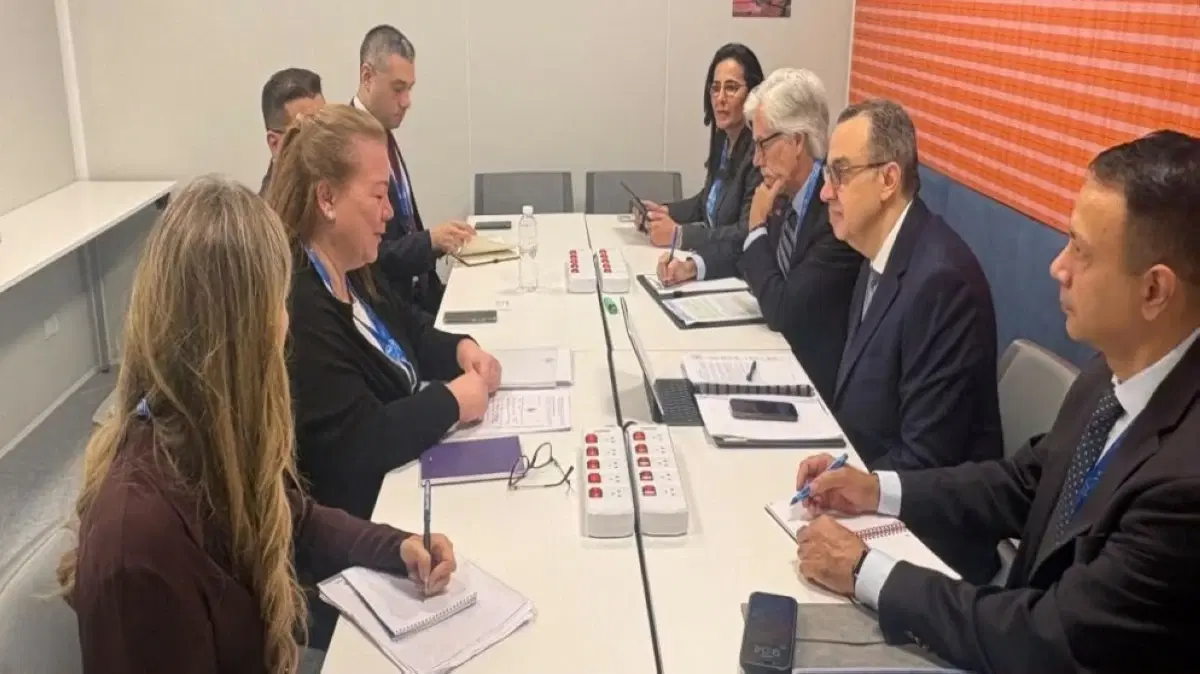
This came following a meeting she held with the Minister of Planning and International Cooperation, Zeina Toukan, and the International Finance Corporation’s Regional Vice President for the Middle East and Central Asia, Imad Al-Fakhoury, during the 2026 World Bank Group Annual Meetings in the Thai capital, Bangkok.
Khalifa added in a post on the "LinkedIn" platform that her meetings with government officials from across the Middle East and beyond, during the first day of the annual meetings, demonstrated a strong commitment to moving forward with reforms that can provide more and better jobs, and expand economic opportunities for the people of those countries.
Toukan and Al-Fakhoury discussed ways to enhance cooperation in the areas of water security and infrastructure, and to create the necessary conditions to expand private sector participation.
Al-Fakhoury said via "LinkedIn" that the meeting focused on enhancing water security, developing resilient infrastructure, and creating the necessary conditions for greater private sector participation, explaining that the discussions addressed stimulating investment in high-value sectors, including energy, transport, and mining, which contributes to advancing Jordan's Economic Modernization Vision and providing job opportunities.
He pointed out that the International Finance Corporation, part of the World Bank, has been a trusted partner for Jordan for over half a century, during which it has achieved many first-of-their-kind accomplishments in the areas of public-private partnerships, renewable energy, and critical infrastructure, in addition to helping mobilize private investments.
Al-Fakhoury affirmed the World Bank Group's continued commitment to working with the public and private sectors in Jordan to unlock new opportunities, mobilize private capital at scale, enhance resilience, and support sustainable, private-sector-led growth across the Kingdom.
Khalifa noted that her meeting with Toukan was one example of countries' commitment to moving forward with reforms, expressing her pride in the partnership that the World Bank Group continues to build across the region, and in the daily efforts of the Group's teams to support countries in turning ambitious reforms into tangible results.
Jordan is participating in the Annual Meetings of the International Monetary Fund and the World Bank Group, which kicked off on Monday in the Thai capital, Bangkok, and will continue until October 18, with a delegation that includes the Minister of Planning and International Cooperation Zeina Toukan, the Minister of Finance Abdul Hakim Al-Shibli, and the Governor of the Central Bank of Jordan Adel Al-Sharkas.
The Jordanian participation comes at a time when Jordan is anticipating the start of the sixth review of the economic reform program supported by the Extended Fund Facility, and the third review of the Resilience and Sustainability Facility, in conjunction with continued financial and development cooperation with the World Bank, which approved last June two financings for Jordan with a total value of $1.1 billion.
The meetings provide an opportunity to follow up on the developments of economic and financial cooperation programs with the two international institutions, and to discuss priorities for reform, growth, and investment, in light of the continued economic challenges resulting from regional tensions and their repercussions on energy prices and transport and trade costs.
Know more about this story?Send us a tip
Ask about this report — answers stay grounded in its text.