Jordan participates in the Asian Investment Bank meetings in Doha
Doha5 min read
Share
Minister of Planning and International Cooperation Zeina Toukan is participating in the 11th annual meetings of the Board of Governors of the Asian Investment Bank for Infrastructure (AIIB), held in Doha, as the value of existing and proposed funding from the Bank for projects and programs in Jordan approaches $1 billion.
Bank data monitored by "Al-Mamlaka" shows that its direct portfolio with Jordan includes 3 approved financing operations with a total value of $700 million, along with a proposed financing of up to $300 million for the Mafraq power plant project, which is still under consideration.
The Bank is holding its eleventh annual meetings in Doha on September 28 and 29, under the title "Infrastructure of Tomorrow: Impact and Innovation", to discuss infrastructure financing trends in the coming phase, as the Bank enters its second decade of operation.
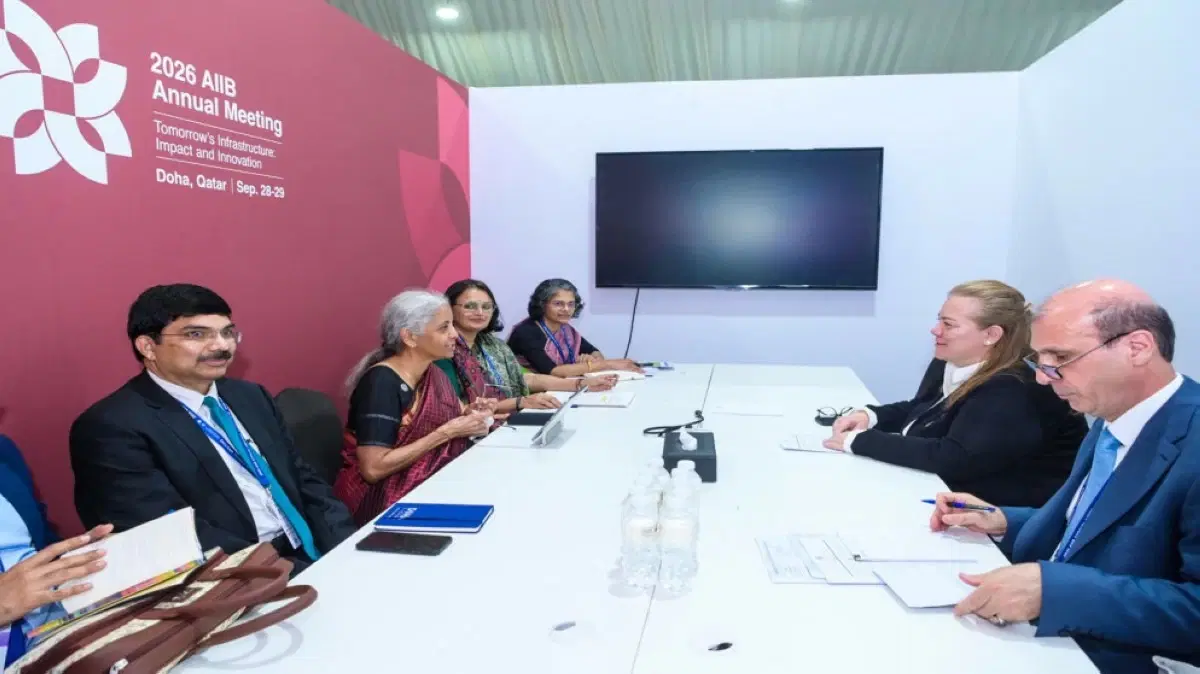
On the sidelines of the meetings, Toukan held talks with Indian Finance Minister Nirmala Sitharaman on enhancing economic cooperation between the two countries, particularly in food security, fertilizers, trade, and investment.
During the meeting, the Jordanian side expressed interest in continuing and strengthening cooperation with India in the sectors of fertilizers, energy, water, and infrastructure projects, in addition to attracting more investments to the Kingdom, while the Indian side indicated its aim to raise the volume of bilateral trade to $5 billion by 2030.
- National Water Carrier
Jordan's participation in the meetings comes about 6 months after the Asian Investment Bank for Infrastructure approved $250 million in financing for the Aqaba-Amman desalination and water transfer project.
According to Bank data, the financing was approved on March 25, 2026, and is directed to the National Carrier Project Company. The project includes the construction of a seawater desalination plant in Aqaba, an underground water transmission system with a length of 438 kilometers, and a solar power plant with a capacity of 281 megawatts, along with the infrastructure associated with the project.
The project aims to produce 300 million cubic meters of drinking water annually, with the goal of enhancing drinking water supplies in the Kingdom.
- $300 million proposed for Mafraq plant
In the latest development in the Bank's portfolio with the Kingdom, the Bank is considering financing of up to $300 million for the development of a new combined cycle power plant in Mafraq with a capacity of 700 megawatts.
According to the latest Bank data, the project is still classified as a "proposal", meaning that the $300 million has not been finally approved to date.
The project aims, according to the Bank, to meet the growth in electricity demand during peak times and enhance the stability and reliability of the electrical grid, allowing for the absorption of higher levels of renewable energy.
The project includes the development, construction, and operation of a new plant operating with combined cycle technology using gas, with a capacity of 700 megawatts in Mafraq Governorate, along with the associated infrastructure.
The project is being implemented by "Al-Khanasiri Energy Companies", with the support of Al-Ittihad Development Company, and is based on a 25-year power purchase agreement signed between the project company and the National Electric Power Company.
- $450 million for the Investment and Reforms Program
The financing relationship between Jordan and the Asian Investment Bank for Infrastructure began in 2021, when the Bank approved its first investment in the Kingdom, amounting to $250 million for the Comprehensive, Transparent, and Climate-Responsive Investment Program, in parallel with $500 million in financing from the World Bank, bringing the combined financing of the two institutions for the first phase to $750 million.
The program focuses on improving the fiscal space for public investments, including those related to climate goals, improving the business environment and the ability of institutions to attract private sector investments and climate financing, along with the development of data and evidence used in policymaking and implementation.
In 2023, the program received additional financing of $400 million from the World Bank and $200 million from the Asian Investment Bank for Infrastructure, raising the World Bank's contribution to the program's two phases to $900 million, compared to $450 million from the Asian Investment Bank, totaling $1.35 billion from the two institutions.
The additional financing phase extends until June 30, 2028, and also includes a government contribution of $242.8 million.
The total financing approved by the Bank for Jordan since the start of the financing relationship between the two sides amounts to $700 million, while the portfolio is expected to rise to $1 billion with the addition of the proposed Mafraq plant financing.
The annual meetings come at a time when the Bank launched a new facility for energy, food security, and economic resilience with a size of up to $10 billion for two years, to assist member countries and clients affected by the repercussions of the conflict in the Middle East, through tools including rapid budget support, financing for vital expenses and imports, and liquidity provision. As of the published information, the Bank has not yet announced any financing allocated for Jordan under this facility.