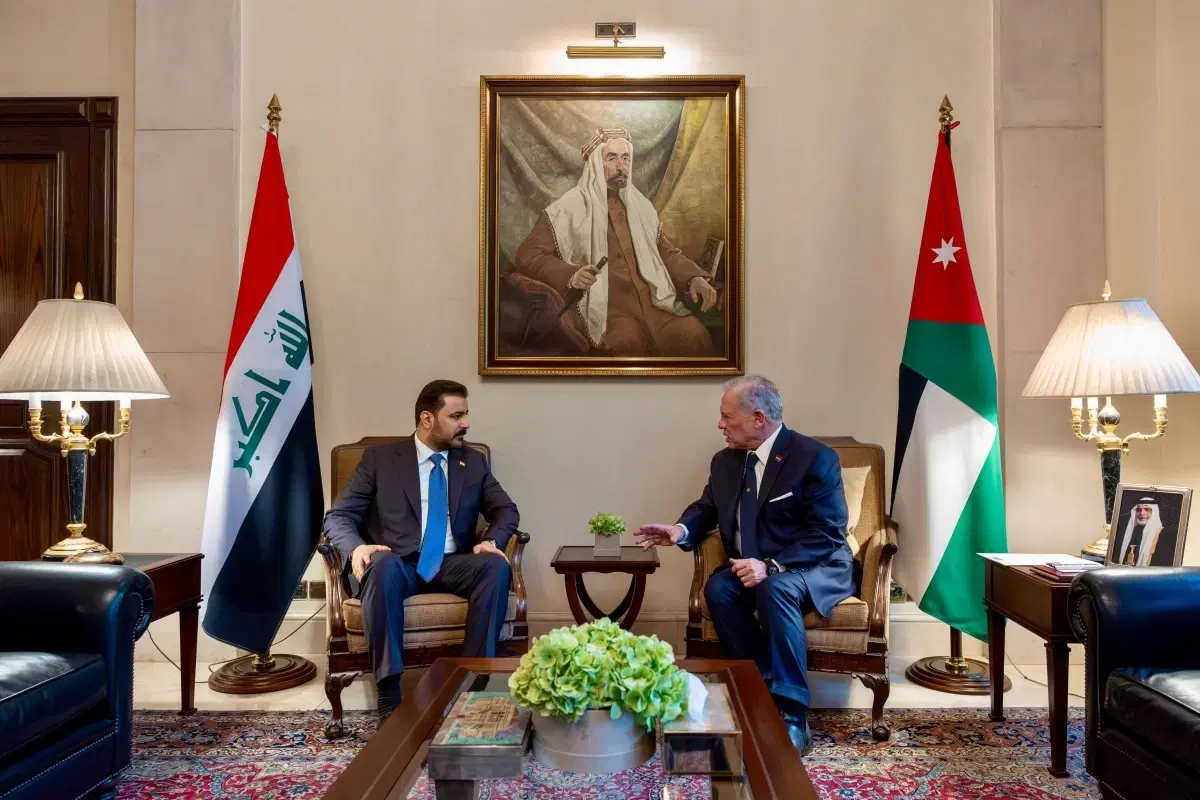
The King's speech at the United Nations brings the issue of Jerusalem back to its legal and humanitarian framework
Kanaan: The historical status quo protects the identity of Jerusalem and its holy sites
Follow Al Rai

The Hashemite custodianship is a guarantee to preserve the historical status quo
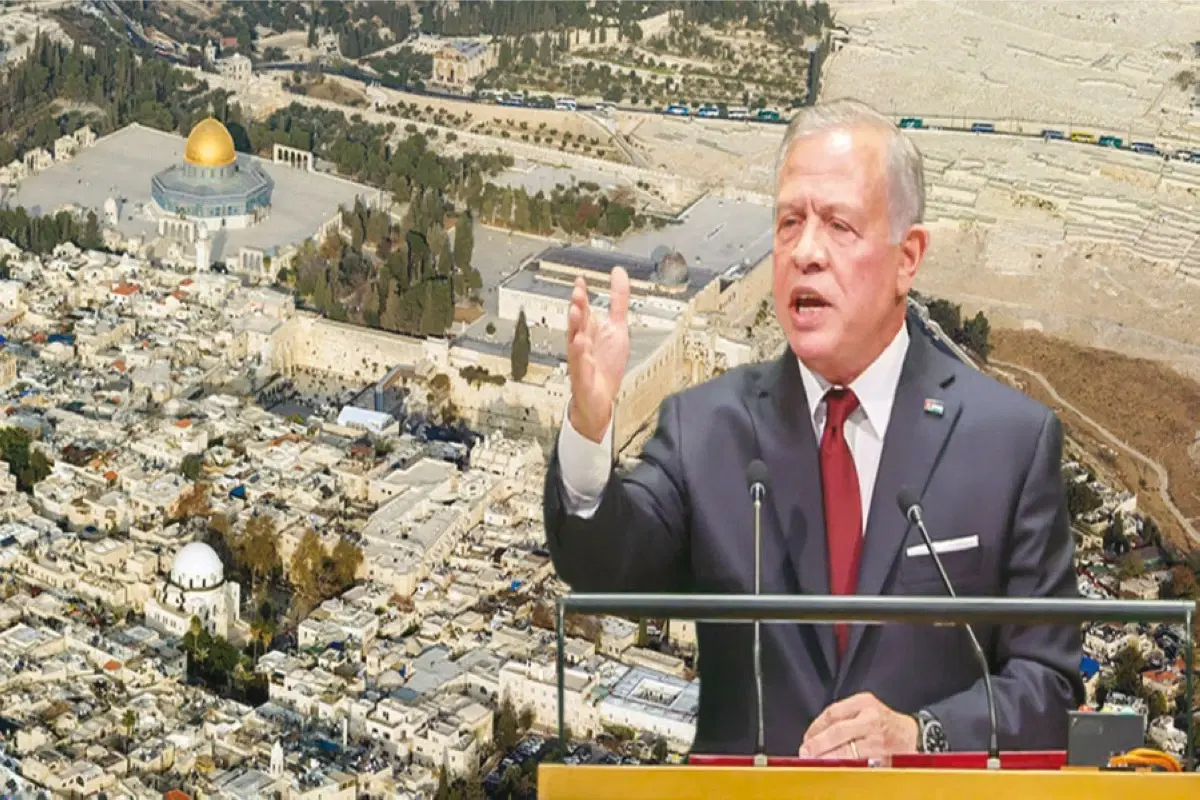
The King's speech at the United Nations brings the issue of Jerusalem back to its legal and humanitarian framework
Kanaan: The historical status quo protects the identity of Jerusalem and its holy sites
Nasraween: Israeli religious claims do not grant the right to sovereignty over the land
Father Badr: Jerusalem is a city for everyone, not a battlefield for religious conflict
In Jerusalem, the holy city of the three Abrahamic religions that holds a religious and historical memory spanning centuries, claims of portraying the conflict as a confrontation between followers of religions; reducing an entire city and ignoring the heritage of a people living on its land, constitutes an infringement on the legitimate rights of Muslims and Christians.
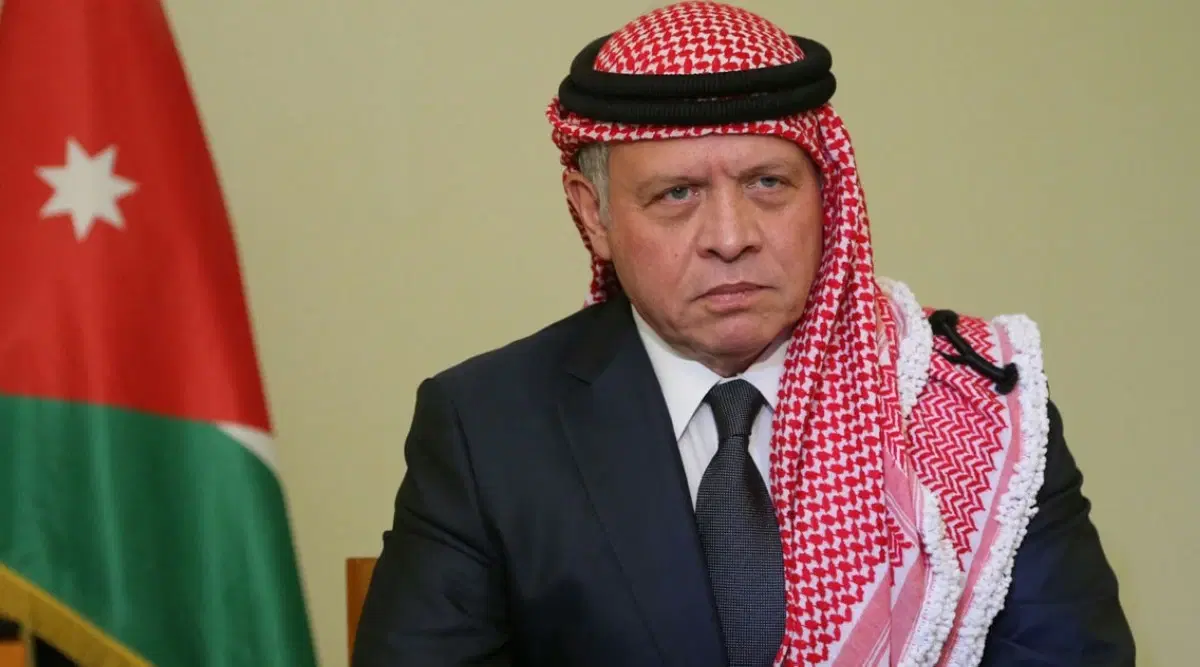
Therefore, His Majesty King Abdullah II, in his speech to the United Nations General Assembly, warned against attempts to portray what is happening as a 'war of religions,' with Islam on one side and Judaism and Christianity on the other, affirming: 'But it is not a conflict of religions. It is a conflict over whether Palestinians – Muslims and Christians – deserve the same rights as others.'
This vision inherently affirms that the protection of Jerusalem and its holy sites begins with protecting its diversity, respecting the rights of followers of different religions in it, and preserving their religious and historical presence and heritage.
In this context, His Majesty the King emphasizes: 'We protect Christianity – its communities and heritage – in its original and historical homeland, while defending the true image of Islam in the face of voices of hatred,' stressing that Jordan will continue 'to carry the Hashemite custodianship and preserve the historical and legal status quo in Islamic and Christian holy sites in Jerusalem.'
In Jerusalem, freedom of worship is inseparable from the right of access to holy sites, and the protection of these holy sites is inseparable from preserving their historical and legal status. Among these dimensions, the issue of Jerusalem stands as a matter of land, rights, identity, and history, where legal responsibility intersects with the religious and humanitarian dimension, and the protection of its diversity remains part of the protection of the city itself.
Dr. Laith Nasraween, Professor of Public Law at the University of Jordan, highlights the danger of 'politicizing the conflict' in redefining the issue itself. He says that turning the conflict into a 'war of religions,' especially in Jerusalem, 'redefines the nature of the conflict itself,' as the transition occurs from dealing with it as an issue of occupied land, sovereignty, and the rights of a people, to a battlefield of ideological confrontation between followers of religions, which broadens the scope of the conflict and makes its containment and settlement more difficult.
Nasraween points out in a statement to '$' that what the King warned against in his speech to the United Nations is specifically related to the attempt to present the conflict as a confrontation between Islam on one side and Judaism and Christianity on the other, while the Palestinians whose issue is about rights are Muslims and Christians.
He adds that 'politicizing the conflict' can obscure the legal understanding of the issue of Jerusalem, when religious narratives and beliefs become the basis for claiming sovereignty over it, so 'no matter how important the religious and historical connection to the city, it does not in itself constitute a legal basis for acquiring sovereignty.'
Here, a distinction emerges between the sanctity of Jerusalem and the politicization of the conflict over it, as the religious sanctity is a historical and spiritual fact that is not diminished by diversity, while turning the conflict into a religious struggle uses this sanctity to shift the issue from land, occupation, and rights to a confrontation between ideologies, according to Nasraween.
Jerusalem is not a battlefield for one religion
From this perspective, protecting the holy sites does not conflict with keeping the issue within its legal and political framework. On this, Nasraween says that Jerusalem is a city of exceptional religious significance to Muslims, Christians, and Jews, and recognizing this significance requires protecting the holy sites, ensuring freedom of worship and access to them, and preserving their religious and historical identity.
However, the problem begins, according to him, when this significance becomes a tool for redefining the conflict, so that religious belief becomes a justification for controlling the land or changing its status.
He emphasizes that religious claims, whatever their source, 'do not in themselves constitute a legal basis for acquiring sovereignty or annexing territories,' and that confronting this discourse is by keeping the issue within its correct legal framework, while protecting the religious significance of Jerusalem and its holy sites for all followers of religions.
Nasraween explains that international law looks at Jerusalem from two interrelated angles; the first is related to the legal status of East Jerusalem as part of the Palestinian territory occupied since 1967, a status that does not change with the length of the occupation or unilateral measures taken on the ground. Occupation does not transfer sovereignty to the occupying state, and it is not permissible to acquire territories by force or unilaterally change their legal status.
The second angle, according to Nasraween, is related to the holy sites, which enjoy special protection that requires respect for freedom of worship, the preservation of religious places, and the maintenance of their historical and religious character, identity, and function.
The historical status quo... more than protecting a stone
The issue does not stop at the legal status of the city, as the holy sites themselves are linked to a system of historical and religious arrangements that govern their management, access to them, and the practice of rituals in them.
Nasraween explains that preserving the 'existing historical status quo' in the holy sites does not only mean preventing physical attacks on buildings, but also includes preserving the historically established arrangements and practices related to the identity of religious places, their function, management, organization of access to them, and the practice of rituals in them.
Therefore, any fundamental change in these elements unilaterally can affect the existing historical status quo, even without direct physical attack on a holy site.
Nasraween places His Majesty the King's position on the Hashemite custodianship in this context, noting that Jordan's affirmation of protecting the historical and legal status quo in Islamic and Christian holy sites means protecting the identity and religious function of Jerusalem, not just protecting historical buildings.
A system beyond protecting the holy sites
The debate over 'politicizing the conflict' is not separate from another concept that is one of the key keys to understanding the reality of Jerusalem, which is the 'existing historical status quo' or'status quo,' which is not only about preserving buildings and holy sites, but also includes historical arrangements related to their management, access to them, and the practice of rituals in them.
Abdullah Kanaan, Secretary-General of the Royal Committee for Jerusalem Affairs, explains that the concept of the 'existing historical status quo' historically emerged as a framework for understanding related to the management of holy places and the regulation of their affairs, affirming that its preservation has been linked since the Ottoman era to ensuring freedom of worship according to the arrangements of the sects themselves among them.
Regarding the Al-Aqsa Mosque/Temple Mount with its total area of 144 dunams, Kanaan confirms in a statement to 'Al-Rai' that the existing historical status quo is based on 'its Islamic management and exclusive Islamic ownership,' and that this status quo continued during the Ottoman era and the Jordanian administration of the West Bank, including Jerusalem, up to after 1967, with the continuation of Jordanian endowments and the Jerusalem Endowment Council affiliated with them in Jerusalem in supervising the affairs of the mosque.
He believes that attempts to change this status quo are no longer limited to physical attacks, but also include, according to his description, measures that affect the nature of access to the mosque and freedom of worship in it, through restrictions on the entry of worshipers, determining the age groups allowed to enter, and even preventing prayer altogether in some cases.
Kanaan continues to review some of these practices: 'Allowing settlers and extremist Temple groups, which number more than 80 extremist organizations, to storm the Al-Aqsa Mosque and perform epic rituals and prayers in its courtyards,' in addition to issuing deportation orders, along with what he considers attempts to impose a temporal and spatial division of the Al-Aqsa Mosque.
He places these developments in a broader context of infringing on a single holy site, considering that changing the historical status quo in Jerusalem affects Islamic and Christian religious rights in their holy sites and endowments, and touches on their original Arab historical identity in the city, and that the Hashemite custodianship of Islamic and Christian holy sites constitutes, according to him, a fundamental element in protecting this status quo.
Kanaan bases his talk on a number of international references and decisions that he believes have affirmed the status of the holy sites and the need to preserve their existing status, in addition to Article Nine of the Jordanian-Israeli Peace Treaty of 1994, which stipulated Israel's respect for the special role of the Hashemite Kingdom of Jordan in the holy places in Jerusalem, and giving this role top priority in the final status negotiations.
From a matter of rights to an ideological confrontation
From here, Kanaan reads the King's speech to the United Nations General Assembly as an extension of a broader idea in Hashemite policy, which is to keep the Palestinian issue, and at its heart Jerusalem, within its legal and humanitarian framework, and to refuse to present it as a conflict between followers of religions.
He says that the royal speech presented to the international public what he describes as attempts to 'distort terms and falsify facts,' especially portraying what is happening as a war between Islam on one side, and Christianity and Judaism on the other, affirming that the essence of the issue is about the rights of Palestinians, Muslims and Christians, in freedom, dignity, and self-determination.
Kanaan believes that the danger of this proposal lies in the fact that it moves the issue from its historical, cultural, political, and legal framework to a broader alleged ideological confrontation, while the Hashemite message, according to him, confirms that the protection of Jerusalem and its holy sites cannot be achieved by turning it into a battleground for religions, but by respecting international law, protecting freedom of worship, and preserving the religious diversity of the city, which is Islamic, Christian, and historically Arab.
He points out that this position is also linked to preserving the Christian presence in Jerusalem, as it is an integral part of the city's history and identity, emphasizing that the defense of Christian and Islamic holy sites goes within one framework, which is the protection of freedom of worship and the rejection of plans to reduce them to a single false religious narrative as Israel tries to do.
Kanaan concludes that maintaining the 'status quo' does not mean fixing a rigid material reality, but protecting a historical and legal system that has preserved religious rights formed over centuries, and that any unilateral change in this system, specifically Israeli plans for Judaization, can affect the nature of the city and the relationship of Muslims and Christians with their holy sites and Islamic and Christian endowments.
Christians... The present that does not disappear
For his part, the director of the Catholic Center for Studies and Media, Father Refaat Badr, believes that the speech of His Majesty the King carried in this aspect a 'clear balance' as if we are in front of two Hashemite scales: defending Christianity in its historical homeland, and at the same time defending the true image of Islam.
Badr says in a statement to «$» that His Majesty the King realizes that Christianity, which originated in Bethlehem, Jerusalem, and all this land, cannot be without a voice, and therefore he has always been one of the defenders of the right of the Palestinian people, Christians and Muslims, to live in peace, freedom, and dignity on their land.
He continues that 'in contrast, and since the events of September 11 and attempts to link Islam with terrorism, Jordan has taken it upon itself to confront this image. I recall here the conference held on March 11, 2002, in the presence of His Majesty under the title 'Together in Defense of the Nation', where Arab Christians also stood alongside their Muslim brothers in rejecting the accusation of terrorism against Islam.'
Badr mentions that in some circles there is an attempt to present it as if it were a conflict between Muslims and Jews, marginalizing Palestinian Christians, which is a 'rejected and inaccurate description'.
He adds that the issue is essentially political, related to a people living under occupation and demanding freedom, dignity, and independence, and that relying on religious or biblical interpretations to justify a political reality on the ground cannot be a fair basis for a solution.
He stresses that Palestinian Christians are an integral part of their people, who have lived with Muslims on this land for centuries, sharing with them the suffering and national destiny, and that there are Christian martyrs who fell in defense of Palestine and the rights of its people; therefore, the issue must remain within its correct framework: the issue of a people, land, and rights, and its solution must be political and fair, not religious.
One city... three religions
In the Old City of Jerusalem, religious diversity does not need theoretical proof; it is present in the stones of the city, its holy sites, its roads, and its memory.
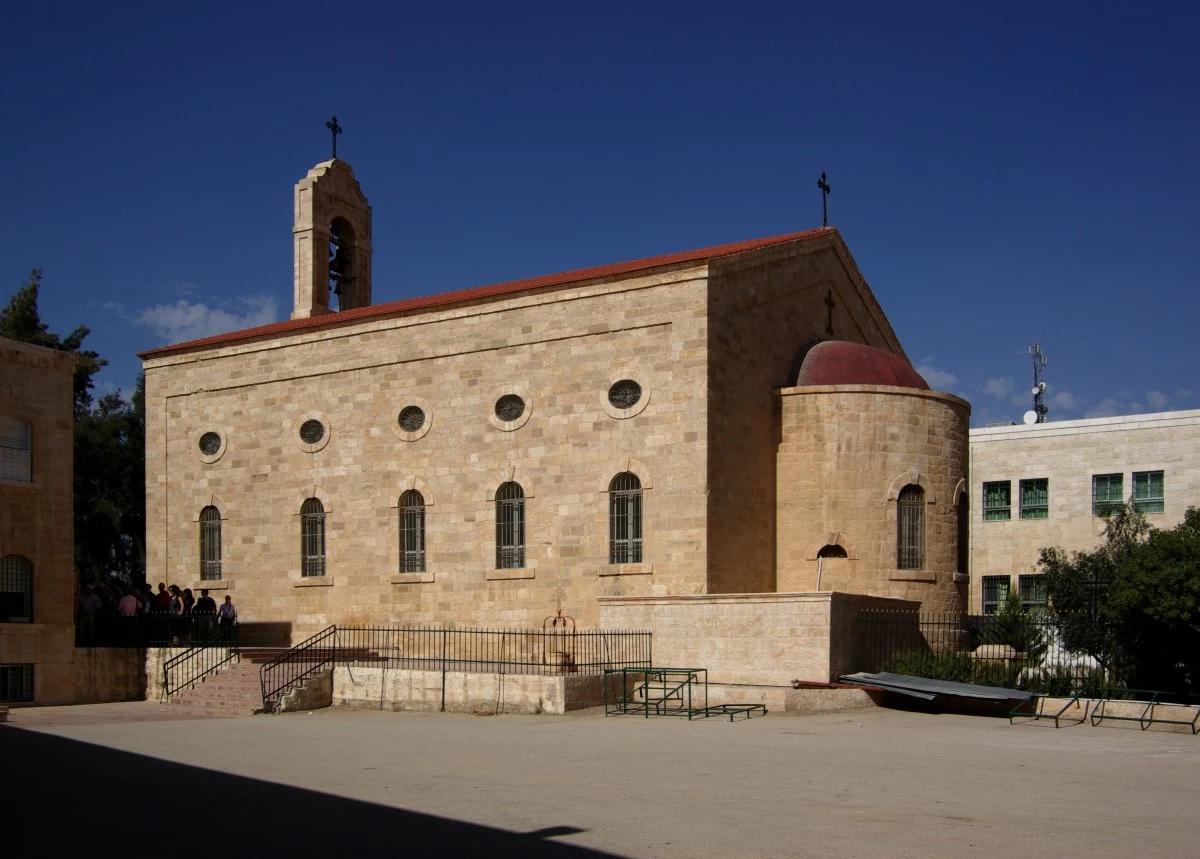
UNESCO describes the Old City of Jerusalem and its walls as a holy city for Islam, Christianity, and Judaism, and points to the existence of religious sites of great importance for the three religions, from the Al-Aqsa Mosque and the Dome of the Rock to the Western Wall and the Church of the Resurrection. The organization also emphasizes that the exceptional global value of the city is based, in part, on this overlap of different religious traditions and heritages.
For this reason, Father Badr says that Jerusalem is a 'city for everyone', and its uniqueness lies in its complex religious and historical identity, emphasizing that Muslims, Christians, and Jews have the right to access their places of worship and practice their rituals freely and safely.
In Jerusalem, religious diversity is not only measured by the presence of the holy sites of the three religions, but also by the ability of their followers to access them and practice their rituals in them. During Ramadan in 2025, the United Nations Office for the Coordination of Humanitarian Affairs (OCHA) documented restrictions imposed by the Israeli occupation authorities on the access of Palestinians with West Bank IDs to East Jerusalem to perform prayers at the Al-Aqsa Mosque, which included preventing thousands of worshipers from reaching the holy sites, and refusing the entry of hundreds of others into the mosque after they were subjected to identity checks and searches.
The Office estimated the number of Palestinians who crossed the checkpoints to reach East Jerusalem during the month at more than 44,000, including about 8,000 on the night of Qadr and 10,000 on the last Friday of Ramadan. This number is slightly higher than the number of people who passed through the checkpoints during Ramadan 2024, which was about 35,000, but it represents only 11% of the number of Palestinians who were able to reach East Jerusalem during Ramadan 2023, which was estimated at about 388,000.
The restrictions extended to Palestinian Christians during Easter celebrations in April 2025, as the United Nations Office for the Coordination of Humanitarian Affairs documented the establishment of mobile checkpoints in the Old City and around the Church of the Resurrection, and the imposition of restrictions on the entry of Christians with West Bank IDs.
In that year, the Israeli authorities issued about 6,000 permits for West Bank Christians to access Jerusalem during Easter, according to a UN report by Father Ibrahim Felts, deputy guardian of the Holy Land, from a Christian community in the West Bank estimated at about 50,000. Despite the permits, reports indicated that hundreds of Christians were prevented from entering the Old City during Holy Saturday, and others were detained at checkpoints.
In 2026, the restrictions took another turn, with the closure of the Al-Aqsa Mosque and the Church of the Resurrection to worshipers, starting from February 28, under the pretext of the state of emergency and security conditions linked to the Israeli war on Iran.
The Palestinian News and Information Agency (WAFA) reported on April 8 that the sites remained closed for the fortieth consecutive day, before the Al-Aqsa Mosque was reopened to worshipers the next day.
Badr believes that the decline in the number of Christians in Jerusalem carries a danger that goes beyond the demographic aspect, as Christians, according to the language of the Gospel, are the'salt of the earth', and Badr described the decline in their presence as 'dangerous' because it may entrench a narrative that reduces Jerusalem to a battleground between Muslims and Jews only, while the truth is that Christianity is an integral part of the city's identity, history, and present.
He points to multiple reasons for emigration and the decline in Christian presence, including the occupation, restrictions on movement, and economic and social pressures, emphasizing that the protection of Christians in Jerusalem and Palestine is not just a church issue, but part of protecting the identity of the place. Here, the Christian dimension meets the essence of the message carried by the King's speech: protecting Christianity in its historical homeland, in parallel with defending the true image of Islam in the face of hate speech.
Finally... between international law, the existing historical situation, and freedom of worship, the message of the royal speech intersects: Jerusalem is protected by preserving its diversity and holy sites and identity, and keeping its issue within the political, legal, and humanitarian framework, as it is a holy city with a complex identity, and its true message is to remain a city open to all, not a city of exclusion and monopolization.
Know more about this story?Send us a tip
Ask about this report — answers stay grounded in its text.