Abu Dalou: Invasions and restrictions on worshippers are a violation of international law
Awwad: Jordanian diplomacy seeks to prevent cementing Israeli measures
Follow Al Rai

The Hashemite Custodianship is part of protecting the status quo
Abu Dalou: Invasions and restrictions on worshippers are a violation of international law
Awwad: Jordanian diplomacy seeks to prevent cementing Israeli measures
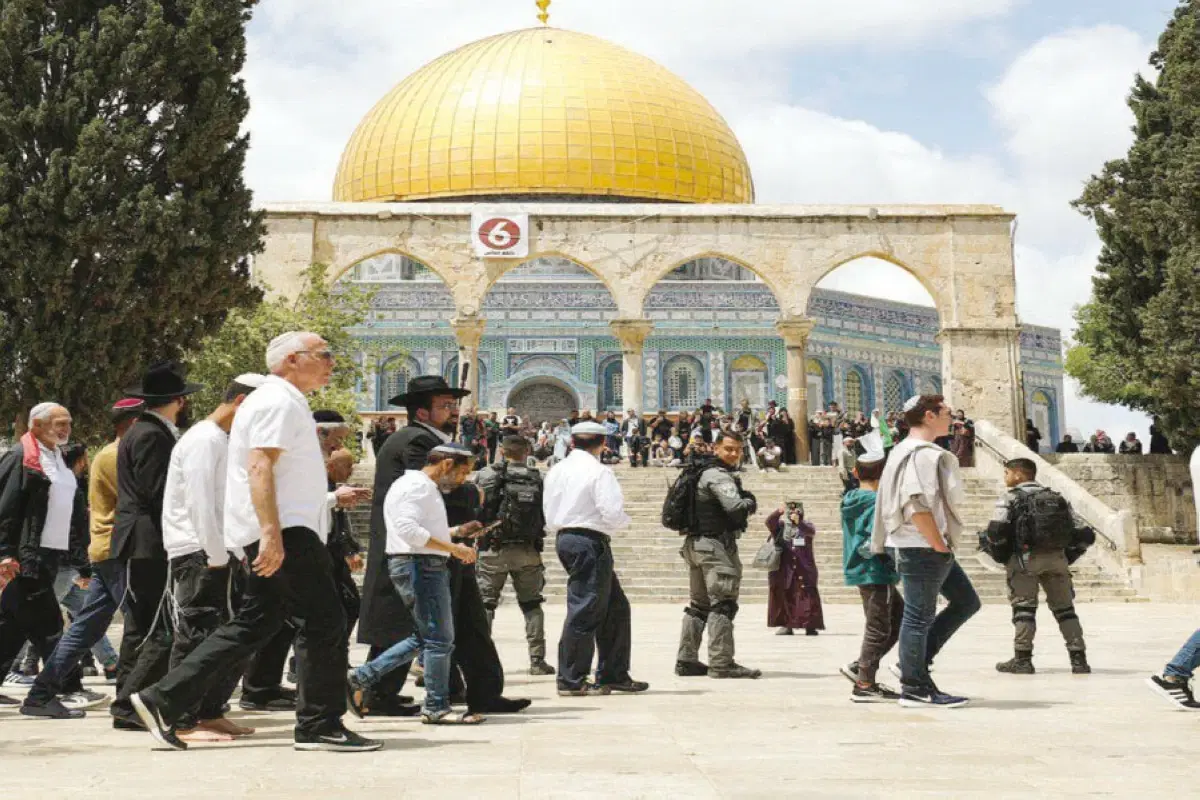
Frequent Israeli incursions into the blessed Al-Aqsa Mosque and the Noble Sanctuary have become part of a more complex political scene in the city, where the calculations of the Israeli government and extremist religious groups intertwine with the city's future, identity, and the historical and legal status quo at its sanctities.
Jordan deals with these developments considering Jerusalem and the Islamic and Christian sanctities as an issue with political, legal, and diplomatic dimensions, in addition to its direct connection to the Hashemite Custodianship, which Jordan continues to emphasize as a historical and legal responsibility, warning against the continued settler incursions into Al-Aqsa Mosque under the direct protection of the Israeli police, and attempts to impose new facts or divide the mosque temporally and spatially.
The gravity of these incursions can be read from the Jordanian and Palestinian political perspective as not occurring in isolation from other measures inside Jerusalem, as they are accompanied by restrictions on the movement and entry of worshippers, arbitrary measures, and harassment affecting Jerusalem Awqaf employees, in addition to provocative acts and movements by Israeli religious and nationalist groups seeking to expand their presence within the Noble Sanctuary.
Moreover, the year 2026 witnessed a remarkable and unprecedented escalation in this context, and here the fundamental question arises for Jordan, which is not only related to who enters the mosque and when, but whether these practices could gradually turn into a new reality that is later dealt with as an established fact.
This perhaps explains the focus of Jordanian rhetoric on the term "historical and legal status quo," as any change in the rules of access and management within the sanctuary could turn over time into a practical change in the nature of managing the place, given that the Jordanian position is based on a vision considering East Jerusalem as part of the occupied Palestinian territories, and that the future of the city must be linked to the two-state solution and the establishment of an independent Palestinian state with East Jerusalem as its capital.
According to observers, this distinction is politically important, as it makes the Hashemite Custodianship, according to the Jordanian vision, part of the system for protecting the status quo and not a substitute for the Palestinian right in the holy city.
According to political analyst, legal expert, and public law professor Dr. Moaz Abu Dalou, Jordan has focused its diplomatic rhetoric on international law and United Nations resolutions in rejecting unilateral Israeli measures, pointing out that incursions and the imposition of restrictions on worshippers constitute a blatant breach and violation of international law and international humanitarian law, and an attempt to impose new facts in Al-Aqsa Mosque.
Abu Dalou added that this track gives Jordanian diplomacy a wider space to maneuver in framing the issue within the framework of international rules, rather than within the framework of a religious conflict alone.
He pointed out that the Jordanian perspective regarding Jerusalem stems from preserving the status quo in the city as a major part of the regional security and stability system, noting the importance of the special role of the Hashemite Custodianship in protecting and patronizing Islamic and Christian sanctities in Al-Quds Al-Sharif.
Regarding the developments of the scene in Jerusalem, Abu Dalou said that the Jerusalem file will remain one of the most sensitive files in regional politics, especially with the continuation of political and security tensions in the Palestinian territories, indicating that Jordan, by virtue of its direct relationship with the Jerusalem file, has a clear interest in preventing the transformation of unilateral measures into permanent arrangements on the ground.
He pointed out that the essence of the political battle over Jerusalem today relates to preserving the historical and legal status quo in Al-Aqsa Mosque, and confronting the occupation's attempts to change the city's status quo.
Abu Dalou continued: From here, the adherence and firmness of the Jordanian position and the continuation of diplomatic movement on this file can be understood, as Jordan views Jerusalem as an issue linked to security, stability, Palestinian rights, international law, and the historical role of the Hashemite Custodianship.
He indicated that the Jordanian diplomatic presence is steadfast and resolute in protecting the sanctities, which are inseparable from protecting the historical and legal status of Jerusalem, preserving the city's identity and political future, and rejecting any unilateral measures that could undermine the prospects of peace and the two-state solution.
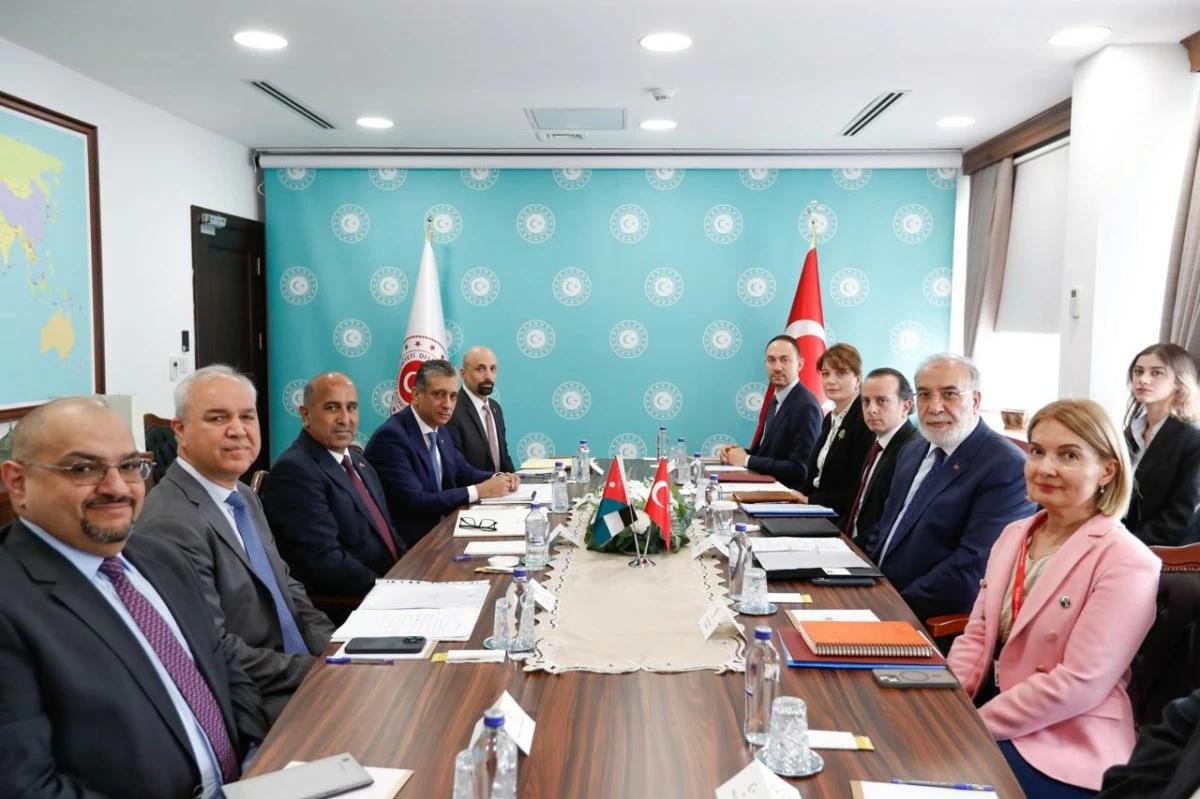
Political and legal researcher Dr. Mustafa Awwad said that Jordan has tended in recent months to expand the circle of Arab, Islamic, and international action regarding the Jerusalem file, pointing to Amman's recent hosting of a ministerial meeting on Jerusalem and the sanctities, with the participation of Arab and Islamic countries and the Secretary-General of the Arab League, aimed at coordinating a unified stance towards developments in Jerusalem.
Awwad added: Here emerges one of the most important tools of Jordanian diplomacy in transforming the issue of Jerusalem from a separate Jordanian-Israeli confrontation into an Arab, Islamic, and international issue linked to international law and the two-state solution. Furthermore, the central objective of Jordanian political action is also to prevent ongoing Israeli measures from turning into a permanent reality.
He pointed out that the occupation's policy of repeated incursions, imposing restrictions on worshippers, and allowing Jewish religious manifestations inside the courtyards of the mosque, noting that it could lead to a change in the status quo regarding the rules of engagement with the holy sanctuary.
Know more about this story?Send us a tip
Ask about this report — answers stay grounded in its text.