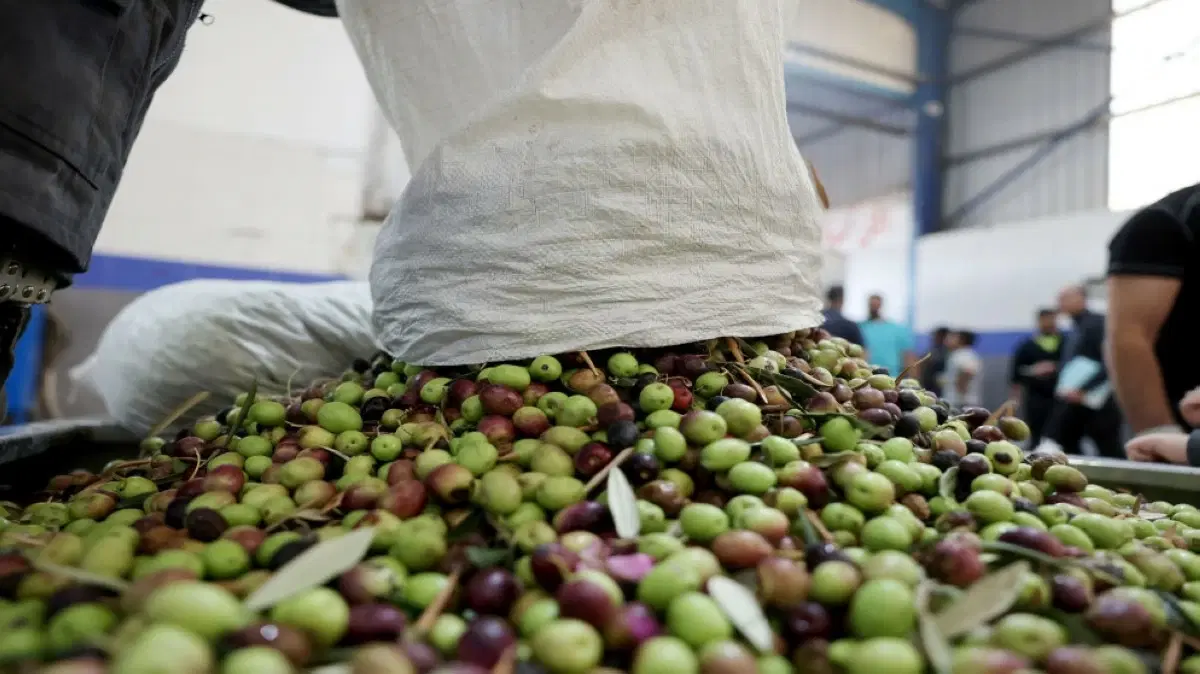
She explained that the directorate's staff will conduct regulatory tours of 15 licensed olive presses in the province to ensure their compliance with public health and safety conditions and approved instructions.
She pointed out the implementation of 150 advisory and awareness campaigns that benefited about 500 farmers, in addition to spraying campaigns that covered about 5,000 dunums planted with olive trees of various types.
She added that the directorate distributed 6,000 traps to combat insects over an area estimated at about 12,000 dunums planted with olive trees, in addition to 4,000 colored traps used to give indications about the presence of pests and insects, distributed over about 8,000 dunums.
Al-Mahasneh called on farmers to communicate with the Agricultural Extension Department at the directorate to inquire about any observations or problems related to olive trees, noting that the directorate conducts field tours to provide advice, guidance, and follow-up of crops.
In another context, she explained that the completion rate of the electronic numbering project for the livestock sector in the province reached 60%, pointing out that the directorate provides vaccines to livestock breeders for free, according to the vaccination schedule approved by the Ministry of Agriculture.