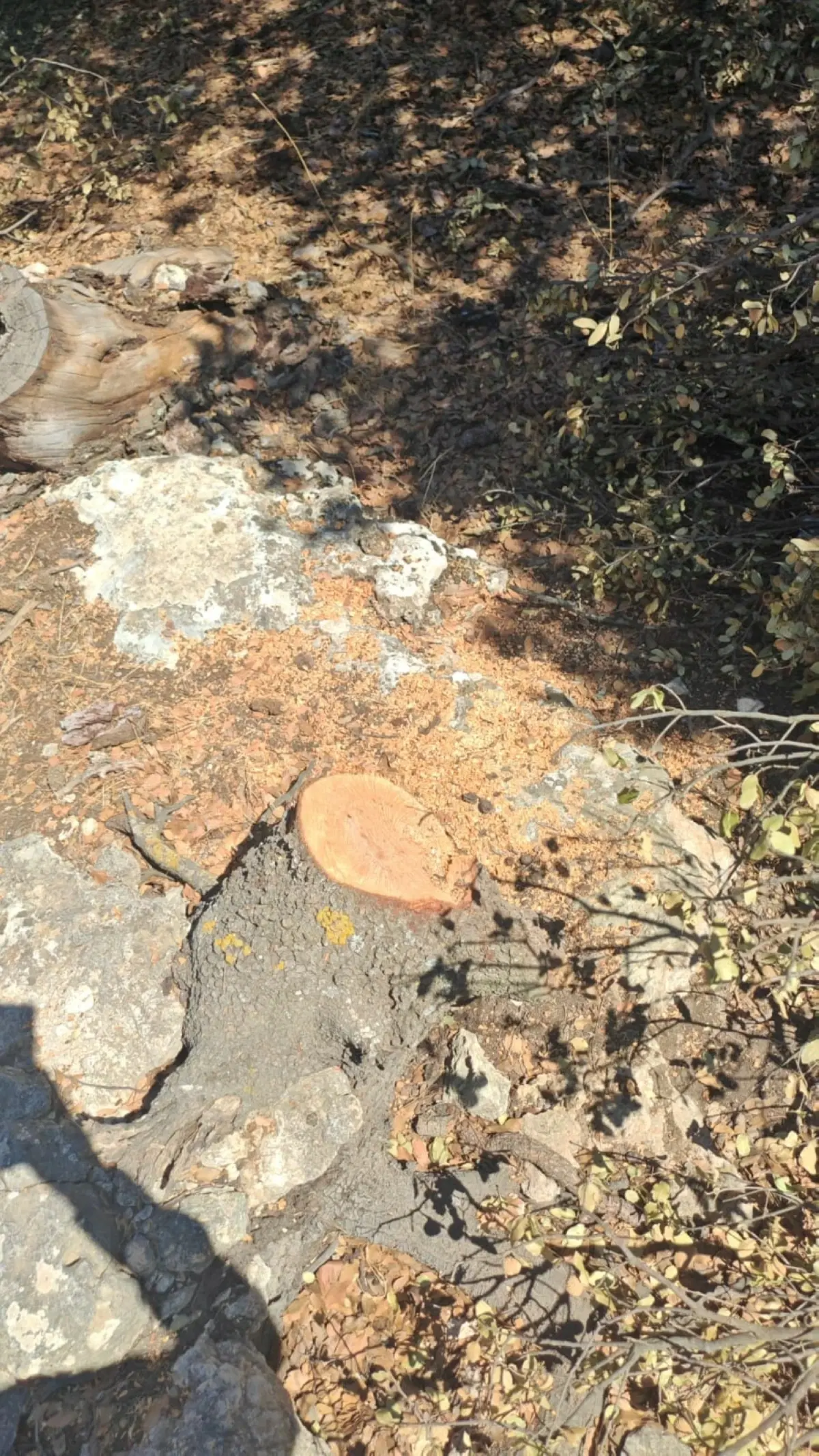
Hundreds of ancient trees disappear weekly in Sakib - Details
Amman3 min read
Share
Fears are resurfacing in the Sakib area of Jerash Governorate regarding the growing attacks on forest lands, amid circulating reports of the cutting and disappearance of large numbers of ancient trees, alongside demands for stricter oversight and a serious investigation into the scale of these attacks and those benefiting from them.
The issue holds special importance in a region considered one of the most prominent forest areas in the Kingdom. Ancient trees are not merely vegetation; they are a vital part of the forest wealth and ecological balance. Replacing large trees that are cut down takes many years, making their loss an impact that extends beyond the local area.
Alarming figures
According to data provided to "Alrai" newspaper by an informed local source, hundreds of ancient forest trees disappear almost every week. The danger of these attacks is not limited to the loss of the trees themselves; removing ancient trees paves the way for a decline in vegetation cover, affects biodiversity and the soil's ability to retain water, and disfigures the natural landscape that characterizes the region.
Eyewitnesses: Attacks occur repeatedly
An eyewitness, who preferred to remain anonymous, said that the tree-cutting operations are not isolated or transient incidents, noting that residents repeatedly observe signs of large forest trees being cut down in various parts of the forests.
He added that ancient and large trees are being heavily targeted, questioning how the cut trees are transported and how the perpetrators gain access to the forest areas in the Sakib forests.
These events raise the question of field oversight, especially since forest protection requires an integrated system that includes periodic patrols, monitoring of the areas most vulnerable to logging, rapid response to reports, and the pursuit of timber traffickers.
Another question arises regarding the fate of seized items and the legal measures taken against violators, as well as the extent to which the results of seizures and cases referred to the competent authorities are announced, which would enhance the local community's confidence in the seriousness of dealing with these attacks.
The phenomenon of tree cutting cannot be separated from the economic aspect; the timber resulting from ancient trees represents material value, making it essential to uncover the entire chain of the attack, rather than just pursuing those who perform the cutting.
Residents of the Sakib area demanded that any investigation include identifying the sources of the timber, its transport routes, and the parties receiving it, all the way to the final beneficiary, if organized activity is proven to be behind the cutting operations.
Demands to open the file on attacks
In light of the increasing questions, eyes are turning to the authorities concerned with the forestry sector to settle the circulating figures and clarify the volume of officially recorded attacks in the Sakib forests, as well as the number of seizures, cases, and measures taken over the past period.
There are also growing demands to intensify patrols and field tours, utilize modern surveillance methods in areas that are difficult to cover continuously, and tighten penalties to ensure they act as a deterrent.
The Sakib forests are not a resource that can be quickly replaced, and an ancient tree that disappears today may need decades to return to the same size and environmental value.