Human Rights Watch: 'Temporary' Halt to Public Repression in Venezuela
Amman2 min read
Share
Human Rights Watch considered on Friday that Venezuela's interim president, Delcy Rodriguez, oversaw a 'temporary' halt to public repression in the country after years of persecution of opponents.
Following Thursday's meeting of its representatives with Rodriguez, the organization revealed that Venezuelan activists, opponents, and journalists reported that they enjoy 'much greater freedom in doing their work,' but noted that consolidating these gains requires'strong institutional reforms and the release of all political prisoners.'
This meeting is a pivotal moment in the transitional phase Venezuela is experiencing after many years of strict socialist rule.
The New York-based rights group was expelled from Venezuela in 2008 during the rule of the late President Hugo Chavez.
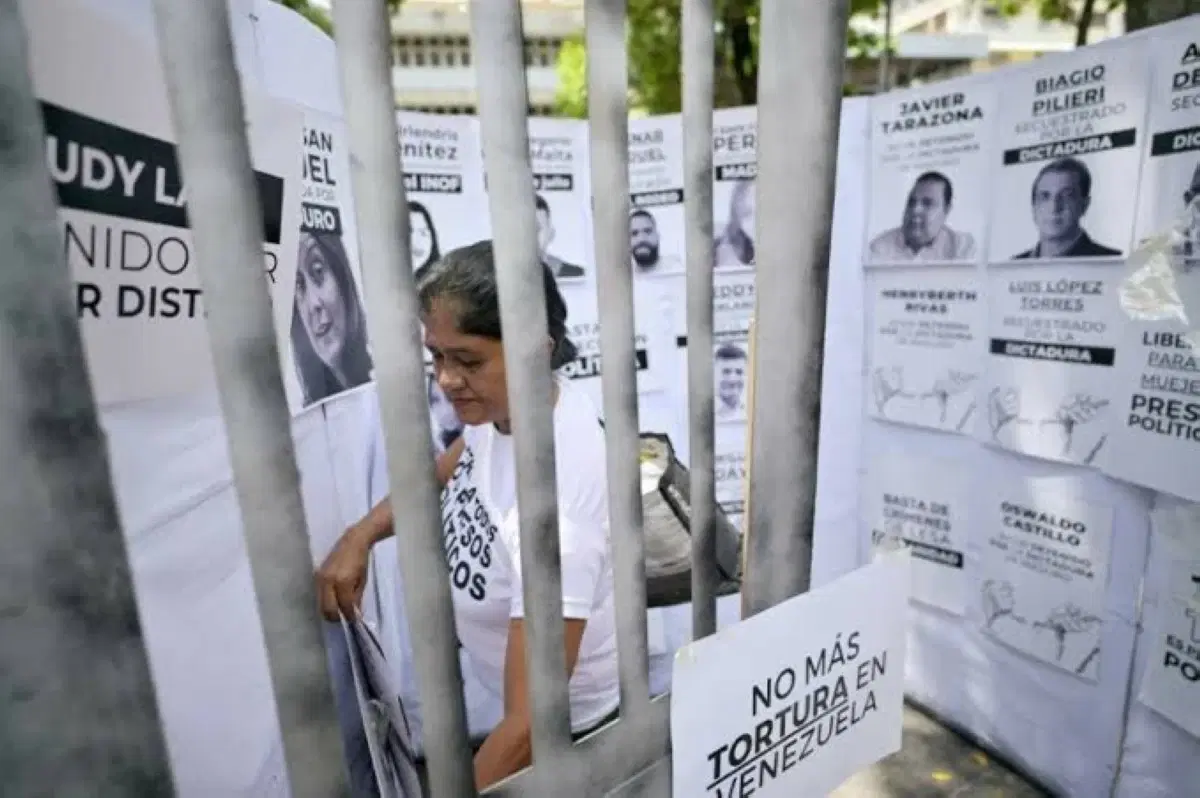
Since taking office, Rodriguez has released hundreds of political prisoners and announced plans to close the notorious El Helicoide prison, where, according to human rights organizations, inmates were tortured by intelligence agencies of the ousted President Nicolas Maduro.
Her government also announced on Thursday that it had unblocked a number of news websites that were previously inaccessible, a move that was widely welcomed by their administrations and journalists.
The National Telecommunications Commission (CONATEL) said on its website Thursday that 'access to a number of platforms and local and international digital media' had been restored.
The non-governmental organization 'V en Sin Filtro' concerned with digital rights verified the accessibility of 17 websites through several internet service providers. It counted 188 websites still blocked in the country, including 79 news websites.
The decision coincided with the start of a second round of talks between the government and the opposition on Thursday, nine months after the US military operation that ousted President Nicolas Maduro.
Negotiations stalled after intelligence agencies arrested former opposition mayor Javier Oropeza, who returned to Venezuela at the beginning of the week after spending two years abroad.
He was released in the evening after the intervention of the opposition delegation leader, Denora Figuera.