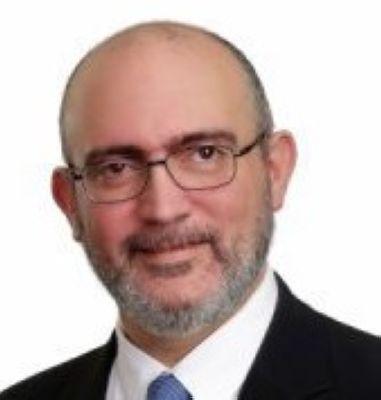
I write these words as a Jordanian before writing them as CEO of the "int@j" association, and with a heavy heart. Those who ascended in Hammoud are all our family, and I extend my deepest condolences to the families of the martyrs and the people of Karak, praying for a speedy recovery for the injured.
Those who opened fire on innocent people praying for their deceased mother did not target Christians alone; they targeted the very idea of Jordan: a country where church bells and the call to prayer have stood side by side for centuries, and whose families share both joys and sorrows.
The cowardly killers wanted to sow doubt among Jordanians, but the response was the opposite of what they intended. Muslims and Christians stood together in front of churches, and voices were united from the Palace to the Government and the street. His Majesty the King affirmed that the response will be decisive and that the security of Jordanians is a red line.
This cohesion is not just a slogan for occasions; it is an asset we have built across generations: the tribe that protects its neighbor, the school that brings students together, and the company where a single team works knowing nothing but competence and belonging.
Jordan has gone through severe tests, including what Karak itself witnessed in 2016, and each time it emerged stronger and more resilient. So too will it be today: Jordanian unity will not be broken.
However, grief and condemnation are not enough. Therefore, we must ask frankly: How can a person reach this level of hatred? A bullet does not begin at the trigger, but with a word, with a discourse that divides people into "us" and "them", and with an ideology that confiscates the other's right to differ.
Some extremist discourses do not carry weapons or call for violence, but they prepare the soil. When it is fertile for some, the final seed is enough. Therefore, I call for a serious review of the hotbeds of this ideology: embedding critical thinking, the values of citizenship, and pluralism in schools; monitoring inciting content and closed recruitment groups; building alternative content that speaks to youth in their language; and addressing unemployment and frustration, which extremists exploit even though they do not justify extremism.
This is not the battle of the valiant security agencies alone, but the battle of the family, school, university, mosque, church, media, and private sector together.
From my position in the digital sector, I know that our real capital is trust. The investor who chooses Jordan as a regional headquarters and entrusts their projects to Jordanian teams, and the startup building a product here for the world, are all betting first and foremost on Jordan's stability and the cohesion of its society.
Yet I am certain that the impact will remain limited and temporary. The immediate security and political response reassures partners of the strength of institutions, and the world saw Jordanians of all faiths standing shoulder to shoulder as a testimony to stability in its own right. Our homeland has previously overcome regional crises, a pandemic, and economic fluctuations, and has continued its growth and export of services and competencies.
The digital economy is part of the solution. Every job opportunity for a young person in Karak, Tafilah, Ma'an, or any other governorate in our beloved homeland, and every program connecting graduates to the labor market, is a bulwark against the despair upon which extremism feeds.
"int@j" is committed to continuing its work with our partners to bring digital opportunities to the governorates and to present Jordan's true image to the world: a safe, open, and capable country.
Jordan will remain a homeland that accommodates all its children, protecting the weak among them before the strong. The martyrs of Hammoud will remain a testament that hatred does not win and that our unity is stronger than their bullets.
May God have mercy on the martyrs and protect Jordan, its leadership and its people.