Freihat: Empowering local communities ensures a more equitable distribution of tourism revenues
Participated in the Euro-Mediterranean Summit of Economic and Social Councils
Amman4 min read
Share
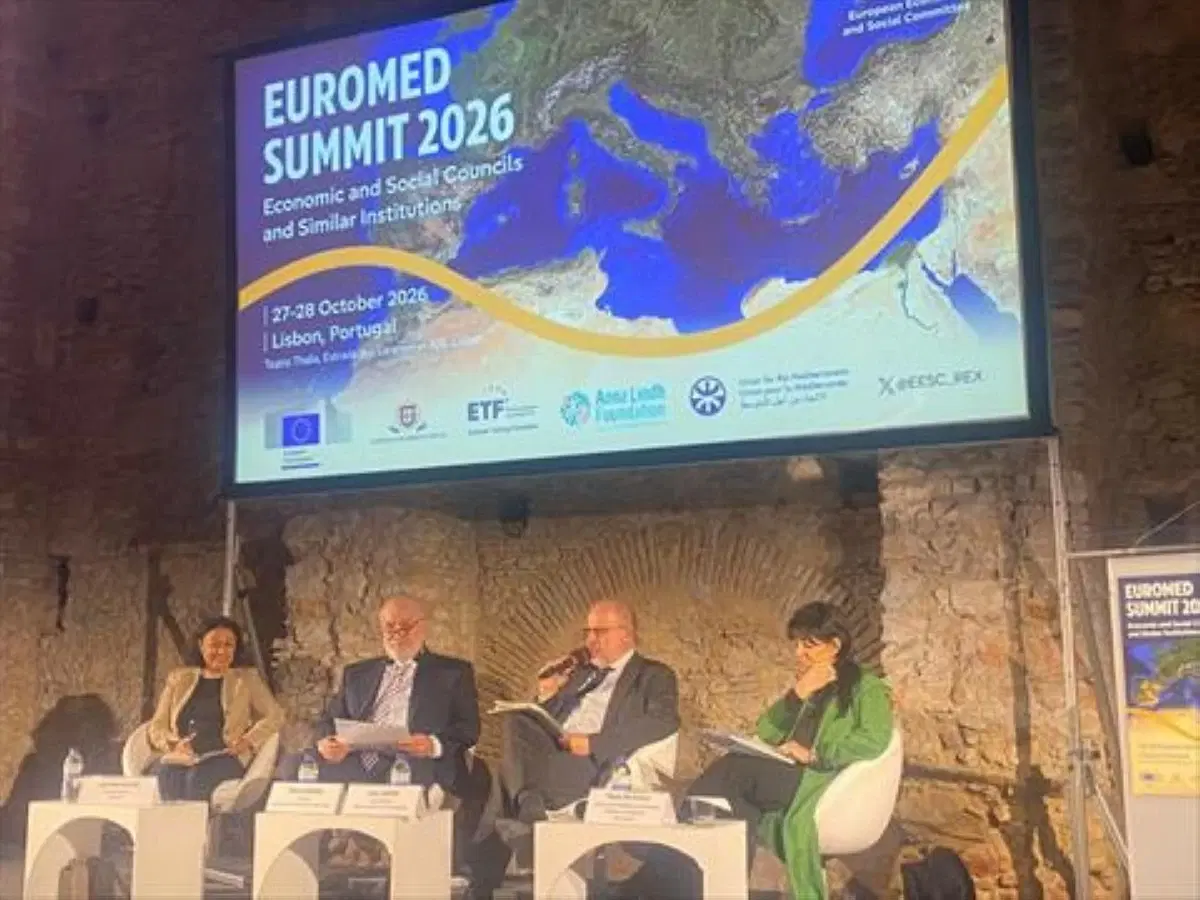
The President of the Economic and Social Council, Prof. Dr. Moussa Freihat, participated in the proceedings of the Euro-Mediterranean Summit of Economic and Social Councils and Similar Institutions, held in the Portuguese capital, Lisbon, on October 27 and 28, 2026.
Freihat spoke at the fifth session entitled "Cultural Heritage as a Driver for Sustainable Tourism and Quality Job Creation," discussing the reality of heritage and sustainable tourism in Jordan, highlighting the Kingdom's rich tourism potential, and the importance of leveraging it to support economic and social development, and ensuring that local communities benefit from the revenues of this sector.
Freihat presented Jordan's position as a tourism destination rich in historical, religious, and natural sites, including six sites inscribed on the UNESCO World Heritage List, among them Petra, Wadi Rum, the Baptism Site (Al-Maghtas), and the city of Salt.
He pointed to the growing economic importance of the tourism sector, explaining that tourism income reached about 5.7 billion dinars in 2025, an increase of nearly 10.1% compared to 2024, while its contribution is estimated at around 13.4% of real GDP, according to 2025 estimates.
Freihat stressed the necessity of achieving a more equitable distribution of the economic benefits of the tourism sector among governorates and local communities, and expanding opportunities available to women and youth. He noted that women occupy about 14% of direct tourism jobs, which underscores the importance of enhancing their participation in the tourism labor market and supporting initiatives and projects led by women and youth.
Freihat stressed in his speech that achieving heritage-based sustainable tourism requires working along three integrated tracks: the first is sustainability, through protecting archaeological and natural sites, managing visitor flows, reinvesting a portion of revenues in site maintenance and heritage preservation, alongside encouraging tourism in lesser-visited trails and sites.
The second track is enhancing the resilience of the tourism sector and its ability to face crises, by diversifying tourism markets and products, including religious, medical, adventure, and events tourism, and developing products that attract visitors year-round.
As for the third track, it focuses on achieving economic and social inclusion by supporting guesthouses, tour guides, traditional crafts, and community projects, and enhancing the reliance of tourism establishments on local products and services.
Regarding the priorities for developing the tourism sector, Freihat reviewed four main axes that align with the role of the Economic and Social Council in promoting dialogue on economic and social policies. These axes include developing skills and vocational training, enhancing language proficiency and digital skills; and empowering small and medium-sized enterprises and entrepreneurs by facilitating licensing procedures and improving access to financing and digital marketing.
He also emphasized the importance of enhancing local communities' benefit from tourism revenues and increasing purchases of local products, alongside consolidating social dialogue between the government, employers, workers, and civil society institutions when formulating policies and programs related to the tourism sector.
Regarding enhancing regional cooperation opportunities within the framework of the Pact for the Mediterranean, Freihat stressed the necessity of building joint networks to protect heritage, archaeological, and historical sites, exchanging expertise in tourism site management, developing training and skills exchange programs, and directing funding toward small projects and community initiatives. He called for the development of joint cultural and religious trails, and enhancing the exchange of expertise among economic and social councils in the region.
Freihat concluded his speech by emphasizing that Jordanian heritage represents a vital economic and cultural asset, stressing the need to balance the preservation of heritage sites with enhancing the competitiveness of the tourism sector. He also called for expanding the participation of local communities in economic activity to contribute to job creation, improving living standards, and achieving sustainable development in various regions of the Kingdom.
On the sidelines of the summit, Freihat met with Mr. Thomas Wagnesor, Rapporteur of the Economic and Social Committee, and they discussed the possibility of cooperation between the Council and the Union, and agreed to hold an expanded meeting in Amman early next year to achieve this goal.