The rise in tourism income is a positive indicator of the beginning of a gradual improvement in the sector's performance
Amman5 min read
Share
Experts in the tourism sector confirmed that the rise in tourism income in Jordan represents a positive indicator of the beginning of a gradual improvement in the sector's performance, and reflects its ability to continue activity despite the state of instability witnessed in the region.
They told the Jordan News Agency (Petra) that the current phase represents a positive step that can be built upon by continuing tourism promotion and diversifying markets, in a way that enhances growth sustainability and limits the sector's exposure to regional fluctuations.
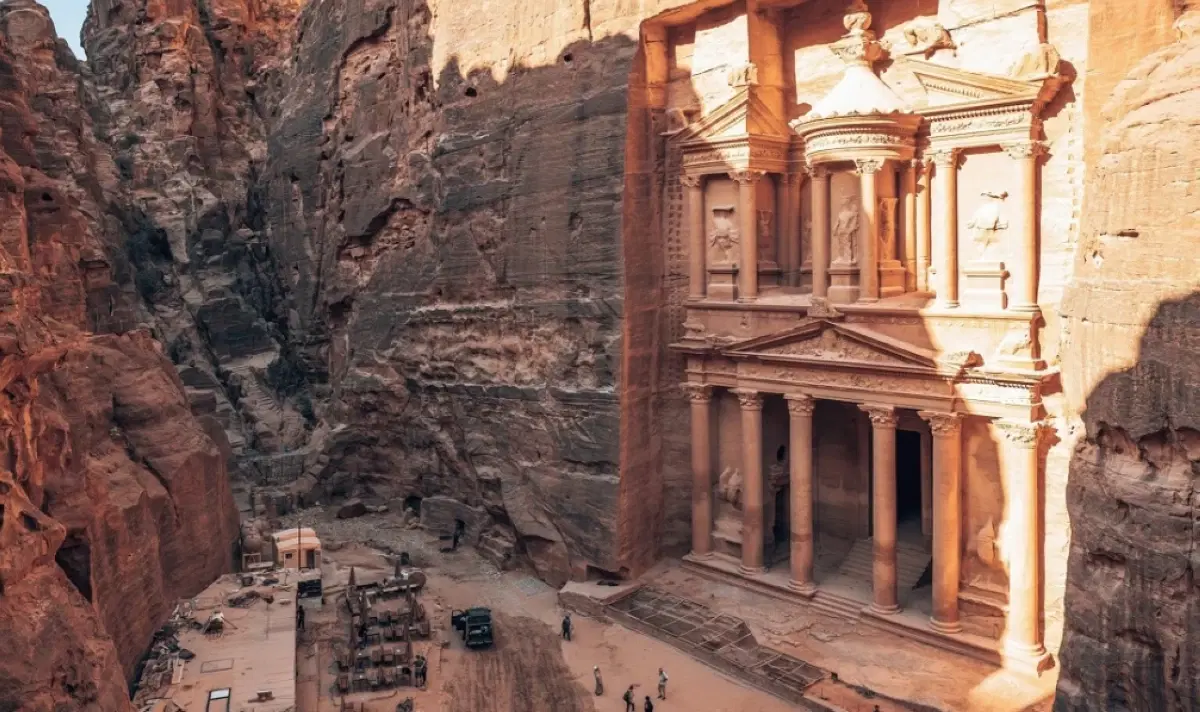
They pointed out that the continued growth of tourism income enhances the opportunities for improving the performance of tourism establishments and related activities, noting that prominent tourist sites, led by Petra, Jerash, and the Dead Sea, possess global assets that qualify them to regain their momentum and enhance their activity with the return of foreign tourism and the growing number of visitors, which reflects positively on the tourism sector and the local economy.
Tourism expert and investor Osama Abu Taleb said that the rise in tourism income in Jordan constitutes a positive indication of the sector's resilience and the beginning of a gradual recovery, pointing to the importance of building on this improvement to ensure it reflects on tourism establishments, investment, job opportunities, and local communities.
He explained that improving tourism indicators requires continuing promotional efforts and diversifying markets, with a focus on regaining momentum in European and American markets in parallel with maintaining Arab and Asian markets, in a way that supports inbound tourism movement and contributes to the gradual restoration of the activity of sites that rely heavily on foreign tourism, led by Petra and Wadi Rum.
Abu Taleb added that the coming phase requires focusing on maximizing the economic value of tourism by extending the visitor's length of stay, increasing their average spending, and linking tourist destinations within integrated programs that include various regions of the Kingdom, which expands the circle of beneficiaries of tourism revenues and enhances opportunities for small projects and local communities.
He emphasized the importance of developing performance measurement indicators for the sector to include, in addition to visitor numbers and tourism income, the length of stay, tourism spending, job opportunities, and investments, pointing out that true success lies in transforming tourism growth into sustainable economic value that reflects positively on establishments, workers, and local communities, and enhances the sector's contribution to the national economy.
For his part, Dr. Hakam Shatnawi, Professor of Tourism and Hospitality Management at Yarmouk University, said that the tourism income data in Jordan during 2026 reflects a gradual improvement in the sector's performance despite regional challenges, explaining that this shift reflects an improvement in subsequent months that compensated for part of the previous decline.
He explained that this improvement was supported by the rise in income from Arab visitors and Asian nationalities during the first nine months of the current year, emphasizing the importance of maintaining markets that are achieving growth and working to regain momentum in key foreign markets.
Dr. Shatnawi indicated that the return of foreign tourism will contribute to revitalizing tourism establishments and services related to visits, including hotels, restaurants, guides, and tourist transport, confirming that the growth in tourism income represents a positive development that can be built upon, and that the restoration of foreign demand will enhance the impact of this growth in destinations that rely on international tourism, led by Petra.
For his part, Bahjat Hamdan, a member of the Board of Directors of the Jordanian Businessmen Association and an investor in the tourism sector, emphasized the necessity of expanding tourism promotion to Arab and Asian markets, regaining momentum in European and American markets, developing domestic tourism, enhancing direct flights to Aqaba, and stimulating tourism in Petra and less-occupied areas, in addition to supporting medical, religious, environmental, adventure, and business tourism.
He pointed out the importance of accompanying these efforts with training and qualification programs for workers, improving service quality, facilitating procedures for investors, and providing a financing environment that helps establishments continue and expand, noting the positive outlook in the tourism sector following the rise in tourism income.
Data issued by the Central Bank indicated that tourism income continued its recovery, recording an increase of 21.5 percent during September 2026 compared to the same month of the previous year, reaching 794.3 million dollars. Tourism income during the first three quarters of 2026 also recorded an increase of 4.9 percent, reaching 6.3 billion dollars, while data showed an increase in tourism income from Arabs by 18.8 percent and from Asian nationalities by 12.3 percent.
Since the beginning of the year, the government has approved a package of decisions supporting the tourism sector, which included providing financial facilities to tourism establishments and bearing the interest on loans and facilities granted to them with the aim of enabling them to face challenges and maintain the sustainability of their businesses and job opportunities. It also approved a new package to support the tourism sector, which focused on supporting the Petra region and included measures targeting tourist guides and a number of tourism professions and activities.