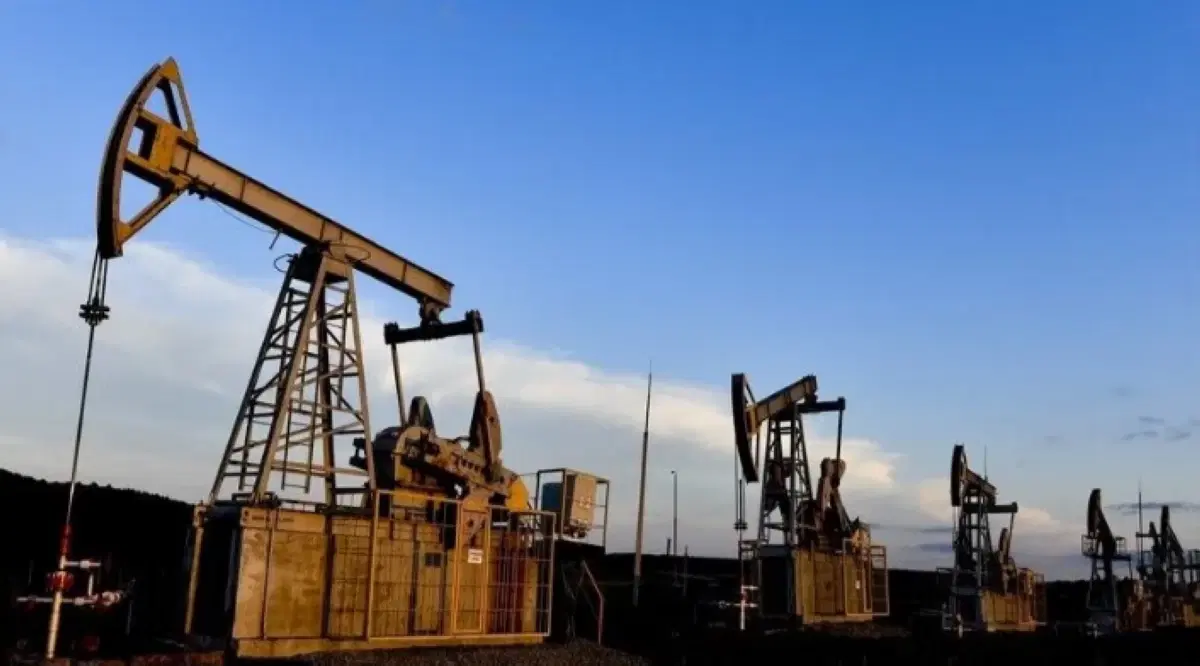
This comes in light of continued uncertainty regarding global supplies and weak prospects for de-escalation in the Middle East, which increases pressure on energy markets.
Surpassing the $110 threshold again on Monday marks the highest price level since late last May, when markets recorded high levels influenced by the conflict in the Middle East, before prices retreated to below $80 during June and July due to temporary truces, then gradually rose again due to geopolitical concerns related to supplies.
Prices witnessed fluctuations during Monday's trading after starting with a decline, coinciding with US oil companies scaling back their operations as a result of the hurricane that hit offshore production areas in the United States.
Hurricane "Isaias," active in the Gulf of Mexico since October 6, caused severe and direct repercussions on the US energy sector, as its advance toward the coasts led to the suspension and disruption of more than 70 percent of crude oil production, the evacuation of essential personnel from offshore platforms, and the halting of deep-water drilling operations as a precautionary measure to face massive flooding and damage to refinery networks, according to US media reports.
In the context of regional tensions, Iranian Revolutionary Guard spokesman Hossein Mohebbi said on Monday that Tehran does not rule out the possibility of a new war breaking out, warning that its response would be "much more severe" this time.
Mohebbi added, in statements to Iranian state television, that the United States could face "very major problems," warning that the world could witness a "dangerous energy crisis."
On February 28, 2026, a war broke out between the United States and Israel on one side and Iran on the other, resulting in thousands of deaths, and Tehran responded with attacks on Israel and US sites in countries in the region, before a ceasefire was reached in April.
Later, the United States launched attacks on sites in Iran, amid stalled negotiations between Washington and Tehran, despite their signing of a memorandum of understanding in mid-June 2026.
The stalling of negotiations comes amid disputes over navigation in the Strait of Hormuz, one of the most important strategic corridors for global energy supplies and trade.