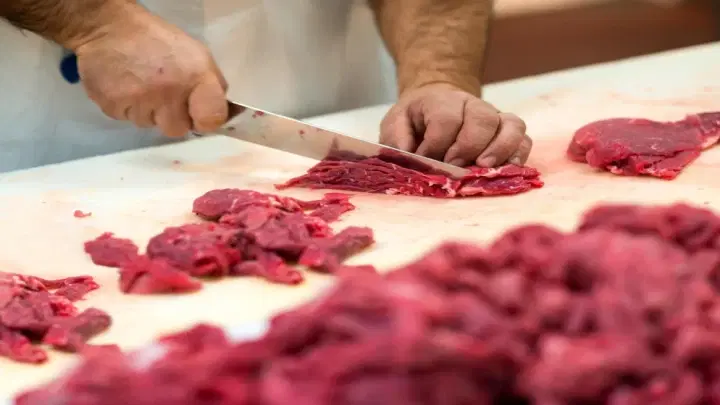
He explained that field inspection tours include food establishments that sell fresh and frozen meat, as well as restaurants, to verify the sources of the meat, storage, cooling, and freezing conditions, and the extent of compliance with temperatures and health requirements.
Al-Rousan indicated that some of the seized cases involved thawing meat in improper ways, including leaving it in hot environments and not keeping it at appropriate temperatures inside refrigerators, which may lead to discoloration and the emission of odors, necessitating its destruction and the taking of legal measures against the violators.
He stressed that frozen meat is not necessarily unfit for human consumption, as it can be safe if it meets health requirements and is stored and transported properly, pointing out that the violation lies in misleading the consumer regarding the nature of the product, selling it as fresh contrary to its reality, or handling it in unsafe ways.
Al-Rousan noted that the administration has received more than 5,000 complaints since the beginning of the year to date in various fields, confirming that complaints related to meat have been addressed and necessary measures have been taken regarding the violating cases, without specifying an exact number for them.
He called on citizens to purchase meat from licensed and reliable establishments, not to be swayed by illogical prices, to pay attention to the information displayed on products, and to report any suspicion of fraud or unsafe handling of meat, emphasizing that the citizen is an essential partner in the food safety oversight system.