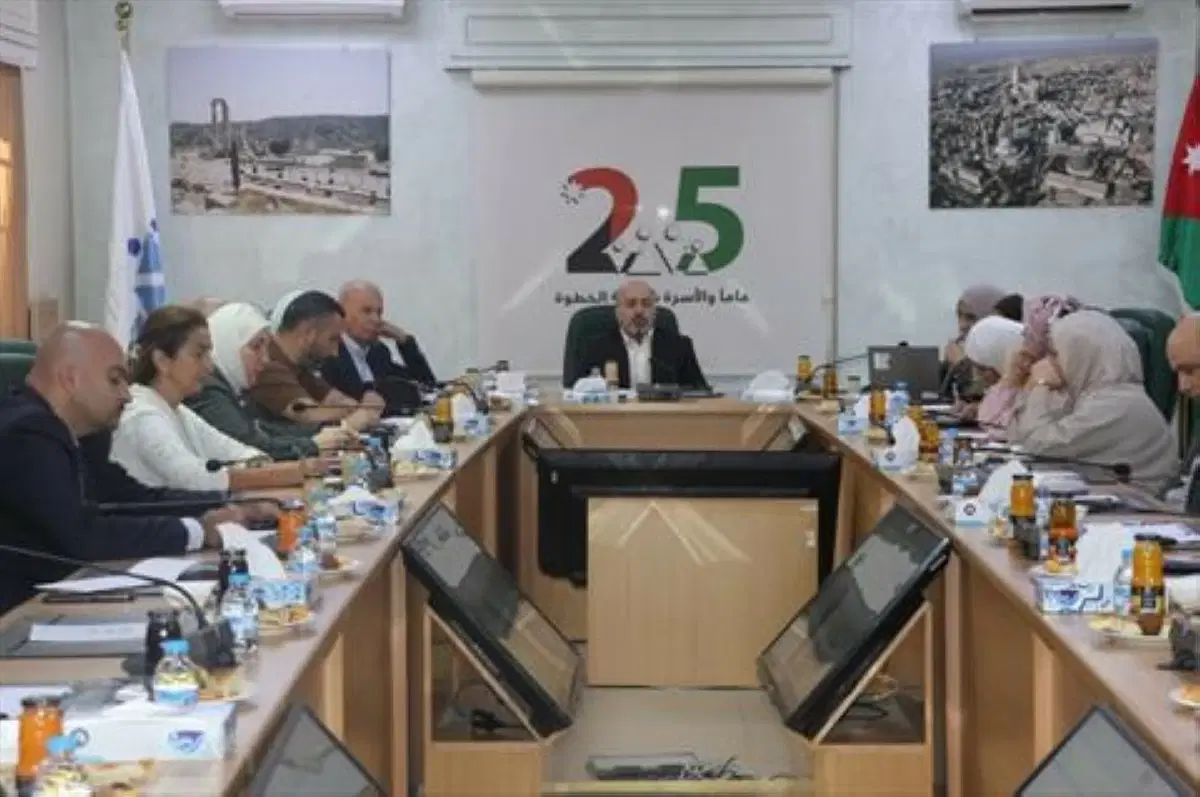
The Secretary-General of the National Council for Family Affairs, Dr. Muhammad Muqaddasi, said that the attention to the issues of the elderly is at the core of the Council's role in developing policies, strategies and national plans related to the family and its members, explaining that the Council has worked over the past years, in partnership with the National Committee for the Elderly and relevant national and international institutions, to support the issues of the elderly and enhance their presence within national policies.
Muqaddasi added that the preparation of this study represents an important step in the path of developing an integrated system for the protection of the rights of the elderly, by reviewing the reality of the current legislation and assessing the extent of its compatibility with the changing needs of this category and the relevant international standards and agreements, stressing that the results of the study will provide a knowledge and analytical basis that helps national entities to determine legislative priorities and take appropriate decisions regarding the development of the legal framework for the elderly.
He explained that the study will review and analyze the current Jordanian legislation related to the elderly, compare it with international standards and agreements and relevant Arab legislation, identify legislative and regulatory gaps and challenges, in addition to listening to the views of concerned parties and institutions through interviews and participatory meetings, leading to the presentation of practical legislative recommendations and proposals.
Muqaddasi pointed out that the importance of the study is not limited to reviewing legal texts, but rather lies in building a comprehensive knowledge base on the extent of the need to develop a more comprehensive and integrated national legislative framework for the rights of the elderly, which enhances protection from various forms of violence, abuse, exploitation and marginalization, and supports their right to health care, social protection, participation, living with dignity and independence.
For her part, Dr. Sarah Salman, the population officer at ESCWA, emphasized the importance of cooperation with the National Council for Family Affairs in supporting national efforts aimed at enhancing the rights of the elderly, noting that the preparation of the study represents an opportunity to provide a specialized analysis of the existing legal framework and to benefit from regional and international expertise and standards in this field.
She added that ESCWA is keen to continue cooperation with the Council and national partners in developing policies and legislation related to the elderly, in order to enhance the legal and institutional environment that supports their rights, and to respond to demographic changes and the increase in the number of elderly people, in line with international and regional trends towards ensuring a dignified, safe and productive old age.
The results of the study are expected to form a national reference for policymakers and legislative and executive bodies in identifying the strengths and gaps in the existing legal framework, and developing the necessary proposals to enhance the protection of the rights of the elderly, including examining the need for a comprehensive national legislative framework that addresses their issues in a holistic manner.
These efforts come within the framework of the work of the National Committee for the Elderly, which was established in 2012 with the aim of enhancing coordination between national institutions concerned with the issues of the elderly, and following up the implementation and development of the National Strategy for the Elderly and its executive plans, in order to contribute to improving the reality of the elderly in the health, social, economic, developmental and environmental fields, and to respond to demographic developments and to benefit from relevant international standards and practices.
The National Council for Family Affairs emphasizes on this occasion that enhancing the rights of the elderly is a participatory national responsibility that requires the integration of roles between government and national institutions, civil society organizations and international partners, in order to ensure the transition from responding to needs to building an integrated system based on rights, protection and empowerment, and to guarantee a dignified, safe and independent life for the elderly.