
New Aqaba Port records a 64% increase in cargo handling to 5.85 million tons
Container handling rises 7% to 786,950 TEUs
Follow Al Rai

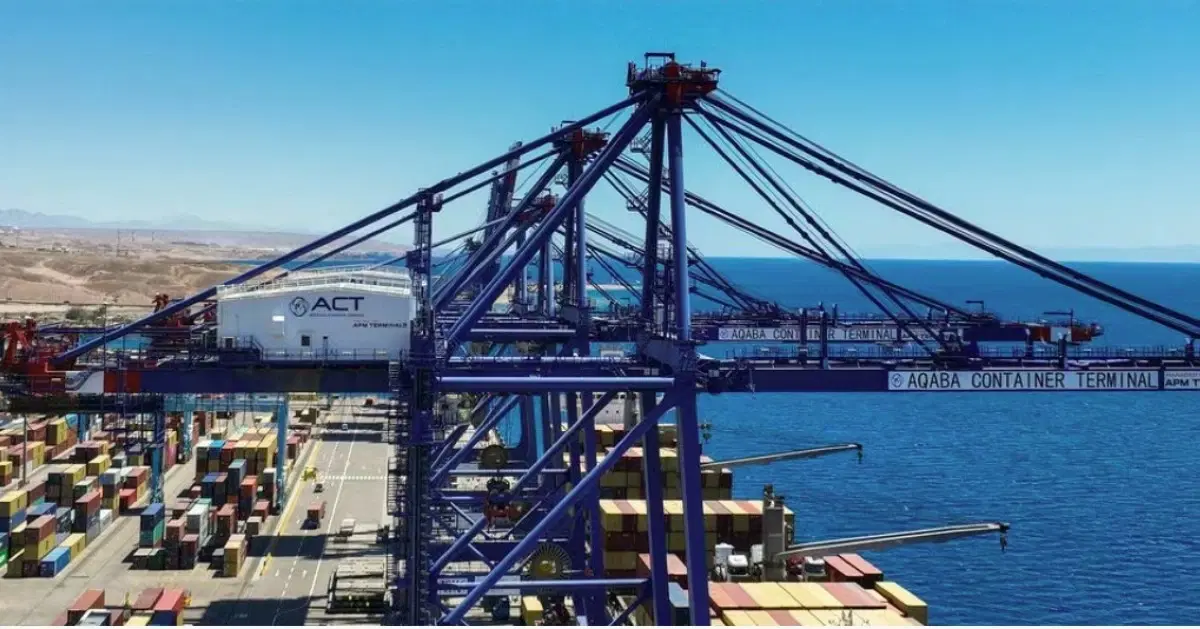
New Aqaba Port records a 64% increase in cargo handling to 5.85 million tons
Container handling rises 7% to 786,950 TEUs
Cargo handling via the oil terminal rises 39%, while phosphate declines 19.1%
Sea and air passengers increase 2% to 422,487 during 9 months
Data from the cargo, passenger, and vessel movement report issued by the Transport and Logistics Directorate at Aqaba Development Corporation showed an increase in total cargo handling in the Aqaba ports system by 12% during the first nine months of 2026, reaching about 19.68 million tons, compared to the same period in 2025.
According to the report, the number of containers handled rose by 6.58% to reach 786,950 TEUs, while the total movement of passengers by land and air increased by 2% to reach 422,487 passengers, compared to 413,718 passengers during the corresponding period last year.
Performance varied between port facilities and cargo types; the New Aqaba Port recorded a notable increase in handling, alongside increased cargo movement via the oil terminal, while handling of phosphate, liquefied natural gas (LNG), and air freight declined, and the number of cruise ship passengers decreased.
New Aqaba Port: 64% increase in handling
The New Aqaba Port recorded a 64% growth in total cargo handling during the first nine months of 2026, reaching 5,848,640 tons, compared to 3,574,052 tons during the same period in 2025.
The report attributed this increase to a 45% growth in grain handling, reaching 3,624,452 tons, compared to 2,498,051 tons during the corresponding period last year.
Coal handling also rose by 60% to reach 518,911 tons, compared to 324,125 tons, and bulk sugar handling recorded 810,402 tons, compared to no quantities recorded during the corresponding period of 2025.
Handling of general cargo increased by 20% to reach 894,875 tons, compared to 746,476 tons in the same period last year.
Conversely, the number of stone containers, according to the classification in the report, rose from 68,314 to 94,530, an increase of 38%, while the number of livestock decreased from 873,442 to 543,593, a decline of 38%.
Container handling rises to 786,950 TEUs
Total container handling at the Aqaba Container Terminal rose by 6.58% during the first nine months of 2026, reaching 786,950 TEUs, compared to 738,348 containers during the same period in 2025.
According to detailed data, imported containers rose by 12% to reach 415,382 containers, compared to 371,437 containers in the corresponding period.
In the details of imported containers, the number of imported containers excluding transit containers decreased by 14% to reach 299,620 containers, compared to 347,844 containers during the first nine months of 2025.
In contrast, containers imported for transit purposes rose by 391% to reach 115,762 containers, compared to 23,593 containers during the same period last year.
As for exported containers, including empty and full, they rose by 1% to reach 371,568 containers, compared to 366,911 containers.
Full exported containers recorded a decline of 7% to reach 77,329 containers, compared to 83,129 containers during the corresponding period.
Oil terminal rises 39% and LPG 11%
Cargo handling movement via the oil terminal rose by 39% during the first nine months of 2026, reaching 3,433,461 tons, compared to 2,465,170 tons during the same period in 2025.
Crude oil was at the forefront of handled materials in terms of quantity, as its handling rose by 14% to reach 1,223,957 tons, compared to 1,075,146 tons.
Diesel handling also rose by 7% to reach 799,561 tons, compared to 746,540 tons, and gasoline handling increased by 50% to reach 805,468 tons, compared to 535,791 tons during the corresponding period.
Gas handling recorded an increase of 176% to reach 54,151 tons, while potassium hydroxide handling rose by 77% to 21,363 tons, and phenol by 309% to 147,036 tons.
Data also showed an increase in chemical handling by 943% to reach about 46,511 tons, compared to about 4,458 tons, and an increase in mineral oil handling by 1047% to reach 32,715 tons, compared to 2,853 tons.
Vegetable oil handling also recorded 302,700 tons during the first nine months of 2026, compared to no quantities recorded during the same period last year, while magnesium chloride handling decreased from 32,750 tons to zero.
Regarding gas facilities, liquefied petroleum gas (LPG) handling rose by 11% to reach 413,181 tons, compared to 371,664 tons during the corresponding period.
In contrast, liquefied natural gas (LNG) handling decreased by 31% to reach 464,837 tons, compared to 670,931 tons during the first nine months of 2025.
Increase in dry and liquid bulk cargo
In terms of cargo classification by type, total dry bulk cargo handling rose by 8% during the first nine months of 2026, reaching 11,905,204 tons, compared to 11,043,692 tons during the same period in 2025.
Grain handling rose by 45% to reach 3,624,452 tons, while phosphate handling decreased by 19.1% to 4,062,887 tons.
Sulfur handling also decreased by 31% to reach 528,033 tons, and fertilizers decreased by 11% to 527,421 tons, while coal handling rose by 60% to reach 518,911 tons, and bulk sugar recorded 810,402 tons.
As for liquid bulk cargo, its handling rose by 16% to reach 5,428,110 tons, compared to 4,694,287 tons during the corresponding period last year.
This increase was driven by a rise in crude oil handling by 14%, diesel by 7%, gasoline by 50%, and LPG by 11%.
Gas handling also rose by 176%, potassium hydroxide by 77%, phenol by 309%, chemicals by 943%, and mineral oils by 1047%.
In contrast, ammonia and phosphoric acid handling decreased by 6% each, LNG handling decreased by 31%, while vegetable oils recorded 302,700 tons during the period.
Total general cargo handling rose by 25% to reach 2,033,142 tons, compared to 1,626,697 tons during the first nine months of 2025.
Number of vessels rises to 2,060
The total number of vessels arriving during the first nine months of 2026 rose by 7% to reach 2,060 vessels, compared to 1,932 vessels during the same period in 2025.
Data showed an increase in the number of liquid bulk vessels by 22% to reach 196 vessels, compared to 161 vessels, and an increase in the number of dredgers by 28% to reach 102 vessels, compared to 80 vessels.
The number of dry bulk vessels also rose by 1% to reach 278 vessels, compared to 275 vessels during the corresponding period.
In contrast, the number of container vessels decreased by 2% to reach 438 vessels, compared to 446 vessels, and the number of cruise ships decreased by 80% to reach 2 vessels, compared to 10 vessels during the same period last year.
The report also recorded the arrival of 95 vehicle carrier vessels during the first nine months of 2026, compared to no vessels recorded in this category during the corresponding period of 2025.
Know more about this story?Send us a tip
Ask about this report — answers stay grounded in its text.




