Al-Shobaki inspects the role of the Amman Municipality in cultural development
Amman4 min read
Share
Dr. Thamer Al-Shobaki, Deputy Director of the City for Community Development Affairs at the Greater Amman Municipality, announced that the Urban Observatory recorded a cultural status measurement index in the capital at a rate of 72.3% and pointed out that the Municipality seeks to raise the index to the eighties next year.
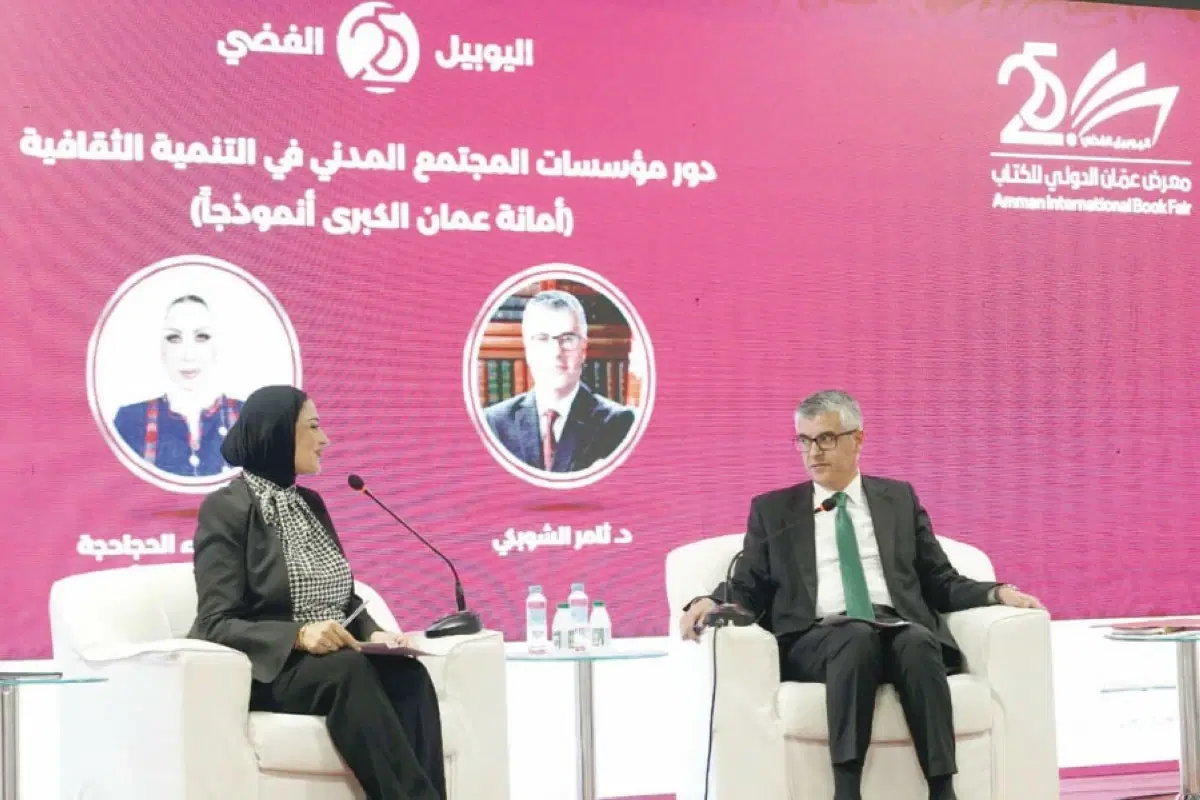
Al-Shobaki confirmed during a seminar entitled «The Role of Civil Society Institutions in Cultural Development – The Greater Amman Municipality as a Model» held as part of the activities of the Amman International Book Fair that the real criterion for the success of cultural work is represented in turning the recipient into a participant and maker of culture, not just in increasing the number of events and attendance.
He said that the Amman Municipality has moved in its strategic vision from focusing on providing traditional municipal services to taking on the role of a strategic planner for cultural and community development, stressing that cultural sustainability is measured by the extent of the cumulative impact of events and their ability to bring about positive change in the awareness and behavior of citizens.
He called for the establishment of a unified and organized cultural council that coordinates efforts between ministries, institutions, and concerned associations, which contributes to organizing cultural movement and protecting the younger generation from hate speech.
Al-Shobaki reviewed the most prominent cultural projects of the Amman Municipality, pointing to the expansion of cultural work from one circle to an integrated directorate that includes centers and libraries distributed in the areas of the capital, noting that the Greater Amman Municipality Library, which is approaching a hundred years old, includes 25 branches.
He also pointed to the increase in the number of participants in the «Read to Rise» competition from about 300 children to between 4000 and 6000 children, alongside the «Our Book is Our Civilization» project, which distributed about 72 thousand books for free in the governorates, in addition to managing the King Hussein Cultural Center, the Museums Center, and the House of Poetry «Habib Al-Zayidi House» and sponsoring a number of Jordanian heritage and folkloric music projects.
In the axis of creative economy, he explained that government and private institutions work to preserve the national identity and customs and traditions, considering economic revitalization a complementary goal to cultural work.
He pointed to the existence of more than 150 strategic partners for the Municipality, alongside a free publishing program through which the Municipality publishes books and manuscripts after evaluating them by specialized committees and depositing them in the National Library.
Al-Shobaki warned of the dangers of uncontrolled digital immersion and its potential impact on language and behaviors in children, calling for a balance between the shift towards digital libraries and the preservation of the book and paper reading.
In the field of protecting urban heritage, he confirmed the prohibition of making changes to heritage buildings expropriated by the Municipality, in order to preserve the visual and planning identity of the city, pointing to the implementation of the «Narrative of Place» initiative to collect sources and document the history of Amman neighborhoods and their old residents.
He explained that more than half of the cultural programs target children and youth through the directorate centers of Zaha and the projects «The Little Writer» and «Reading Marathon».
For her part, the seminar director, Dr. Duaa Al-Hajjaj, pointed to the importance of converting cultural heritage into a general community culture, in the face of the effects of social media and truncated digital content, and raised questions about the readiness of the Municipality in the fields of creative economy, cultural infrastructure, digital transformation, and documenting the narrative of place.
The seminar witnessed interventions from the attendees that addressed the cultural industry and tourism, library tourism, the role of culture in developing critical thinking and innovation among young people, alongside preserving the Arab and Islamic identity and the criteria for measuring the success of cultural initiatives.
At the conclusion of the seminar, the President of the Jordanian Publishers' Union and Director of the Amman International Book Fair, Dr. Thamer Al-Shobaki, was honored in recognition of his participation in enriching the cultural program of the fair.