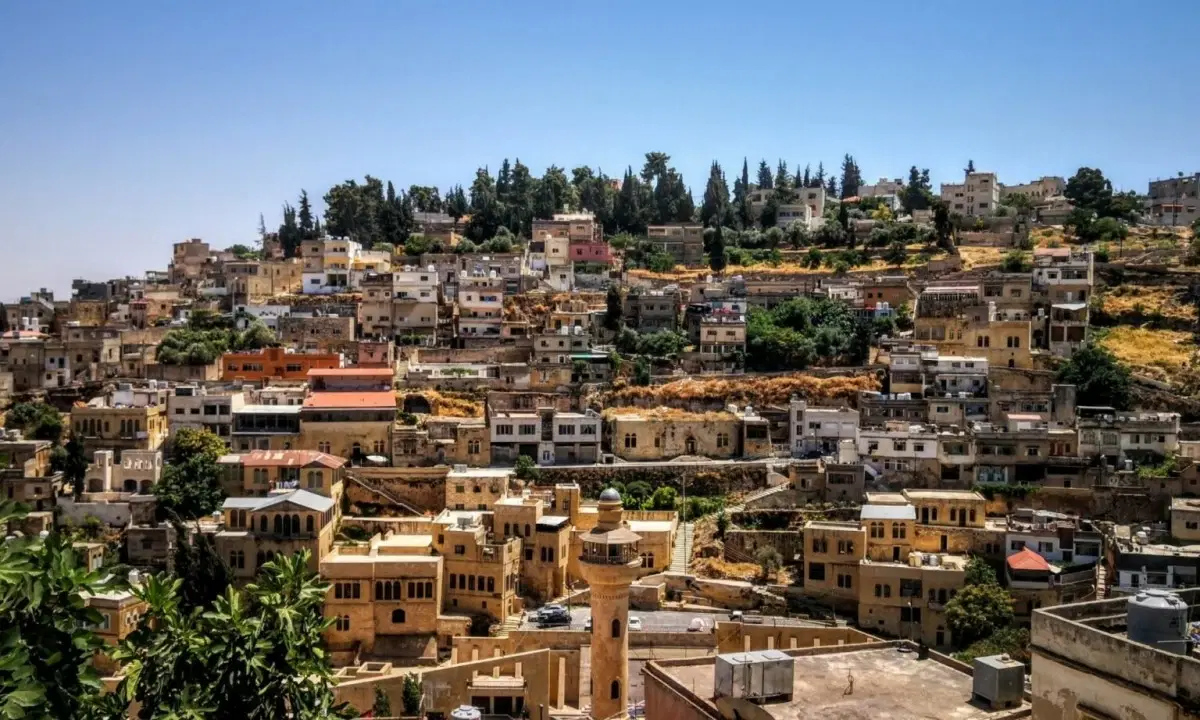
Al-Salt.. Heritage, investment, and financing as pathways to enhance local development
Investments of 46.31 million dinars provide 1203 job opportunities
Amman4 min read
Share
Balqa Governor Faisal Al-Masaeed stated that the governorate enjoys a competitive investment environment, particularly in the agriculture, tourism, and industrial sectors, benefiting from its geographical and climatic diversity which allows for the production of various agricultural crops, alongside opportunities available for developing industrial and tourism projects.
He added that the Balqa Industrial City is considered one of the most prominent development projects in the governorate, as its infrastructure works began in 2016, funded by the Jordan Industrial Estates Company and a contribution from the Saudi grant through the Saudi Fund for Development.
He explained that the first phase of the city, which covers an area of 196 dunums, includes 33 companies in various industrial fields, with investments reaching 46.31 million dinars, providing 1203 job opportunities, while the city is expected to attract, after the completion of the second phase, about 52 companies with a total expected investment volume of 83 million dinars.
Al-Masaeed pointed out that the most prominent development challenges, according to the strategic plan for Balqa Governorate for the years 2027-2030, lie in the limited attraction of investments to benefit from tourism and industrial assets, the insufficiency of development budgets compared to actual needs, as well as delays in the disbursement of allocations and the issuance of tenders, which slows down the implementation of projects and necessitates the strengthening of local and foreign investment.
For his part, the head of the Greater Salt Municipality Committee, Ali Al-Batayneh, emphasized that the municipality views heritage buildings as urban and economic assets capable of investment, rather than just buildings in need of restoration and maintenance, noting that repurposing them for tourism, cultural, and economic activities contributes to attracting investments, supporting small and medium enterprises, and providing job opportunities.
He explained that transforming these potentials into sustainable projects requires flexible financing programs that suit the specificity of heritage buildings, alongside technical support, professional training, and investment incentives.
He pointed out that high restoration costs, the need for specialized expertise, materials, and techniques, and the limited financial capacity of some owners pose challenges to investing in heritage buildings, which calls for providing concessional financing and grants when available, and developing partnerships with financial and development institutions and the private sector.
He added that the municipality is working to expand its network of partnerships and prepare proposed incentives and facilities to encourage owners and investors to restore and repurpose heritage buildings, in coordination with the relevant authorities and within legal frameworks, in preparation for announcing cooperation agreements and the details of these incentives after completing the necessary procedures.
Al-Batayneh pointed to the city of Salt winning the 2026 Global Mayors Challenge, organized by Bloomberg Philanthropies, for the project of establishing a training center for heritage building restoration, and receiving a prize of one million dollars, in addition to technical support for two years.
He indicated that the "Salt Heritage House" project, which opened last month, represents a model for combining heritage preservation with economic development, as it provides a destination for events, conferences, and cultural activities, and spaces capable of investment in the fields of hospitality, restaurants, cafes, and entrepreneurial projects.
He stressed the importance of simplifying procedures for accessing financing, enhancing coordination between relevant institutions, and measuring the impact of programs through the number of buildings restored and reused, job opportunities created, and supported projects and their sustainability.
In turn, the director of the Fawasel Foundation for Civil Society Development, Ragheb Shreim, said that the foundation, which was established in 2020 and is based in Salt, works to enhance citizen participation in development and decision-making, empower youth and women, and support community initiatives.
He explained that the foundation implemented a livelihood support project that targeted 12 home-based projects for women and youth, through an integrated path that included training and qualification, completing official licensing procedures, and providing the necessary equipment and tools according to the nature of each project and its needs.
He added that the foundation is currently working, within the "Youth Connectivity" program in partnership with the British Council, to support six youth initiatives linked to the local priorities of Balqa Governorate, allowing youth to identify the needs of their communities and develop and implement practical ideas in cooperation with the relevant authorities.
Shreim pointed out that one of the most prominent challenges facing civil society organizations is the disparity in response speed between entities, the multiplicity of references and procedures, and the length of some transactions, which may affect the implementation of projects within their timelines.
He emphasized that strengthening the partnership between the public and private sectors requires simplifying procedures and accelerating transactions, identifying clear points of contact at the relevant authorities, facilitating the use of appropriate public facilities for implementing activities, and making the necessary data available to direct programs toward the most needy areas and groups.