Al-Salt Business Center: Projects focusing on agriculture, tourism, and manufacturing sectors
A national network that transforms ideas into projects
Amman5 min read
Share
Creativity and entrepreneurship centers are no longer limited to providing a workspace or an equipped office; rather, they now form an integrated environment that helps idea owners and startup founders transition from the idea phase to implementation through training, consulting, networking, and providing the services needed by the project during its establishment and growth stages.
In this context, the Al-Salt Business Center continues its role in supporting small and micro-project owners, within a network of 13 business centers distributed across various governorates of the Kingdom, providing project owners with a broader space to benefit from available services and programs, regardless of the governorate they belong to.
This network allows project owners in any governorate to benefit from the services of any business center across the Kingdom, which enhances opportunities for communication, networking, and access to services and supporting entities, granting project owners greater flexibility in utilizing the entrepreneurial environment available in various regions.
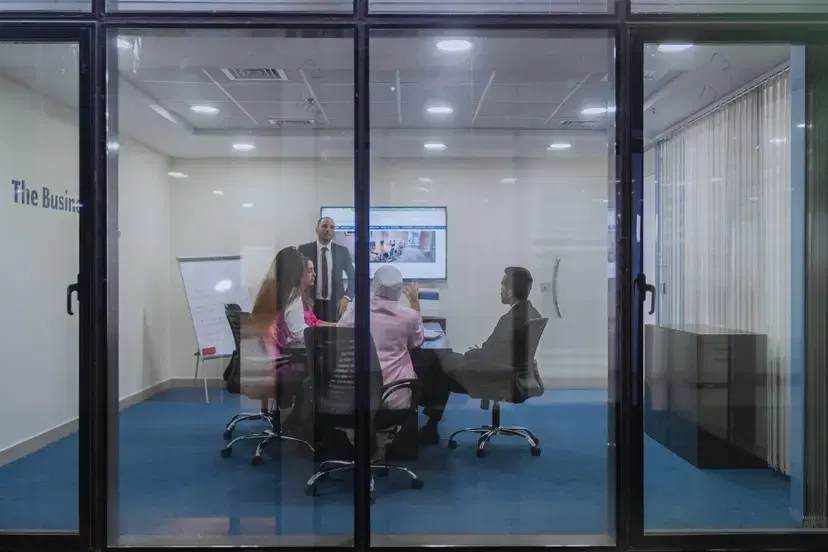
The Al-Salt Business Center offers an integrated business environment that includes administrative and consulting services, office spaces and equipment, meeting and event halls, printing and office services, alongside assistance in networking with relevant entities and institutions, helping project owners start and develop their businesses within a supportive environment.
The Director of the Al-Salt Business Center, Dr. Mohammad Imran Arabiyat, stated that the center comes within the efforts of the "Eqlaa" program to develop project productivity, which is implemented in partnership with a number of supporting institutions and entities, focusing on the agriculture, tourism, manufacturing, and services sectors, with an interest in employing technology and opening new pathways for project owners.
He explained that the role of the business center is not limited to providing the venue and equipment, but extends to providing consulting and administrative services, human resources and program management, organizing meetings and events, as well as networking project owners with entities and institutions concerned with support and funding, and guiding the project owner to the appropriate entities according to the nature of their project and the conditions of each entity.
He emphasized that the presence of a network comprising 13 centers in various governorates broadens the circle of benefit for project owners, as a project owner can benefit from any center according to their needs, allowing them to reach services, opportunities, and relationship networks that go beyond the scope of their governorate.
He pointed out that a startup project needs more than just funding in its early stages; it needs knowledge, guidance, equipment, relationships, and market access, elements that an integrated business environment and a network of business centers can contribute to providing.
The experience of Abdul Halim Hamdan, owner of the "Telescope Lab" project, stands out as a model for a project based on a specialized idea in the field of education and technology. The project works on training children and youth aged 5 to 17 in robotics, programming, and technology, teaching them how to design, program, and operate a robot, alongside developing their innovation and teamwork skills.
The project started from the north of the Kingdom, while Hamdan looks forward to expanding the scope of his work and reaching various governorates of the Kingdom by launching from schools, attracting students, and building partnerships that allow a larger number of children and youth to be introduced to this type of education and training.
“Telescope Lab” also works on developing a specialized team in the field of robotics, where the team participates in implementing projects and practical applications, turning theoretical knowledge into practical skills and experiences for students.
The journey of "Telescope Lab" was not without challenges, as Hamdan points out that one of the most prominent challenges was convincing some schools and the local community of the feasibility of the idea, especially since robotics education is still a relatively new field for some entities.
He notes that the idea itself garners interest, but the challenge arises when it comes to turning this interest into an actual decision to contract for the training programs, explaining that some entities need to see practical results before making their decision.
He adds that experience has proven that practical results are the best way to introduce others to the project; when a school goes through the experience and touches the impact of the program on the students, the experience itself becomes a means of introducing the project to other schools, which has contributed to opening new cooperation opportunities through customer recommendations.
The importance of the network of business centers spread across the governorates stands out in giving project owners the opportunity to benefit from a system that is not tied to a single geographical location, as a project owner can benefit from the services of any center according to their needs, communicate with different project owners and entities, and benefit from opportunities available in other governorates.
This model reinforces the concept of networking among project owners, so that relationships and opportunities are not restricted within the scope of the governorate, but extend to a broader network that can contribute to reaching new markets, potential partners, services, and supporting entities.