Al-Nashama and Saudi Arabia.. A preparatory stop before the Asian destination
Concluding its preparations for the continental finals
Amman12 min read
Share
The national football team continues its preparations for participating in the 2027 AFC Asian Cup, which will be hosted by Saudi Arabia early next year, through a gradual preparation program that progresses from one stage to another, with the aim of reaching the highest levels of technical and physical readiness, in light of high aspirations to continue the remarkable Jordanian presence on the continental stage, and to build on the historic achievement of qualifying for the World Cup for the first time.
In this context, the Football Association announced that a closed training match will be held between the national team and its Saudi counterpart on the second of next January, as part of the preparations for the Asian participation. This match gains additional importance given the nature of the opponent and the circumstances in which it will be held, as it is a stop within the final phase of the preparation program before entering the atmosphere of the tournament, which will be hosted by Saudi stadiums from January 7 to February 5, 2027.
The Saudi match comes as an extension of a preparation program developed by the Association and the technical staff, led by the Moroccan coach Badou Ezzaki, based on utilizing international breaks and playing friendly matches against different footballing schools, in addition to holding a final gathering before the start of the tournament, which allows the technical staff the opportunity to evaluate the available options, solidify the features of the lineup, and address the observations that appeared during the first gathering under the new coach.
From the World Cup to the building phase
Al-Nashama ended their historic participation in the 2026 World Cup, amidst an unprecedented experience in the history of Jordanian football, which brought with it many technical and moral gains, and placed the team before a new level of challenges, whether in terms of friction with global schools or dealing with the requirements of competition in major tournaments.
Despite the difficulty of the results that accompanied the World Cup participation, being in this forum constituted an important station in the team's journey, after moving from the stage of seeking to reach the finals to testing its capabilities against teams that possess extensive experience and great technical and physical capabilities.
With the end of the participation, the focus began to shift towards the Asian entitlement, as it is the first important competitive challenge after the World Cup, and an opportunity to maintain the momentum created by the historic qualification, and to transform the global experience into a practical addition at the level of performance, experience, and confidence.
The following phase witnessed the end of the mission of the Moroccan coach Jamal Sellami, who led Al-Nashama to the World Cup finals, before his compatriot Ezzaki took over the technical mission, with a one-year contract renewable by agreement between the two parties.
The choice of Ezzaki came at a stage that requires preserving the gains that have been achieved, and at the same time opening the way for a broader evaluation of the team's elements, testing new options, and building a technical vision that suits the nature of the upcoming Asian competition.
The Moroccan coach possesses previous international experience, as a player and a coach, in addition to his experience in the World Cup with the Moroccan national team in 1986, which places before him the task of utilizing his expertise in leading Al-Nashama during the coming period, while taking into account the specificity of the team, its capabilities, and the elements that created its success in recent years.
A first gathering.. and technical observations
Ezzaki began implementing his program practically through the first gathering that was held during the international break last September and this October, which witnessed the playing of two friendly matches against Syria and Venezuela in Amman.
The match with Syria ended in a 1-1 draw, in a meeting that represented the first test for the new coach, and an opportunity to monitor the players' performance and check the level of harmony between them, in light of the changes that accompanied the list compared to previous stages.
The meeting allowed the technical staff space to test more than one option, and to look into some details related to building play, moving without the ball, and utilizing the flanks, in addition to evaluating the players' ability to carry out the required duties at various stages of the match.
The meeting also showed the importance of continuing to work on improving offensive effectiveness and developing the speed of transition from defense to attack, which are aspects that need to be tested more against opponents with varying playing styles and technical levels.
In the second match, with Venezuela, the meeting ended in a goalless draw, in a confrontation characterized by mutual offensive attempts, without either side succeeding in reaching the net.
Thus, the team ended its first gathering under Ezzaki's leadership with two draws, a tally that cannot be separated from the nature of the stage the team is living, which focuses on getting to know the players and testing options.
The goal of the two matches was not limited to searching for a win, as much as it was related to providing a practical opportunity for the new technical staff to evaluate the group, monitor its response to technical ideas, and identify the aspects that need more work during the upcoming gatherings.
The importance of the current stage stands out in the necessity of achieving a balance between maintaining the elements that possess international experience and allowing space for players capable of providing an addition, especially since the Asian Cup requires a complete list that can deal with the pressure of matches, the multiplicity of tactical options, and the varying nature of opponents.
Indonesia and Australia.. Important stops
The preparation program is heading to a new stop during the international break next November, as the Football Association announced the holding of two friendly matches in Amman, against the national teams of Indonesia and Australia.
Al-Nashama will meet the Indonesian national team on the evening of Friday, November 13, at the Amman International Stadium, before facing the Australian national team on the evening of Tuesday, the 17th of the same month, at the same stadium.
The two matches constitute an important opportunity for Ezzaki to continue technical work, especially since the team will have completed a first stage of getting to know the group, and the technical staff will have a wider scope to determine priorities, whether regarding the starting lineup, the distribution of roles, or the development of playing mechanisms.
The Indonesia confrontation carries importance in terms of testing Al-Nashama's ability to deal with an Asian team that is in turn preparing for upcoming entitlements, while the Australia confrontation seems a more powerful test given the opponent's experience in continental competitions and what it possesses in terms of physical and organizational capabilities.
It is expected that the two matches will provide an opportunity to raise the pace of competition and test multiple options in various lines, in addition to working on addressing the observations that appeared during the Syria and Venezuela matches.
They also represent an opportunity to continue evaluating the players, especially in light of the importance of reaching a list capable of providing an addition, and not just relying on the names that participated in previous stages, to ensure the presence of suitable alternatives in various positions.
The importance of this gathering also lies in the fact that it comes within a time period that is gradually approaching the Asian tournament, which makes benefiting from every minute of training and every friendly match a technical necessity, far from treating the meetings as formal stops in the preparation program.
A final gathering and the Saudi match
After the end of the next international break, the team awaits its final gathering during late next December, according to the program announced by the Association, which includes playing two friendly matches before participating in the Asian Cup.
In this framework, the Saudi national team confrontation emerged as one of the final preparation stops, as the Association announced the holding of a closed training match between the two teams, in a meeting that provides an additional opportunity to test technical and physical readiness before moving into the atmosphere of the tournament.
The Saudi confrontation carries a clear specificity, not only because of the opponent's strength and continental experience, but also because of its connection to preparing for a tournament held on its home soil, which makes it an occasion to test Al-Nashama's ability to deal with an atmosphere close to the conditions the team will face in the finals.
From a technical perspective, the match gives the technical staff an opportunity to check the extent of the development of harmony between the players, and to measure the group's ability to implement the ideas that Ezzaki worked on during previous gatherings, in addition to evaluating the balance between defensive duties and offensive movements.
The match can also constitute an important stop to determine the features of the lineup that the team will rely on in the tournament, and to evaluate the readiness of the players who are competing for the starting positions, before finalizing the final options for the list.
As a closed training match, it differs in its nature from friendly matches held in the presence of an audience, as the focus in it is on technical and tactical aspects, implementing instructions, and providing suitable conditions for the technical staffs to test the available options.
The available announcement did not include additional details about the exact date of the match or its location, while the confrontation comes within the context of the final gathering scheduled for late December.
The details of the second friendly match referred to by the preparation program in the same period have not yet become clear, which makes the announcement of the rest of the details of this gathering linked to what will be issued later by the Association.
Between the November confrontations and the final gathering, the technical staff will be faced with the task of continuing to follow the players with their clubs, evaluating their levels and readiness, and dealing with any physical developments or injuries that may affect the final options, to ensure reaching the tournament with the best possible group.
A balanced group and challenges
Eyes then turn to the 2027 AFC Asian Cup in Saudi Arabia, which will see the participation of 24 teams, in an edition during which Al-Nashama aspires to continue its strong presence on the continental stage and build on what was achieved in the previous edition, in which it reached the final match.
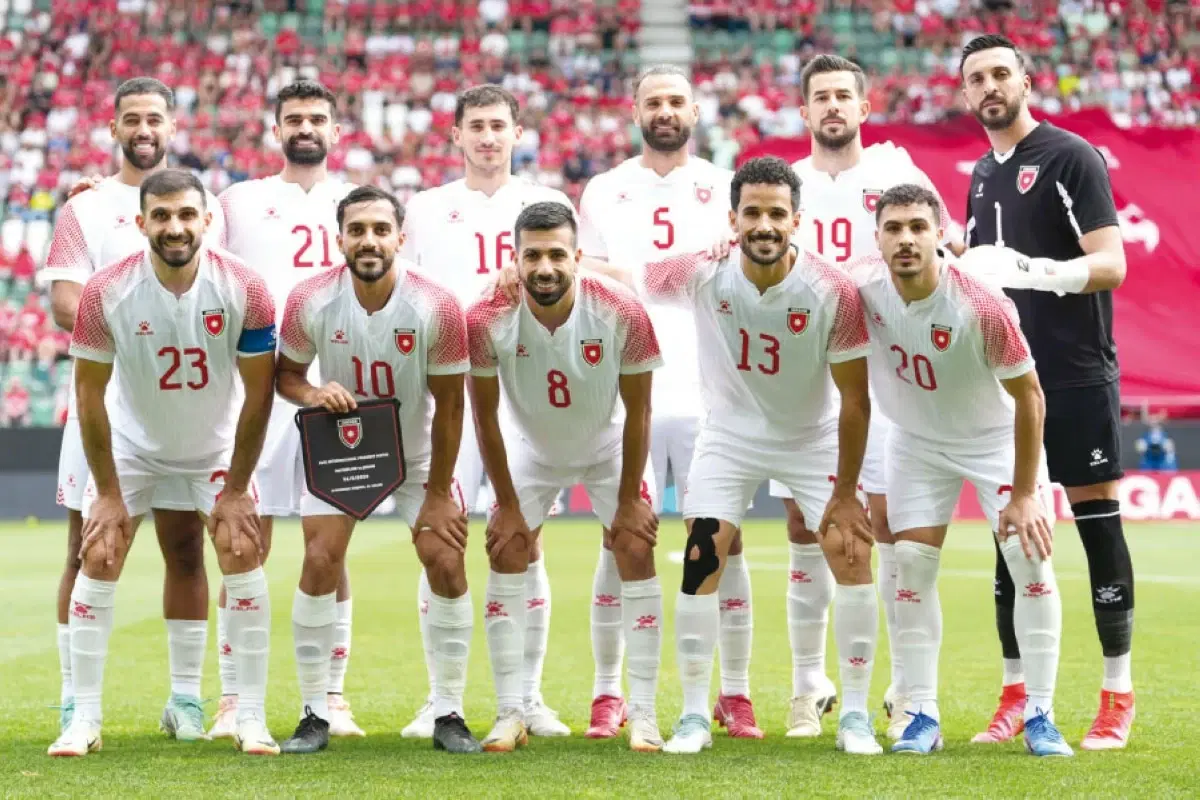
The draw placed the Al-Nashama national team in Group B, alongside the national teams of Uzbekistan, Bahrain, and North Korea. This is a group that requires the technical staff to handle three different matchups in terms of style, technical capabilities, and competition requirements.
Al-Nashama will begin their journey in the tournament by facing Uzbekistan on Friday, January 8, 2027, at the King Abdullah Sports City Stadium in Jeddah, in a match that will be important in defining the features of the start and gaining a morale boost at the beginning of the competition.
The team will then meet their Bahraini counterpart on Wednesday, January 13, at the same stadium in Jeddah, before concluding their group stage journey by facing North Korea on Sunday, January 17, at the Imam Muhammad bin Saud Islamic University Stadium in Riyadh.
The nature of the three matchups varies, which requires Zaki to prepare the team in a way that allows it to deal with each match according to its own parameters, moving away from relying on a single style, and ensuring the ability to adapt to the opponents' styles and the requirements of each confrontation.
The Uzbekistan match appears to be an important test at the beginning of the journey, while the Bahrain match gains double importance in the group's calculations, given the mutual knowledge between the two teams, while the North Korea match requires special preparation to deal with the opponent's style, with all its technical and physical requirements.
The tournament will be held in three Saudi cities: Riyadh, Jeddah, and Al-Khobar, at a group of stadiums that will host the group stage and knockout stage matches, leading up to the final match scheduled for February 5 in Riyadh.
The importance of this edition for Al-Nashama lies in the fact that it comes after the achievement of qualifying for the World Cup and reaching the final of the previous edition of the Asian Cup, which raises the ceiling of expectations and ambitions, and places the team before the responsibility of delivering a performance that reflects the development witnessed by Jordanian football in recent years.
Good preparation is the path to competition
As the tournament date approaches, the need is clear to invest in the preparation program in the best possible way, whether through international gatherings, friendly matches, or daily technical work, to ensure arriving in Saudi Arabia with a team capable of competing, not just participating.
The draws with Syria and Venezuela represent the beginning of the evaluation phase, while the matches against Indonesia and Australia constitute an opportunity to raise the level of testing before reaching the final gathering and facing Saudi Arabia, which will be one of the important stations in drawing the final features of the team.
The challenge remains for Zaki and the technical staff to turn the available time into tangible gains by establishing a technical identity, enhancing cohesion, increasing attacking effectiveness, maintaining defensive balance, and preparing alternatives capable of dealing with the pressure of the matches.
If the World Cup participation has given Al-Nashama an important global experience, the Asian Cup will be the next test of the team's ability to invest in this experience and continue building on what has been achieved, in a tournament that recognizes only readiness, focus, and the ability to deal with the details of matches to achieve a participation worthy of the ambitions of the Jordanian fans, and gives the team a new opportunity to confirm its presence among the continent's giants and seriously think about snatching the title.