The National Team Between Preparation and Betting on Readiness
Amman5 min read
Share
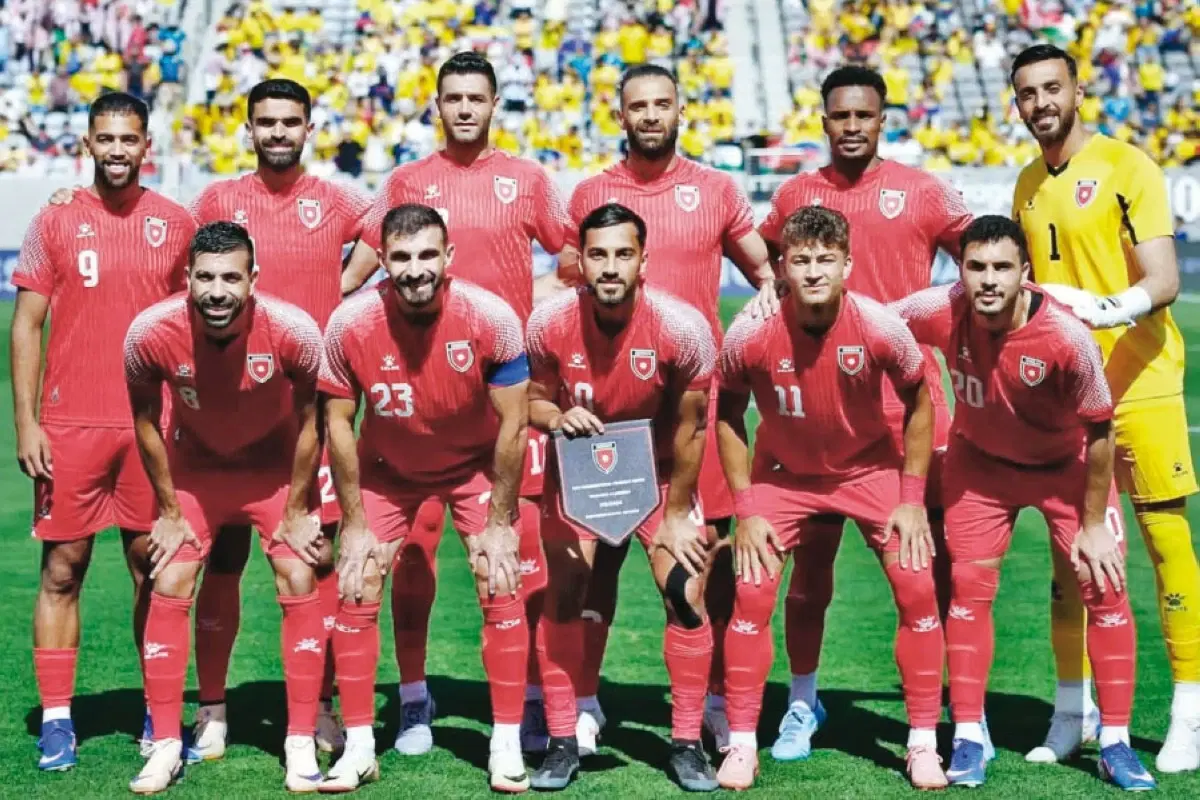
The national football team enters a crucial preparation phase ahead of the 2027 Asian Cup finals, a phase that cannot be viewed merely as friendly matches, but rather as a comprehensive laboratory to test technical and physical readiness, and to establish the identity of the team that will carry the hopes of Jordanians in the major continental forum.
The preparation plan includes hosting the national team's matches in the capital Amman, allowing Jordanian fans the opportunity to closely follow their preparations and enhance their presence and support for the national team before the Asian commitment.
The national team begins its friendly matches with a match against Syria, at 8 PM on Sunday, September 27, at King Abdullah II Stadium, then meets Venezuela at the same time on Tuesday, October 6, on the same field.
During the international break in November, the national team will play two friendly matches, meeting Indonesia on Friday, November 13, at Amman International Stadium, before facing Australia on Tuesday, November 17, at the same field.
The national team will also hold its final gathering in late December, which precedes participation in the Asian Cup, and includes two friendly matches.
The selection of a series of matches by the technical staff of the national team, led by the new Moroccan coach Badou El-Zaky, reflects an understanding of the importance of diversity in football schools. The match against Syria gives the team the opportunity to engage with an opponent that it knows well in terms of the combative nature and defensive discipline, while the match against Venezuela is a different experience against a South American team characterized by skill and speed.
The matches against Indonesia and Australia are a double test; the first reveals the ability of the national team to impose their style against a less experienced opponent, and the second puts them against a strong team with extensive experience in major tournaments, which allows coach Badou El-Zaky the opportunity to measure the ability of his players to face high pressure and physical speed.
Physically, these matches give players the opportunity to gradually regain the rhythm of competition and help the technical staff evaluate levels of endurance and fitness. Technically, they are a space to experiment with tactical plans, rotating players between positions, and testing the harmony between the three lines.
In this regard, coach Badou El-Zaky understands that the importance of preparing for the Asian Cup lies in the ability to adapt to different styles of play, making this phase a 'major rehearsal' before entering the finals atmosphere.
The four matches preceding the final gathering are of double importance; they are not just preparation, but a real sorting phase for the official lineup, during which Zaki will assess the individual and collective potential of the players, try out more tactical combinations, and test their harmony under pressure. He will also determine who deserves to be on the final list and who needs additional time or is out of the equation.
Following this, the final gathering in December will serve as a station to establish the technical identity of the team, where Zaki will rely on the official lineup that will compete in the finals. Here, the importance of the previous matches becomes clear; they will determine the features of the team and reveal its readiness to compete with the continent's giants.
In conclusion, the current preparation phase is not just a schedule of matches, but a comprehensive construction journey that combines physical, technical, and mental aspects, giving the coach the opportunity to review all the details before making his final decisions. It is a phase that goes beyond the limits of preparation to become a bet on the future, as the national team seeks to write a new chapter in the history of Jordanian football, supported by their fans and armed with the experience of a coach who knows that the path to the championship begins with small details that are decided in such stages.
Finally, the role of the Jordanian fans in this phase cannot be overlooked, as hosting matches in Amman gives the players a significant morale boost and strengthens their connection with the audience, who always form the '12th player'. Facing these teams in front of the fans raises the level of confidence and gives the players a sense of national responsibility.
Reminder of the Asian Cup
It is worth noting that the draw for the 2027 Asian Cup finals placed the national team, the runner-up of the previous edition, in Group Two, alongside Uzbekistan, Bahrain, and North Korea.
The 2027 Asian Cup finals will be held from January 7 to February 5 in Saudi Arabia.
The national team will start its journey in the tournament in Group Two with a match against Uzbekistan on Friday, January 8, at King Abdullah City Stadium in Jeddah, before facing Bahrain on Wednesday, January 13, at the same field, and will conclude its group stage matches with a match against North Korea on Sunday, January 17, at Imam Muhammad bin Saud University Stadium in Riyadh.
Meanwhile, Group One included Saudi Arabia, Kuwait, Oman, and Palestine, Group Three included Iran, Syria, Kyrgyzstan, and China, Group Four included Australia, Tajikistan, Iraq, and Singapore, Group Five included South Korea, the UAE, Vietnam, and Yemen, and Group Six included Japan, Qatar, Thailand, and Indonesia.
The top two teams from each group, along with the best four third-place teams, will advance to the round of 16, which will be held from January 22 to 25.
The quarter-final matches will be played on January 28 and 29, with the semi-final matches on February 1 and 2, and the final match will be held on February 5, 2027, at King Fahd International Stadium, where the champion of the 19th edition of the tournament will be crowned.