Al-Karak.. 608 thousand dinars to support 40 projects
Amman7 min read
Share
The experiences of a number of projects in Al-Karak Governorate reveal the impact of financial and technical support in transforming ideas into productive businesses, highlighting the ability of funds and financing entities to provide real and sustainable support that goes beyond the traditional model of concessional small loans toward enhancing the business environment and establishing developmental partnerships that follow the path of constructive cooperation between the public and private sectors, thereby contributing to stimulating the local economy and creating job opportunities for the governorate's residents.
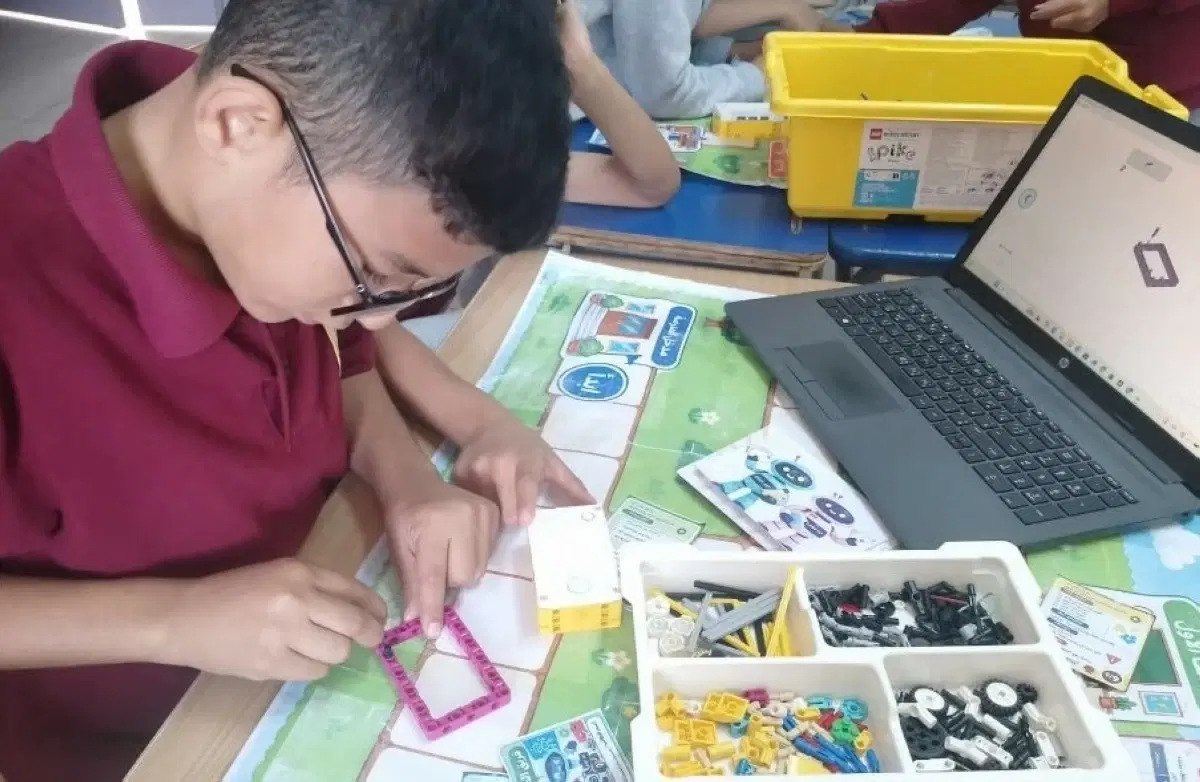
Engineer Zilal Al-Shamayleh is considered one of the success stories, as she founded the "Easy Kit" academy, which specializes in teaching robotics and artificial intelligence to children and adolescents. Her story is one of the success stories, as she was able to obtain a financial grant from the "Bi-Himmatikum" program to support youth projects from the Jordan Enterprise Development Corporation (JEDCO).
Al-Shamayleh said that the idea for her project began in 2018, with the aim of spreading digital culture, innovation, and training in the design and programming of robots and electronics. It was incubated and developed through several business incubators and local support programs, including "JEDCO," to become today one of the most important academies that provides an integrated educational system for the target groups and the education sector locally and globally.
In another experience, young man Mohammed Al-Tarawneh founded a center for indoor interactive games, combining entertainment, technology, and educational activities for children aged 4 to 14, benefiting from a grant of 35 thousand dinars from "JEDCO." Since its launch last year, the project has provided five job opportunities, with plans to increase them in tandem with expansion.
Another grant also enabled young man Yaqoub Al-Hijazi to start a project for growing vegetables, canning and packaging fruits and vegetables, and making pickles in cooperation with his family members, while he aspires to obtain additional support to purchase the necessary equipment, develop production and packaging processes, and raise his competitive ability.
The Jordan Enterprise Development Corporation (JEDCO), as a government arm to support the private sector in Jordan to become capable of competing in global markets, implements a variety of development and advancement programs targeting different sectors in the fields of manufacturing, services, and agro-industry.
The corporation stated that its strategy for the years 2025–2027 is based on the pillars of high-value industries and innovation, and it plays a major role in achieving the national goals of the Economic Modernization Vision by providing integrated technical and financial support for small and medium enterprises, modifying work values among Jordanian youth seeking job opportunities, in addition to its contribution to the economic empowerment of women.
The corporation indicated that it implements several programs, including the "Start Your Project" program, which targets Jordanians over 21 years of age who have innovative project ideas and provides financial support of up to 50 thousand dinars, while the "Tatweer" program, which offers financial and technical grants with a similar ceiling, supports existing establishments and develops their production, administrative, marketing, and quality systems.
It explained that support for projects does not stop at the stage of providing financial or technical assistance, but extends to enabling them to continue developing and facing challenges that arise with the growth of their businesses. It also allows their owners the possibility of benefiting from the expertise of its affiliated entities, which supports the transition of their projects to new stages of development; whether through developing design and training skills via the Fashion Design and Training Center, enhancing product readiness through the services of the Jordan Numbering Association, or exploring expansion opportunities in foreign markets via the Jordan Exporters Association.
The corporation indicated that (40) projects in Al-Karak Governorate benefited from its various programs, distributed across industrial, agricultural, and service sectors, as these projects contributed to providing (108) job opportunities, with a support value of approximately (608) thousand dinars.
For his part, the Director of the Development and Employment Fund in Al-Karak, Yassin Al-Mubaideen, said that the fund provides concessional financing programs for youth, women, and charitable and cooperative societies, with the aim of establishing productive projects that generate income and employ local labor.
He explained that the value of loans ranges, depending on the target group, between 5 and 25 thousand dinars, with repayment periods of up to seven years, profit margins ranging between zero and 5 percent, and grace periods from three months to a year. The fund also provides financing ranging between 25 and 75 thousand dinars for new or existing entrepreneurial projects, and interest-free soft loans for graduates of vocational training institutes who hold professional practice certificates, with a ceiling of up to 15 thousand dinars.
He added that the fund has financed more than 125 projects in Al-Karak since the beginning of the year until the end of last August, with a financing volume exceeding one million dinars, providing about 222 job opportunities, while it financed 137 projects last year with a value of one million and 600 thousand dinars.
Those interested in developmental affairs in the governorate believe that financing programs directed at governorate development constitute a fundamental lever for small and medium enterprises, emphasizing that the evaluation of the success of any financing program should not be limited to the value of the amounts disbursed, but rather measured by the number of job opportunities it has provided, the volume of economic activity it has generated, and the extent to which the region's residents have benefited from it in the long term.
They called for activating the partnership between the public and private sectors to allow municipalities to implement sustainable investment projects and reduce the burdens of operation and maintenance on their budgets, in addition to providing preferential investment incentives for Al-Karak Governorate and studying the establishment of a special fund for its development with the contribution of major industrial companies operating there.
For his part, the head of the Shihab Municipality Committee, Engineer Bahjat Al-Rawashdeh, said that financing programs are among the essential tools for achieving local development and improving the level of services provided to citizens, especially in municipalities that face financial challenges and accumulations in service and infrastructure needs.
He indicated that the municipality's need for funding goes beyond paving and maintenance work to implementing sustainable developmental and productive projects that achieve an economic return and provide job opportunities for the region's residents, but their success requires that the value of the funding be commensurate with the volume of actual needs, that there be clear criteria for distributing allocations according to population, area, volume of responsibilities, and available financial capabilities for each municipality, and ensuring that the municipality is not burdened with financial obligations beyond its capacity.
He pointed out that municipalities cannot bear all developmental burdens alone, especially in light of limited budgets and high project costs, which calls for strengthening cooperation between the Ministry of Local Administration, government ministries and institutions, and the private sector to identify available investment opportunities and prepare economic feasibility studies, suggesting that a unified path be created to submit and follow up on financing projects and to simplify procedures related to approvals and studies.
He drew attention to the municipality's need for a package of projects, including a center for crafts, professions, and small and medium enterprises to allow the region's residents to develop their businesses and market their products, in addition to working on developing natural and heritage sites suitable for tourism investment, in coordination with the relevant authorities.