Al-Issawi: Royal directives place the citizen and national interest at the top of priorities
Al-Issawi: Comprehensive modernization and strengthening state resilience are integrated paths in the Royal vision
Follow Al Rai

Al-Issawi: Royal directives place the citizen and national interest at the top of priorities
Al-Issawi: Comprehensive modernization and strengthening state resilience are integrated paths in the Royal vision
Speakers: Our pledge to the King and the Crown Prince is that Jordan remains first, safeguarding its security, protecting its achievements, and continuing the march of building
Speakers: Jordan's youth are partners in shaping the future and continuing the march of achievement
Head of the Royal Hashemite Court, Yousef Hassan Al-Issawi, emphasized that the directives of His Majesty King Abdullah II place the supreme interests of the nation and the Jordanian citizen at the forefront of priorities, pointing out that direct communication with citizens and listening to them constitutes an essential part of the Royal approach in following up on their needs and aspirations.
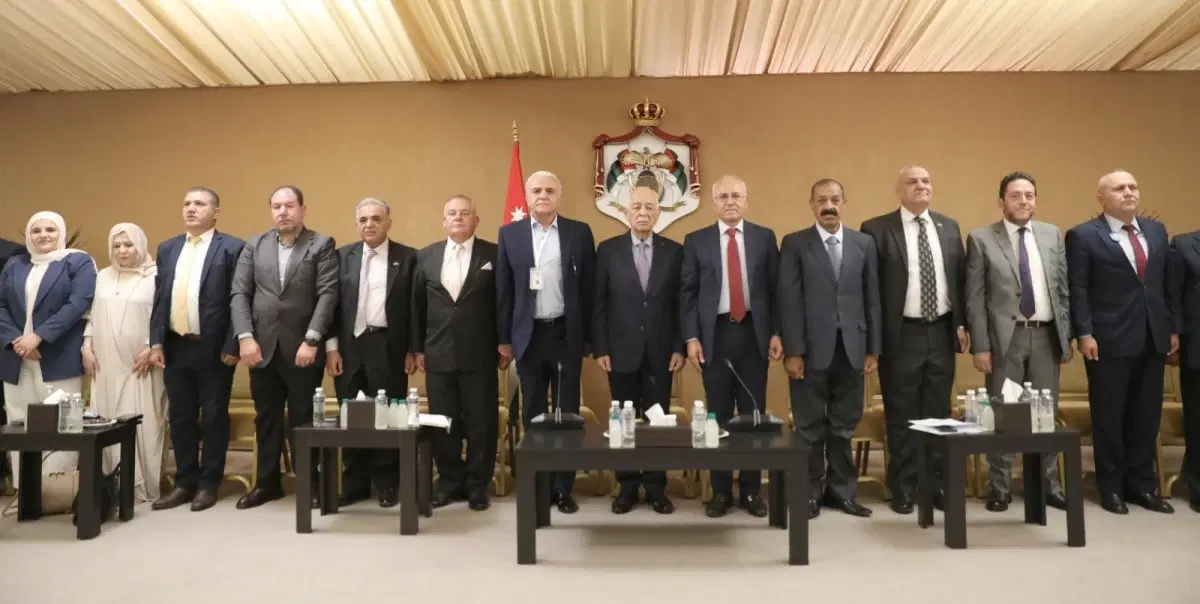
This came during a meeting held by Al-Issawi on Friday at the Royal Hashemite Court's Madareb Bani Hashem, with a delegation from the youth Dignity and Loyalty Authority comprising about (1,400) political, economic, social, youth, and women figures.
Al-Issawi conveyed to the attendees the greetings and pride of His Majesty King Abdullah II and His Royal Highness Crown Prince Al Hussein bin Abdullah II, stressing that the Royal Hashemite Court, under His Majesty's directives, will remain open to the sons and daughters of the nation, and a space to listen to their opinions and issues, convey them, and follow them up with the concerned authorities.
Al-Issawi stated that the Royal vision stems from the premise that the citizen is the focus and ultimate goal of the development process, and that the value of plans and programs is measured by the real impact they make on people's lives, whether in job opportunities and income, or in the level of education, health, and services.
He pointed out that His Majesty the King's continuous follow-up on the implementation of the economic modernization vision comes within this framework, with the aim of increasing growth and investment opportunities, stimulating productive sectors, and providing sustainable job opportunities for Jordanians, which is directly reflected in their standard of living.
He explained that the economic activity led by His Majesty the King abroad, and his meetings with international economic and investment companies and institutions, aims to leverage Jordan's relations and standing to serve the national economy, attract investments, transfer technology and expertise, and open new markets for Jordanian products and sectors.
Al-Issawi stressed that the political, economic, and administrative modernization tracks, in accordance with the Royal vision, are interconnected and complementary, with the goal of enhancing the efficiency of state institutions, developing public administration, consolidating the rule of law, expanding participation, and raising the economy's capacity to grow and provide opportunities.
He noted that youth and women represent a fundamental pillar in the modernization and development process, and that His Majesty the King and His Royal Highness the Crown Prince attach great importance to providing opportunities that empower youth in education, training, work, entrepreneurship, and innovation, and enhance women's participation in various fields of public and economic life based on competence and ability.
Al-Issawi explained that this approach is based on transforming national energies and capabilities into production and work, thereby enhancing youth's reliance on their own abilities and expanding their avenues of participation in building their future and serving their communities.
Al-Issawi emphasized that Jordan's strength is based on the cohesion of its institutions, the unity of its society, and its ability to handle challenges with awareness and responsibility, pointing out that the Hashemite leadership places the nation's security, stability, sovereignty, and the interests of its citizens above all considerations.
He expressed pride in the role played by the Jordanian Armed Forces - the Arab Army and security agencies in protecting the Kingdom's borders and safeguarding its security and stability, pointing out the care given by His Majesty the King, the Supreme Commander of the Armed Forces, to develop its capabilities and raise its level of readiness to face various challenges.
Al-Issawi said that Jordan's positions towards the Palestinian cause are based on steadfast constants led by His Majesty the King's efforts in defending the rights of the Palestinian people, working to establish a ceasefire in Gaza, halting the suffering of civilians, and rejecting attempts to impose new facts on the ground in the West Bank and Jerusalem.
He pointed out Jordan's continued efforts, under the leadership of His Majesty the King, in defending Islamic and Christian holy sites in Jerusalem within the framework of the Hashemite Custodianship, and upholding the right of the Palestinian people to establish their independent state on the basis of the two-state solution.
He stressed that His Majesty the King approaches the region's crises from a firm conviction that conflicts are not solved by wars, killing, destruction, and starvation, but rather through dialogue and political and peaceful paths that protect the lives of peoples, safeguard their dignity, and provide them with security and stability.
He added that the moves led by His Majesty the King regionally and internationally to halt escalation are based on respecting the sovereignty of states and protecting the security of their peoples, while simultaneously preserving Jordan's interests and independent national decision-making, and enhancing cooperation with brothers and friends in a way that serves security and stability in the region.
Al-Issawi emphasized that serving the nation is not limited to expressing positions, but rather requires work, production, shouldering responsibility, respecting the law, preserving national unity, confronting rumors and misinformation, and placing the public interest above narrow interests.
For their part, the speakers affirmed their pride in the Hashemite leadership, their loyalty to His Majesty King Abdullah II, their rallying around His Majesty, and their backing of his positions and efforts in protecting Jordan's supreme interests, safeguarding its security and stability, enhancing state resilience, and continuing the march of building and modernization. They stressed that the leadership's wisdom, the cohesion of Jordanians, and the unity of their ranks will remain a source of strength for the nation in facing various challenges.
They stated that they take pride in what His Majesty the King represents as a national leadership keen on Jordan and its people, on protecting its achievements and resources, and on consolidating its presence and standing, affirming that Jordanians will remain true to their pledge to rally around their leadership, fulfill their responsibilities towards their country, and preserve its unity, security, and stability.
They expressed pride in His Royal Highness Crown Prince Al Hussein bin Abdullah II, and his support and backing of His Majesty the King's efforts, praising the Crown Prince's attention to youth, their issues, and aspirations, and his keenness to enhance their presence, empower them, and open the field for initiative, work, and assuming responsibility. They stressed that His Royal Highness's closeness to the youth enhances their confidence in their ability to actively participate in building Jordan's future.
They also praised the efforts of Her Majesty Queen Rania Al Abdullah, particularly in the fields of education, youth and childhood care, and the empowerment of women and families, noting that Her Majesty's focus on education and the development of Jordanian human capabilities reinforces national efforts aimed at building aware, qualified generations capable of contributing to the service of their society and country.
They emphasized that Jordan will remain strong with its leadership, people, and institutions, and that preserving its security, stability, and national unity is a shared responsibility of everyone. They stressed that true belonging to the country and loyalty to its leadership are not demonstrated by slogans, but rather by work, achievement, assuming responsibility, and preserving the state's gains and resources.
They stated that Jordanians take pride in Jordan's honorable and steadfast positions towards the issues of its nation, foremost among them the Palestinian cause, and in the efforts led by His Majesty the King in defending the rights of the Palestinian people, Jerusalem, and its Islamic and Christian holy sites, and protecting them within the framework of the Hashemite Custodianship. They affirmed that Jordan will remain steadfast in its positions and principles, defending the issues of its nation.
They added that unity of ranks and national awareness constitute a fundamental pillar in protecting the nation, emphasizing the importance of enhancing intellectual security, steering away from extremism and exaggeration, and countering inaccurate and misleading information to preserve society's security and stability and strengthen state resilience.
They asserted that Jordanian youth possess energies and competencies that qualify them to be true partners in shaping the present and the future, pointing to the importance of granting youth the trust and necessary space for initiative, experimentation, and assuming responsibility, and linking their energies to opportunities that enable them to turn their ideas into achievements and projects that serve their communities and country.
They noted the importance of keeping pace with rapid transformations in the fields of e-learning, artificial intelligence, and technology, and benefiting from Jordanian expertise and competencies in developing these sectors, localizing knowledge and technology, expanding training and qualification opportunities to reach youth in all governorates of the Kingdom, and linking knowledge with universities, institutions, the private sector, and practical opportunities.
They pointed out the importance of developing the university environment and enhancing the role of youth within it, considering universities as spaces for building character, awareness, and leadership, encouraging dialogue, respecting differences, and joint work, alongside creating more effective frameworks for communication between youth and state institutions, allowing them to express their ideas and participate in providing national and community solutions and initiatives.
They also underscored the importance of volunteer work in enhancing belonging and social responsibility, developing legal awareness among youth, organizing their voluntary participation, alongside paying attention to language learning and cultural qualification as two means to enhance communication with the world and enable youth to convey Jordan's civilizational message and defend their country's issues in various forums.
They stressed the importance of expanding participation opportunities for various segments of youth, including athletes and persons with disabilities, benefiting from their capabilities and expertise, promoting justice and equal opportunities, and empowering them to actively participate in public life and positions of work and responsibility.
Some speakers also addressed a number of general demands and needs related to certain regions, alongside demands concerning categories of citizens, relating to service, developmental, and social aspects, job opportunities, care, and empowerment, emphasizing the importance of considering and addressing them within the framework of justice, equal opportunity, and improving the level of services provided to citizens.
At the conclusion of the meeting, Al-Issawi appreciated the positions and views expressed by the attendees and their pride in Jordan and its Hashemite leadership, affirming that what brings Jordanians and their leadership together is a relationship based on trust, honesty, loyalty, and shared responsibility toward the homeland.
Know more about this story?Send us a tip
Ask about this report — answers stay grounded in its text.