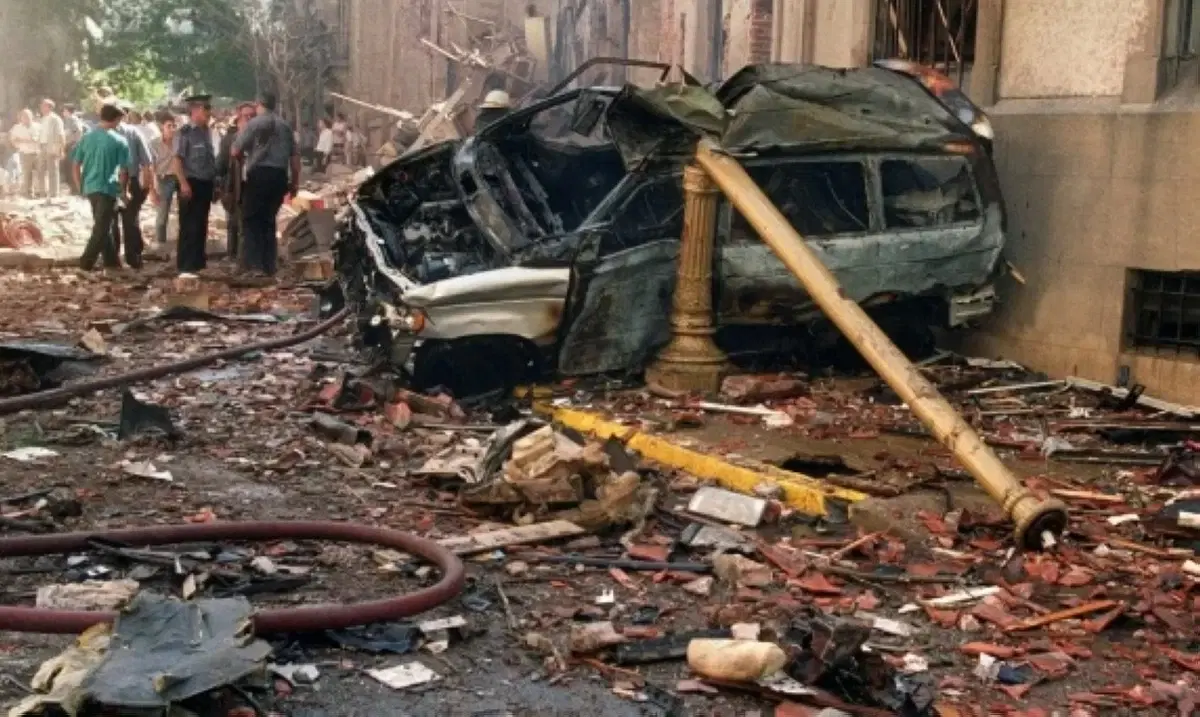
An Argentine judge on Monday formally charged seven Iranians and a Lebanese man on suspicion of involvement in a bombing that targeted a Jewish community center in Buenos Aires in 1994. The decision paves the way for a possible trial in absentia in the case of the attack, which killed 85 people and injured 300 others on July 18, 1994. The investigations so far have not led to the arrest of any suspects in the bombing of the Argentine Jewish Mutual Association (AMIA) headquarters, which is considered one of the worst attacks in Argentina's history. Judge Daniel Rafecas said, 'The decision to carry out the attack was made in August 1993 by the highest levels of the Iranian regime, and its execution was entrusted to Hezbollah.' He pointed out that seven of the accused held high positions in the Iranian state at the time of the attack, while the Lebanese accused was a member of the Iranian-backed Hezbollah. Prosecutions against other accused were dropped due to insufficient evidence. Rafecas told Agence France-Presse, 'There are still procedures to be completed' before reaching the trial stage. For his part, Argentine President Javier Milei welcomed the decision, writing on the 'X' platform, 'Ethics as a policy for the state.' Argentina and Israel continue to accuse Iran of being behind the attack, which Tehran consistently denies. Last year, the Argentine judiciary, with the support of Milei's government, authorized the possibility of holding trials in absentia. The bombing of 'AMIA' came just two years after a bombing targeted the Israeli embassy in Buenos Aires in 1992, which killed 29 people, and the judicial ruling suggested a link between the two attacks due to the suspected involvement of Hezbollah in both.
Accusation of 8 People, Including 7 Iranians and a Lebanese, for Bombing a Jewish Center in Argentina in 1994
Know more about this story?Send us a tip
Al Rai
AIAsk about this report — answers stay grounded in its text.