Abu al-Saud: Transboundary Waters Should Not Be a Weapon but a Tool for Peace, Development, and Stability
Amman3 min read
Share
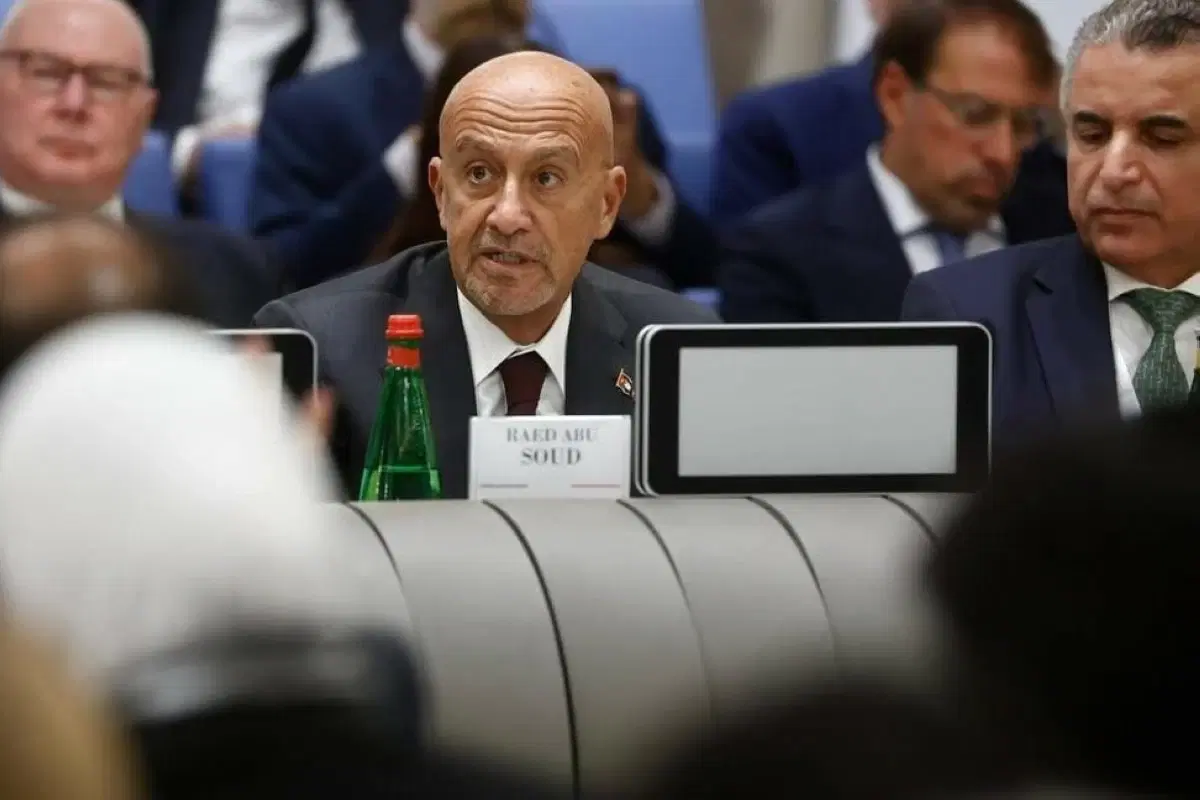
Minister of Water and Irrigation Raed Abu al-Saud said that Jordan has succeeded over the past four years in reducing water loss by 10 percentage points, which has allowed the recovery of large quantities of water and made them available for supply without the need for a similar increase in new water resources.
Abu al-Saud added, during the second ministerial meeting of the Union for the Mediterranean on water in Rome, that Jordan is working in parallel to protect every available drop of water, in light of the water scarcity and increasing pressure on its resources.
He pointed to Jordan's direction to use advanced technology to detect leaks and attacks, improve network management, and the efficiency of pumping operations and demand forecasting, in addition to enhancing drought and flood monitoring and supporting evidence-based decision-making.
Abu al-Saud said that Jordan wants to use data to make better decisions that contribute to providing water to communities, considering that the Kingdom's experience shows the possibility of transitioning 'from scarcity management to opportunity management'.
He pointed out that water security in the Mediterranean region has become a real challenge in light of climate change, floods, droughts, population growth, and rising demand for water.
He added that Jordan is working to meet the needs of an increasing number of people, alongside hosting large numbers of refugees, while climate change increases the difficulty of relying on traditional water sources, in conjunction with rising costs of pumping, treatment, and transportation, which impose continuous pressure on the financial sustainability of the sector.
Abu al-Saud said that regional tensions impose pressure on already limited water resources, calling on the international community to support a cooperative approach and avoid steps that could undermine regional stability.
He stressed that the pursuit of control over vital national and regional water resources poses a threat to Jordan and the region, emphasizing the importance of strengthening regional cooperation in light of geopolitical challenges and ongoing crises.
He explained that Jordan is expanding, to mitigate the effects of water scarcity, the use of non-conventional water resources, particularly seawater and brackish water desalination, alongside the safe reuse of treated wastewater.
He stressed that the project for desalination and water transfer from Aqaba to Amman (the National Water Carrier) represents the cornerstone of this approach and a key step towards enhancing Jordan's water security in the medium term.
Abu al-Saud called on Mediterranean countries to implement actual projects in the fields of desalination, water reuse, leak treatment, technology, and resilience to climate change.
He affirmed Jordan's commitment to working with Union for the Mediterranean countries and its partners to build a more water-secure, climate-resilient, and sustainable Mediterranean region.
Abu al-Saud's statements came during the second ministerial meeting of the Union for the Mediterranean on water, which he chaired alongside the European Union Commissioner for Environment, Water Resilience, and Circular Economy Jiska Rossvelt, and hosted by the Italian Minister of Foreign Affairs and International Cooperation Antonio Tajani, in the presence of the Jordanian Ambassador to Brussels and Head of the Jordanian Mission to the European Union, Yousef Al-Batayna.
The Union for the Mediterranean launched during the meeting the 'Rome Water Initiative', which aims to mobilize investments, provide technical assistance, and develop sustainable and financeable water projects in the Mediterranean region.