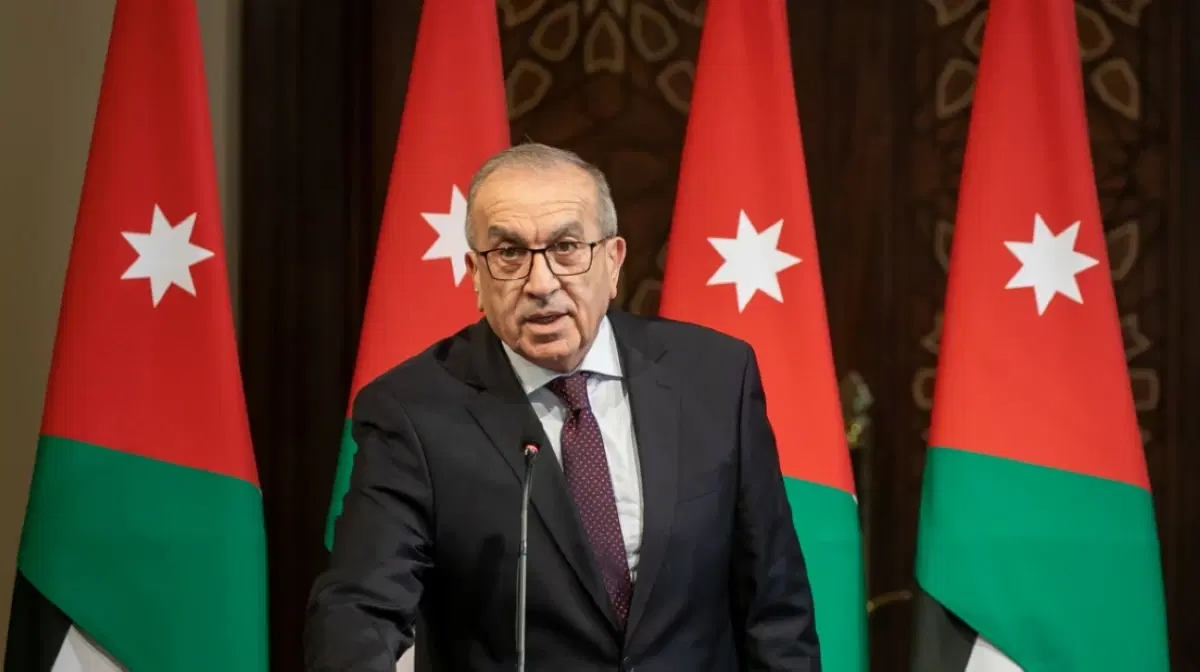
Abu Al-Samn added that the housing and urban development sector is receiving continuous attention from His Majesty King Abdullah II and His Highness Crown Prince Hussein bin Abdullah II, and based on the economic modernization vision that listed the urban development sector as a main axis for improving the quality of life, noting that the Kingdom has achieved an important achievement by issuing the second urban report to monitor the new urban plan, to be the first Arab country and the fourth globally in this field.
He affirmed the continuation of the institution in performing its developmental role through the development and implementation of projects and the provision of serviced land plots with infrastructure and public services, according to modern planning and regulatory bases, alongside enhancing Jordan's presence regionally and internationally, pointing to the election of the Kingdom as a member of the Executive Bureau of the Council of Arab Ministers of Housing and Urban Development and Deputy Chairman of the Executive Bureau.
He emphasized the Kingdom's commitment to continuing to develop the housing and urban development system, enhance the efficiency of institutions and planning tools, and support initiatives that raise the quality of life, and expand areas of cooperation with Arab brothers and international partners, in a way that serves national priorities and enhances Jordan's presence and expertise in this field.
He called for more Arab coordination and integration, and for building a common agenda based on knowledge, innovation, and the exchange of experiences, and placing the human at the center of policies, and anticipating the demographic, economic, and climatic transformations that will shape the features of our cities in the coming years.
For her part, the Director General of the Public Institution for Housing and Urban Development, Engineer Jumana Al-Atiyat, said that the Arab Housing Day confirms that suitable housing is no longer limited to providing shelter, but has become an essential part of the sustainable urban development system, including urban planning, provision of serviced land, affordability of housing, efficiency of services, infrastructure, and environmental sustainability.
Al-Atiyat added that the institution has included 6 priorities and projects within the second executive program of the economic modernization vision for the years 2026-2029, the most prominent of which are the land management project for housing purposes, the empowerment program, and the housing finance support program for low-income Jordanian families, alongside the implementation of an urban observatory for housing and urban data, noting the completion of 4 initiatives within the first executive program for the years 2023-2025, the most prominent of which are the issuance of standards and criteria for future cities and the preparation of a study to develop a new model for low-cost housing.
She pointed out that the institution has completed about 523 projects in various governorates of the Kingdom with a total cost of approximately 900 million dinars, and its projects have contributed to providing housing for more than one and a quarter million Jordanian citizens, in addition to providing infrastructure, services, facilities, and green spaces, explaining that the decision of the Council of Ministers to allocate 15 percent of the lands of the institution's projects to needy or poor families comes within the framework of enhancing community resilience, while 95 percent of the institution's services have been automated and made available electronically to citizens and beneficiaries.