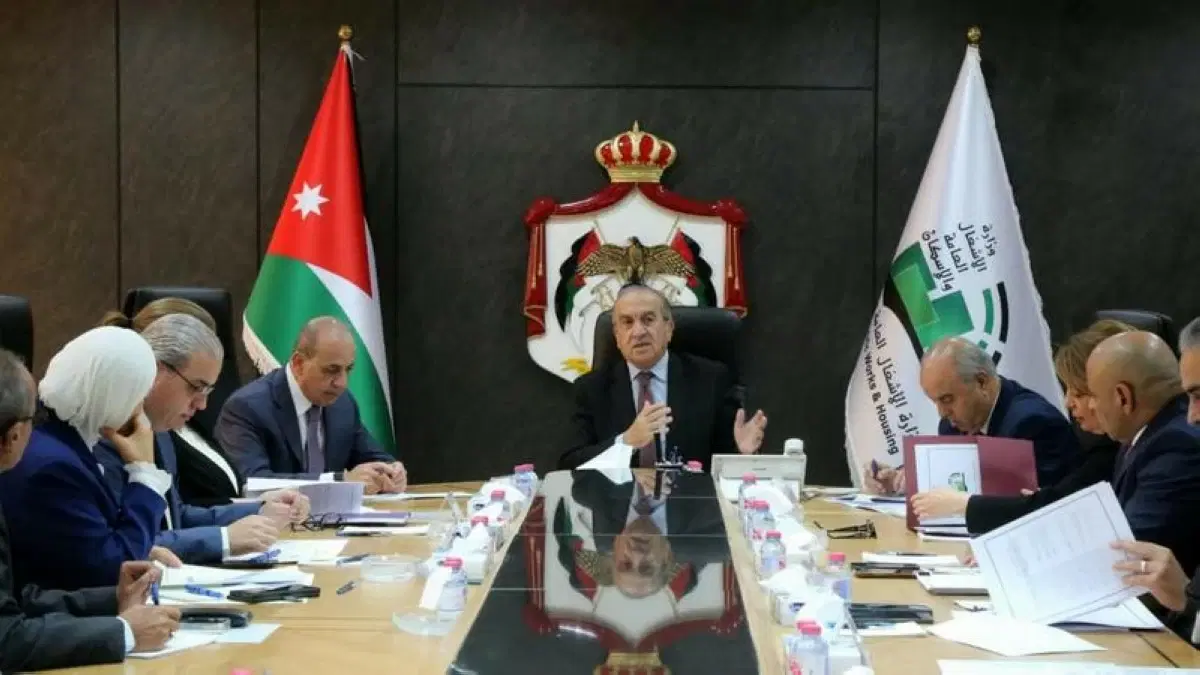
Abu Al-Samen stated that preparing a unified strategic plan for government building projects represents an important step toward developing the planning and implementation system, ensuring optimal utilization of financial allocations, and avoiding time gaps between the completion of designs and plans and the issuance of implementation tenders, which could lead to delays or additional financial burdens on the public treasury.
He added that the coming phase requires strengthening coordination and integration between ministries and relevant authorities, and providing an accurate and comprehensive database of their construction project needs. This will help in making decisions based on national priorities and the strategic importance of each project, after completing the necessary studies and information and reviewing them by specialized technical committees, in preparation for submission to the Ministerial Committee.
During the meeting, the proposed unified model for the strategic plan for government building projects, prepared by the Buildings Department at the Ministry of Public Works and Housing, was reviewed. The presentation covered the model's components, proposed work mechanisms, and the fundamental pillars used to identify needs and prioritize projects.
Committee members discussed the importance of adopting future plans spanning three to five years, covering the needs of ministries and government departments for schools, health centers, hospitals, youth and social facilities, government buildings, and other service facilities, in line with national priorities and development goals.
The participating ministers emphasized the importance of having a unified planning reference for government building projects, which allows for the identification of actual needs away from ad-hoc solutions, helps in setting realistic timelines and financial programs for projects, and determines tender issuance priorities according to clear criteria that consider service needs, development importance, and project readiness for implementation.
The meeting also addressed mechanisms for developing coordination between relevant government agencies and standardizing procedures for data collection and needs assessment, contributing to improved planning quality, reducing delays in various stages of project preparation and implementation, and achieving optimal use of available resources.
The meeting was attended by the Secretary-General of the Ministry of Justice for Administrative and Financial Affairs, Kholoud Al-Abadi, and the Secretaries-General of the Ministry of Public Works and Housing for Technical Affairs and Financial and Administrative Affairs.
The meeting comes within the framework of government efforts aimed at developing planning mechanisms for government construction projects and enhancing integration between ministries and official institutions, leading to a more efficient system for identifying needs and preparing and implementing projects, which reflects on the quality of services provided to citizens and achieves the public interest.