University of Jordan Envisions the Future of Technology, Innovation, and Entrepreneurship
Amman9 min read
Share
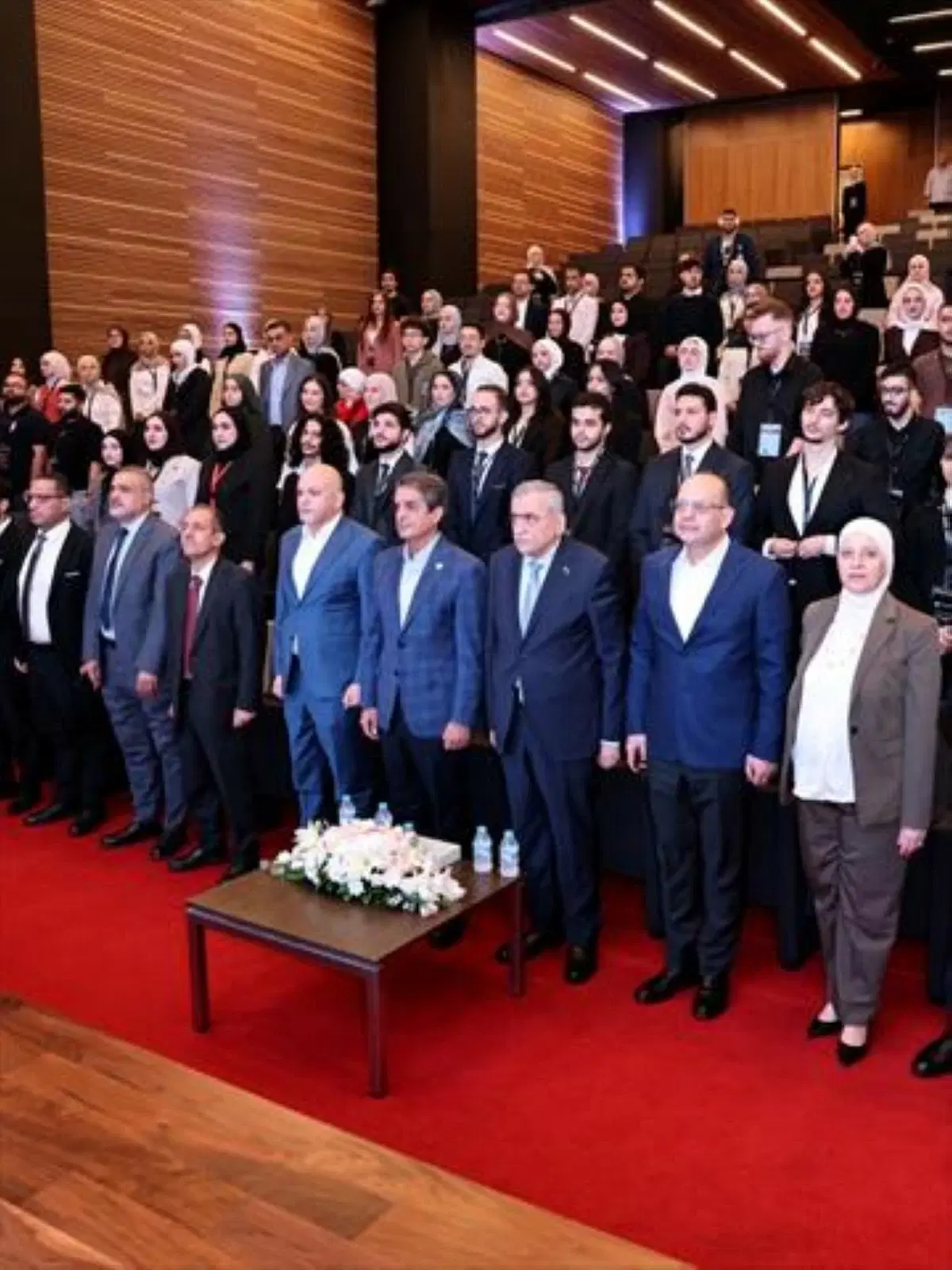
Under the patronage of Minister of Youth Dr. Raed Sami Al-Adwan, and in the presence of University of Jordan President Dr. Nathir Obeيدات, the University of Jordan launched the technology and innovation event "Jordan 2076", under the title "The Role of Technology, Innovation, and Entrepreneurship in Shaping the Future of Jordan," organized by the IEEE Computer Society students at the university in partnership with the Center for Innovation and Entrepreneurship, and with the participation of academic and national figures, experts, specialists, students, and representatives of institutions and companies.
The event comes as part of an initiative envisioning Jordan's future fifty years from now, shedding light on the role of technology, innovation, and entrepreneurship in shaping its features through an interactive experience that transcends the traditional frameworks of technical events. It brings together students, graduates, professionals, experts, and company representatives in a shared space to exchange knowledge and expertise, develop ideas and technical solutions that respond to future challenges and needs, contribute to turning challenges into opportunities for innovation and development, and enhance the role of youth in building the nation's future.
Al-Adwan said in a speech delivered during the opening ceremony: "Investing in technology and entrepreneurship is no longer a luxury, but a national necessity imposed by rapid transformations in the labor market and the digital economy."
He also pointed out that the Royal directives of His Majesty King Abdullah II Ibn Al Hussein, and the attention of His Royal Highness Crown Prince Al Hussein bin Abdullah II, toward empowering youth and enhancing their presence in modern technological and economic sectors, constitute a fundamental pillar for supporting innovation and opening new horizons for Jordanian youth.
Al-Adwan explained that the Economic Modernization Vision emphasizes the importance of building a more productive and competitive economy based on knowledge and innovation, providing job opportunities, and enhancing the ability of economic sectors to grow and expand. He stressed that national responsibility lies in translating these orientations into tangible programs and initiatives that enable youth to acquire the necessary skills and transform their ideas into productive and sustainable projects that contribute to making a real impact in society and the economy.
He indicated that the technical empowerment track is considered one of the most prominent tracks of the youth centers development plan at the Ministry of Youth, as it aims to build youth capacities and develop their skills through programs in digital skills, artificial intelligence, creative thinking, problem-solving, and project planning, alongside enhancing financial culture, awareness of labor market requirements and the digital economy, and consolidating the culture of social entrepreneurship that encourages youth to innovate solutions for societal challenges in the fields of environment, education, health, and local development.
For his part, Obeيدات emphasized that throughout his journey on this earth, man has continued to seek knowledge and discovery, and that what he knows remains little compared to what he does not know; for whenever the circle of his knowledge expands, the horizons of the unknown before him expand with it, renewing questions, generating ideas, and opening new doors for thought, creativity, and innovation. He pointed out that man advances through his ability to question, think, and discover, and not merely by the knowledge he possesses, explaining that new questions lead to inventing tools, developing industries, and finding solutions that may change human life and reshape the world.
Obeيدات noted that the world is living today a new phase of transformations in which the sources of power change and the features of the future shift, as wealth and power are no longer linked solely to traditional energy sources. Instead, technology has become at the heart of the equations of economy, industry, peace, war, and influence, coinciding with the growing role of artificial intelligence, semiconductors, quantum computing, and renewable energy, confirming that technological superiority has become one of the essential keys to making the future and enhancing the ability of nations to compete and innovate.
Obeيدات addressed a message to the youth, emphasizing that they stand before a historical opportunity to participate in shaping the future, calling on them to be the owners of questions, ideas, and pioneers of creativity, to invest their capabilities in research, experimentation, and developing solutions that respond to recurring challenges, and not to underestimate untried ideas or unanswered questions. He noted that they have a vast field for thought, creativity, and innovation before them, through which they can develop new technologies, invent different drivers for existing industries, or find solutions to problems that others thought were unsolvable.
He stressed at the conclusion of his speech that the mission of the University of Jordan goes beyond providing knowledge to stimulating minds, provoking questions, nurturing ideas, and giving them the opportunity to transform into tangible achievements. He emphasized that the impact of science is complete when it turns into capability, creativity when it opens new paths, and innovation when it adds value to the life of the human being and the homeland. He added that the greatest bet remains on the minds of the youth and their ability to create ideas, develop tools, and open the doors of the future.
In turn, the Director of the Center for Innovation and Entrepreneurship at the University of Jordan, Dr. Reem Al-Fayez, said: "The center is keen to support student initiatives that enhance innovation and entrepreneurship and empower students to develop their skills through providing opportunities for communication and networking with the private sector and experts, stressing that the role of the university extends beyond education within classrooms to providing a stimulating environment for creativity and practical application."
She added that the "Jordan 2076" event represents a space that combines knowledge and application through the hackathon and specialized sessions connecting technology with innovation and entrepreneurship, pointing out that youth ideas and innovations form a fundamental pillar in envisioning Jordan's future, while praising the efforts of the organizing students and their ability to lead qualitative events that contribute to the exchange of expertise and the development of ideas.
For his part, the head of the event, student Ahmed Safi, said: "The vision of 'Jordan 2076' was not limited to organizing a technical event, but stemmed from a fundamental question: What will Jordan look like fifty years from now, and what role can youth play in shaping its future?"
He explained that the participants' journey combined innovation, learning, and practical application, stemming from their belief that Jordan's future does not begin in 2076, but is built starting today with science, knowledge, technology, innovation, and investment in the energies and capabilities of youth, expressing his hope that the event will be a starting point for ideas, partnerships, and achievements that leave a real impact on the future of the homeland.
In this regard, the representative of "Petra Ride" company, the platinum sponsor of the event, Engineer Ahmed Yassin, said: "Jordanian youth are capable of turning ideas into a tangible reality through initiatives that bring together companies, talents, and projects in a single space for interaction and the exchange of expertise." In his intervention, he presented the company's journey and development over seven years, pointing out that it came as the fruit of Jordanian ideas, competencies, and hands that believe in the ability of youth to create, compete, and develop smart technological solutions that serve humanity and society. He expressed the company's pride in participating in supporting initiatives that reflect the energies and creativity of Jordanian youth, including "Jordan 2076."
The event's activities included two keynote speeches; the first was delivered by former Minister of Digital Economy and Entrepreneurship, Engineer Muthana Gharaibeh, titled "From Foundation to Future: Building a Jordanian Technological Economy," in which he discussed the paths of developing the technological economy in Jordan and the importance of transitioning from building the knowledge and technical base to developing economic sectors based on innovation and technology, in a way that enhances competitiveness, opens new horizons for youth and startups, and contributes to transforming knowledge and ideas into productive opportunities that support the national economy.
Meanwhile, the second keynote speech was delivered by Jordanian expert and consultant in innovation, entrepreneurship, and building startup ecosystems in the Middle East and North Africa region, Nidal Qandilou, titled "Preparing for What's Coming: Building Mindset and Capabilities to Adapt and Thrive in the Age of Artificial Intelligence," in which he addressed the transformations imposed by artificial intelligence on the nature of work and required skills, and the importance of developing digital capabilities, creative thinking, and flexibility in dealing with technological changes, enabling youth to keep pace with rapid developments, benefit from their opportunities, and participate effectively in shaping Jordan's technological and economic future.
The event also included parallel scientific sessions covering multiple themes, including artificial intelligence and its applications, startups and entrepreneurship, innovation and business development, and digital transformation and the Jordanian economy. These sessions featured academics, experts, specialists, and representatives of institutions and companies operating in the technological sector, who discussed the opportunities and challenges associated with technological development and ways to employ it in supporting the national economy and opening new paths for youth.
The event also witnessed panel discussions that reviewed the path of digital transformation in Jordan, the future of startups and their role in the national economy, alongside an interactive debate that raised questions about the boundaries of the relationship between humans and technology, and the role of humans in guiding technological development and harnessing its potential, allowing participants and attendees to exchange views and discuss issues that will shape the future. The program also included technical and non-technical workshops, and an interactive experience based on the concept of time travel, allowing participants to explore different visions for Jordan's future.
The hackathon constituted one of the most prominent focuses of the event, as it allowed participants to work in teams to develop innovative ideas and solutions that respond to future challenges and needs, by employing knowledge, technical skills, creative thinking, and teamwork.
The event's activities included evaluating the projects qualified for the final stage, with the winning teams to be announced and honored at its conclusion, aiming to encourage youth initiatives and motivate participants to turn their ideas into scalable and applicable projects.
It is worth noting that the "Jordan 2076" event carries a message that the future is not made by a single entity or a single team, but rather its features are shaped by the integration of ideas, energies, and expertise, and that investing in knowledge, innovation, and youth empowerment today forms a basis for building a Jordan more capable of keeping pace with technological transformations, capitalizing on opportunities, and achieving sustainable development.