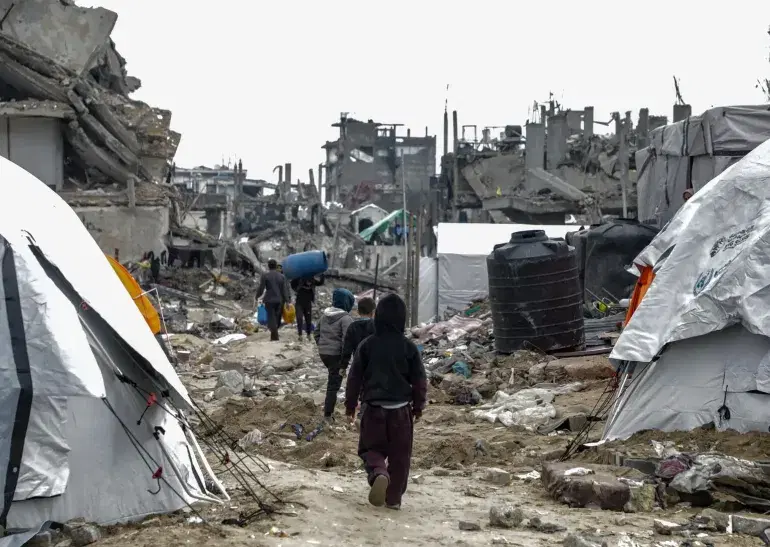
He indicated that almost all children need some form of mental health support to recover, in light of the continuing harsh living conditions, the approach of winter, damaged shelters, a lack of sanitation services, and overcrowding in displacement areas.
Pires pointed out that the ceasefire allowed more humanitarian aid and commercial supplies to enter the Strip and contributed to an improvement in the food security situation, noting the return of more than 560,000 children to learning, including in more than 200 education centers supported by UNICEF.
He added that the organization has provided digital cash assistance to more than 380,000 people during the current year and continues to provide safe water to about 1.2 million people, in addition to removing solid waste and delivering medical supplies.
He warned of the continued deterioration of sanitation services, explaining that the six wastewater treatment plants in the Strip remain out of service, and that most untreated sewage is pumped directly into the sea, which exacerbates health and environmental risks.
He noted that the Sheikh Radwan rainwater collection basin is half full, warning of the possibility of contaminated water flooding and submerging residential areas as winter rains approach, and the resulting risks that threaten the lives of children and their families.
He said that draining the basin is possible within two weeks, but Israel has not yet allowed the necessary equipment to enter Gaza, confirming that a lack of funding and massive needs limit the ability of humanitarian organizations to respond.
Pires called on the parties to the conflict to adhere to the terms of the ceasefire, Security Council Resolution 2803, and their obligations under international humanitarian law.
He emphasized that the recovery of Gaza's children requires enabling them to return to school, access decent shelter and healthcare, play safely, and restore their normal lives, adding that children have suffered more than they should and for too long.