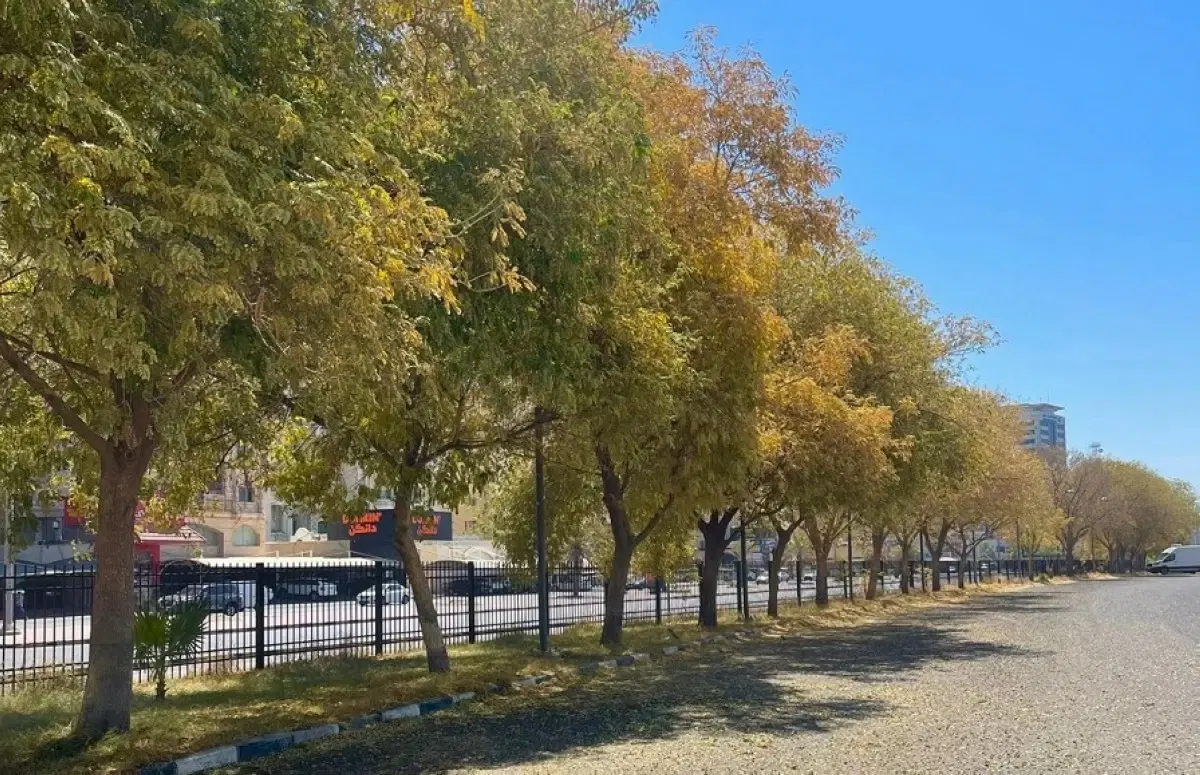
He pointed out that the water needs of trees vary according to soil type and depth, root spread, tree type, and age, noting that sandy soil loses water faster, while clay soil can retain larger amounts, but it may become hard and compact when severely dry.
He explained that the transition from the rainy season to the dry season usually begins in spring, making May an important month for monitoring soil moisture, especially after a winter with little rain, while September and October represent another transitional period during which trees may need additional monitoring, especially if autumn rains are delayed.
He emphasized that the decision regarding irrigation should not depend solely on the calendar but on soil moisture, tree condition, and rain forecasts, highlighting the importance of preventive irrigation aimed at preventing trees from reaching severe stress stages, rather than overwatering them.
Abu Dia pointed out that olive cultivation experiments in Jordan have shown the possibility of efficiently managing irrigation and saving significant amounts of water under certain conditions, through techniques such as regulated deficit irrigation.
He explained that conserving existing soil moisture is as important as providing additional water, noting that using organic mulch, such as wood chips, shredded branches, dry tree leaves, straw, and compost, helps protect the soil surface from the sun and wind, reducing evaporation and maintaining root zone moisture.
He also mentioned the potential to use stones and gravel in some circumstances, especially within systems aimed at slowing surface runoff, protecting the soil, and directing rainwater towards the root zone, stressing that the choice of the appropriate method depends on soil type, slope, and climate.
He stressed the importance of harvesting rainwater through small basins around trees, chains, stone barriers, and contour lines, which helps slow water flow and increase its infiltration into the soil.
He noted that experiments in several countries have shown the potential to benefit from atmospheric moisture capture technologies in areas with suitable fog conditions, but these methods are not suitable for all locations, and organic mulch, rainwater harvesting, and localized irrigation may be more practical in most areas of the Levant. Abu Dia emphasized that young trees deserve special priority in water provision, as their roots have not yet reached the depths that older trees can access, calling for making tree protection part of climate change adaptation policies. He concluded by saying that protecting trees from drought does not always require more water, but conserving existing water and managing it efficiently, affirming that a tree protected today can be a future source of shade, habitat for living organisms, a carbon reservoir, soil protector, and desertification barrier, making its care an investment in the environment and the future.