"The German Towel".. From a Gift of Expatriates to a Heritage Icon and Visual Identity of Ramtha City
Amman5 min read
Share
The "German Towel" is one of the most prominent heritage features that have become ingrained in the popular memory of Ramtha City, transcending its role as a daily cloth to become a cultural and social symbol that reflects an important aspect of the local community's identity and history linked to migration, trade, and interaction with other cultures.
The German Towel is characterized by its bright colors, floral patterns, and soft texture, which have given it a prominent presence in the social life of the people of Ramtha, especially during occasions, celebrations, and family gatherings, where it has been associated with hospitality and celebration, and has become part of the traditional visual scene that expresses the uniqueness and folk heritage of the city.
Academic researcher Dr. Mutasim Al-Daraisa told the Jordanian News Agency (Petra) that the German Towel is originally a piece designated for personal hygiene, but it later turned into a traditional headdress for Ramtha women, explaining that the roots of these transformations date back to the 1950s, when travel between the people of Ramtha and Germany for work and trade was active.
He pointed out that the Ramtha expatriates were returning to their city loaded with embroidered towels as gifts for their families, without having a specific heritage use at first, until a significant transformation occurred when a woman used it as a temporary head covering while her traditional headdress, the shmagh, was drying, which caught the attention of her neighbors who admired its beauty and the fluidity of its colors on the head.
Al-Daraisa added that this coincidence turned into a social phenomenon, as women began to wear the towel as a head covering, prompting merchants to import it in larger quantities from Germany to meet the growing demand, noting that the price of a single piece reached more than 50 dinars at times, indicating its social value and growing symbolism.
With its widespread use, the German Towel became an integral part of the traditional attire of Ramtha women, where it was associated with wearing the "shambar" and the Ramtha "mashqah" dress, forming a complete heritage painting that reflects the identity of the place and its aesthetic taste, and its use extended beyond the Ramtha district to become a distinctive sign attributed to the city and indicating it.
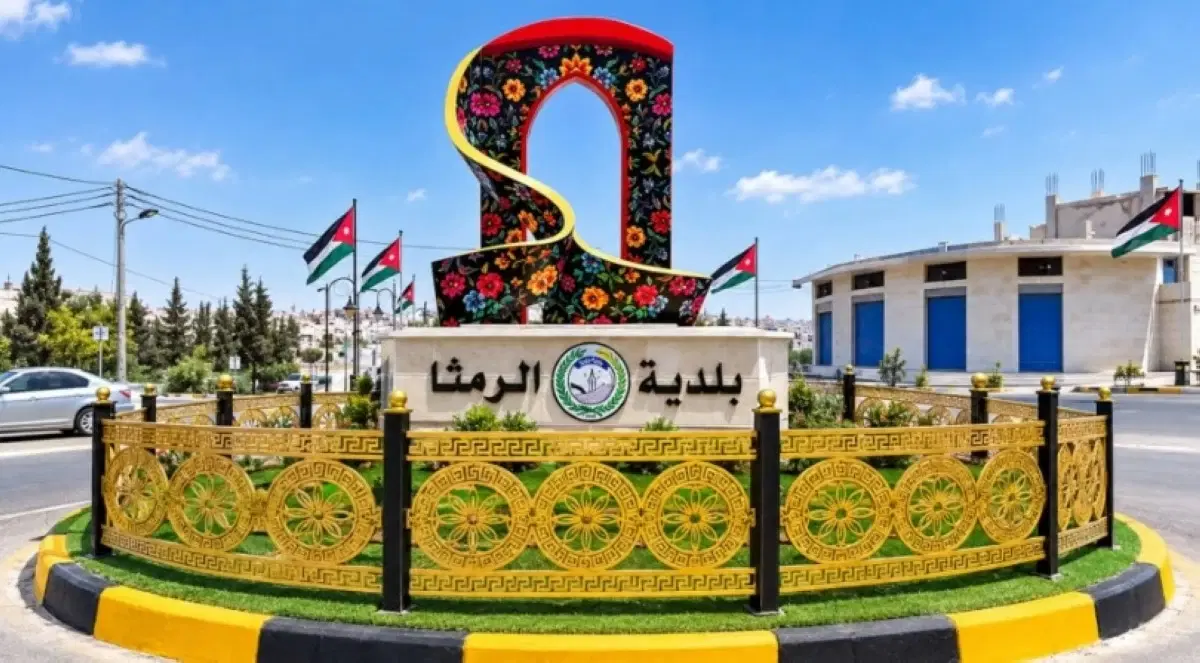
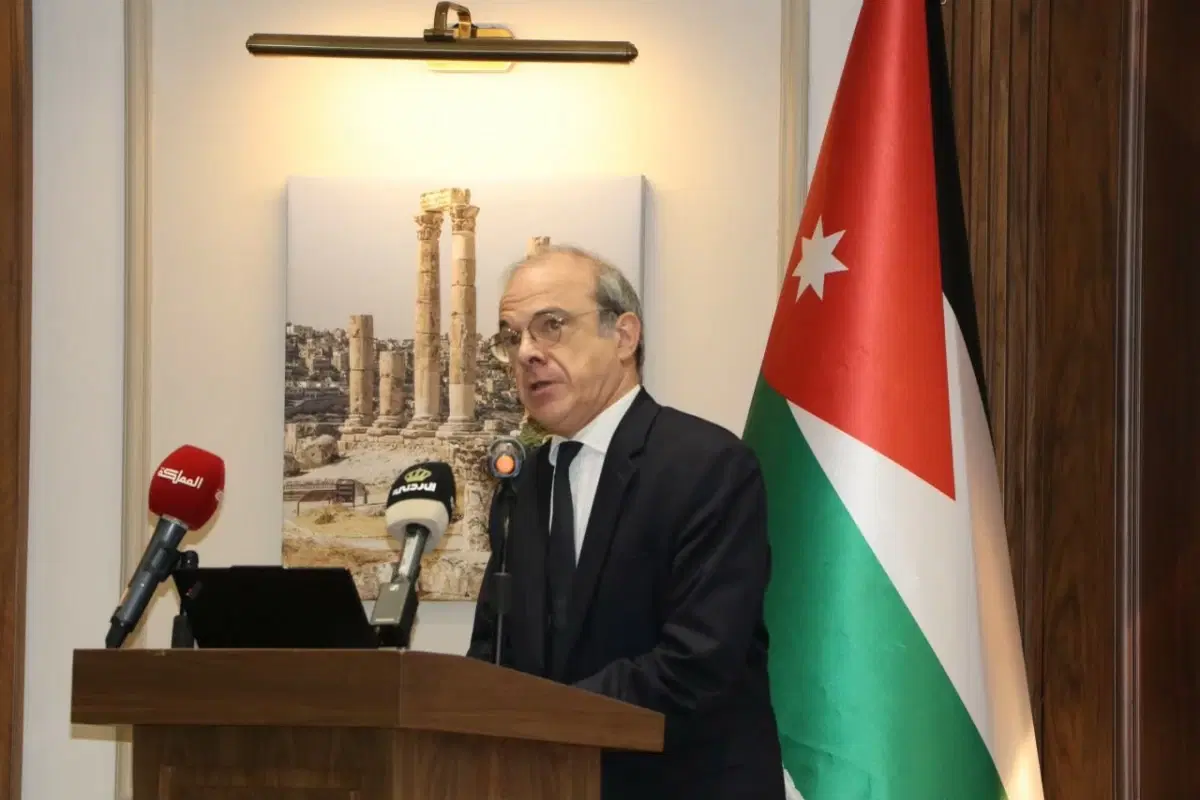
The head of the Ramtha Municipality Committee, Engineer Jamal Abu Obaid, told (Petra) that the municipality was keen to embody this heritage symbol by establishing the "Towel" roundabout, which was designed in the form of a banner flowing smoothly, in a visual expression that combines movement and softness, reflecting the symbolic value of this element in the minds of the city's people.
He explained that the general composition of the roundabout combines two elements in the shape of the letter "R", referring to the first letter of the name of Ramtha City in English, thereby enhancing the presence of the towel as a visual symbol and urban identity for the city.
Abu Obaid pointed out that the story of the German Towel clearly reflects the impact of exile in shaping the local heritage, as expatriates brought it as personal gifts, before women were inspired by the beauty of its colors and the softness of its texture to be reused within the traditional attire, gradually turning it into part of the social rituals in celebrations and occasions, and even into a gift of appreciation and moral significance.
For his part, Dr. Ibrahim Jit, a member of the Arab Association for Thought and Culture, said that the German Towel has become a heritage icon and a symbol of "Nashmiyya" in Ramtha City and the villages of the Horan Plain, confirming that it is associated with the feelings of the locals and reflects their history based on travel, trade, and openness to others.
He added that the towel is no longer just a piece of clothing, but has turned into a symbol that is celebrated in popular songs and poems, and is invoked in occasions as a sign of belonging and pride in local identity, and has become a visual element present in the collective memory that reflects the cohesion of society and the continuity of its traditions.
The German Towel today embodies a living model of the ability of the Ramtha community to absorb external elements and reproduce them within a special local context, becoming an integral part of the heritage, in a cultural interaction process that produced a renewable symbol that combines simplicity, elegance, and deep social significance.
Those interested in the popular heritage in Ramtha are keen to document this heritage and introduce the new generations to it, considering it a witness to an important historical phase of the city's life, and expressing the patterns of living and social relations that prevailed in the past, at a time when cultural and social transformations are accelerating.
The people of Ramtha believe that preserving the "German Towel" is not just about keeping it as a heritage piece, but represents the preservation of the collective memory and local identity, and enhances the continuity of the customs and traditions that have distinguished the city over long decades, so that this symbol remains a witness to its social, economic history, and transformations.