The Council of Ministers takes decisions to establish and support industrial and development projects in Ma'an and other decisions in education, energy and environment
Amman11 min read
Share
- Approval to establish a development zone on an area of 13 thousand dunums owned by the state treasury in the eastern Abu Ammoud area in Ma'an Governorate; to establish 3 strategic industrial projects for the production of phosphoric acid, pure phosphoric acid, and sulfuric acid, with the Jordan Phosphate Mines Company being the main developer of this region.
Approval for the Ministry of Labor to implement a support mechanism for the productive branches program, related to supporting and employing local labor in the Rawdah Industrial Zone in the development region in Ma'an Governorate, within a set of other incentives including: supporting electricity prices by up to 75%, reducing land prices by up to 50%, and supporting the cost of container handling in the port of Aqaba; with the aim of expediting procedures and increasing efficiency.
Approval to unify the registration age for imported tractor heads (trucks), and allow the import of those that have been manufactured for 5 years or less before the clearance year, and allow the clearance, registration, and licensing of tractor heads that have been manufactured for 8 years before the clearance year, according to the mechanism agreed upon between the Land Transport Regulatory Authority, the Customs Department, and the Drivers' and Vehicles Licensing Administration, until 31/12/2026.
Approval to unify the exemptions, incentives, and benefits granted to green hydrogen projects established within and outside the Aqaba Special Economic Zone.
Approval of the reasons for a modified system for the teaching staff in Yarmouk University for the year 2026.
Approval to exempt the "UNRWA" Agency from the prices of textbooks for the current academic year; as a continuation of supporting the Agency and enabling it to continue providing its basic and necessary services to its beneficiaries, the Palestinian refugees on the land of the Kingdom.
Approval of the reasons for a draft system for the conditions for granting licenses for various activities in the gas sector, their durations, procedures for issuance, renewal, amendment, transfer, and cancellation for the year 2026; in preparation for sending it to the Council of Ministers and the Opinion Bureau to complete the procedures for its approval according to the law, and based on the Gas Law.
Approval of the sustainable financing plan for the National Strategy for Municipal Solid Waste Management and assigning the Ministries of Local Administration and Environment to take the necessary measures to implement it in coordination with the concerned authorities according to the law.
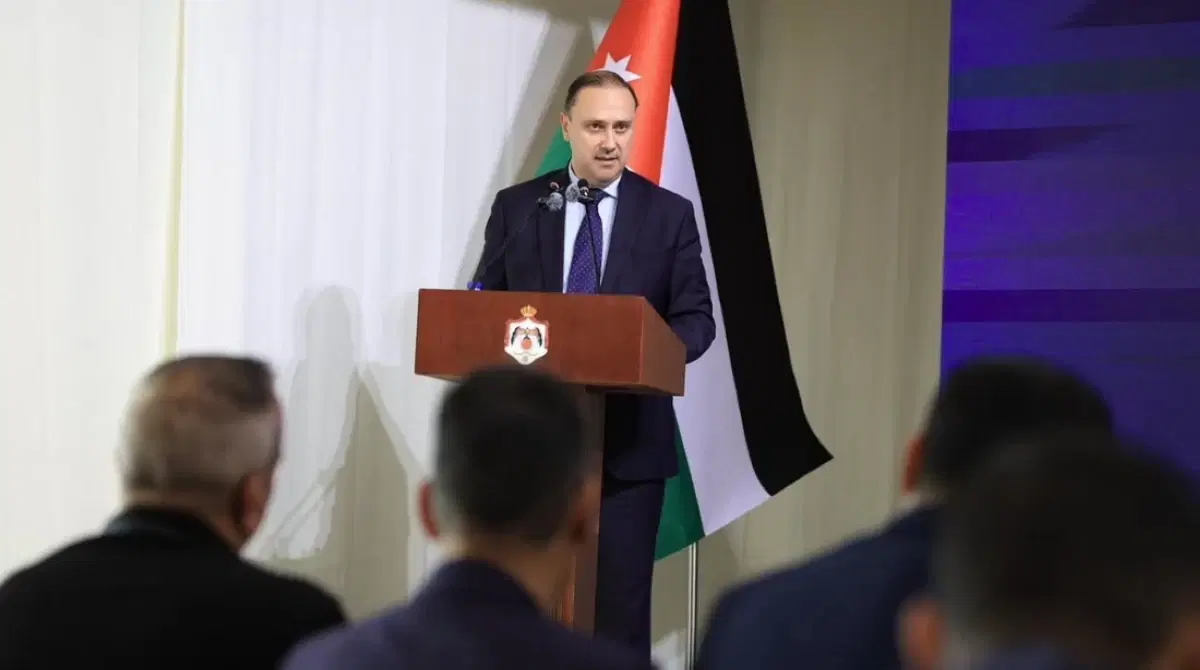
The Minister of State for Media Affairs, the official spokesman for the government, Dr. Muhammad Al-Momani, announced that the Council of Ministers decided in its session held today in Ma'an Governorate, to approve the establishment of a development zone on an area of 13 thousand dunums owned by the state treasury in the eastern Abu Ammoud area in Ma'an Governorate.
Al-Momani explained during a press conference he held after the session, that the establishment of this zone aims to establish 3 strategic industrial projects for the production of phosphoric acid, pure phosphoric acid, and sulfuric acid, indicating that the Jordan Phosphate Mines Company will be the main developer of this region.
The decision comes within the framework of the government's efforts to support investment in Ma'an Governorate and the southern regions, which contributes to achieving a developmental impact that necessarily reflects on the economic activity in the region, and provides job opportunities for the local community.
Momeni also revealed another decision that comes in implementation of the Council of Ministers' decision to grant the Rawdah Industrial City in the Ma'an Development Region incentives and privileges to enhance its competitiveness for investment and attract investments and provide job opportunities, where the Council of Ministers decided to approve that the Ministry of Labor will implement a support mechanism for the productive branches program related to supporting and employing local labor within these incentives; with the aim of expediting procedures and increasing the effectiveness of benefiting from these programs.
Accordingly, the Ministry of Labor will pay 50% of the minimum wage to support the employment of Jordanian labor in factories established in Rawdah Industrial City, in addition to a monthly allowance of 25 dinars for social security subscription and another 25 dinars for transportation.
The decision comes after the Council of Ministers approved last month to grant Rawdah Industrial City, affiliated with the Ma'an Development Region, investment incentives and benefits, similar to the incentives provided to Karak and Tafila Industrial Cities; with the aim of attracting new, quality industrial investments to it, reducing costs on local industries and enhancing their competitiveness; which contributes to supporting the national industry and increasing the volume of exports, increasing its contribution to the national economy and growth, and providing job opportunities for the sons and daughters of the region, in line with the objectives of the Economic Modernization Vision.
The incentives and exemptions provided to Rawdah Industrial Zone include support for electricity prices for industrial investments through the Electricity Distribution Company reducing the value of electricity over 5 years, by 75% for the first two years from the actual start date of the project, 50% for the next two years, and 25% for the fifth year, as well as including it in the small and medium industries definition adopted by the Energy and Minerals Sector Regulatory Authority, and the electricity bill support program implemented by the Jordan Economic Projects Development Institution, which allows it to benefit from these incentives and benefits.
The incentives and benefits also include including Rawdah Industrial Zone in the productive branches program in the Ministry of Labor, through which support is provided for employing local labor by paying wages, or parts of them, or the government bearing the value of labor subscriptions in social insurance, or transportation allowance for a period of three years.
It also includes supporting the cost of container handling in the port of Aqaba for exported goods originating from Rawdah Industrial City at a rate of 50% for a period of three years, in addition to reducing land prices in Rawdah Industrial City to become 7.5 dinars per square meter instead of 15 dinars, for areas exceeding 20 dunums and a total area not exceeding 120 dunums.
In a related context, the Council of Ministers - according to Momeni - approved the unification of incentives, benefits, and exemptions granted to green hydrogen projects established within and outside the Aqaba Special Economic Zone.
The incentives include reducing the income tax to 5% plus 1% national contribution, exempting all equipment and spare parts necessary for establishing the project from its fixed assets, from customs duties, other taxes incurred on them, and import fees, and other fees.
The incentives also included exempting the project from the general sales tax and sales tax stipulated in Article 37 of the Aqaba Special Economic Zone Law No. 32 of 2000, and any other taxes, and that the tax exemptions include services, whether local or international, in addition to the goods and materials necessary for the project.
It also included granting the project company the right to benefit from any additional exemptions from fees and taxes that may be granted later to industrial projects, in addition to exemption from the withholding tax on imported services.
The incentives give a grace period for starting to collect rent for lands owned by the treasury and the Aqaba Special Economic Zone Authority until the project starts operating, with a maximum of five years.
The Council of Ministers also decided to approve the unification of the registration age for imported tractor heads (trucks), and allow the import of those that have been manufactured for 5 years or less before the clearance year, in exchange for removing a registered, operational, and licensed tractor head from service, through cancellation or re-exporting, according to the mechanism agreed upon between the Land Transport Regulatory Authority, the Customs Department, and the Drivers' and Vehicles Licensing Administration, provided that the vehicle to be replaced is registered on the Land Transport Regulatory Authority system.
The decision also included allowing the clearance, registration, and licensing of tractor heads that have been manufactured for 8 years before the clearance year, and deposited in Jordanian free zones under original deposit requests, or those that have been purchased, contracted, or shipped to the Kingdom, or located within the Aqaba Special Economic Zone or customs warehouses (bonded) or located within the Kingdom's territory before or on the date of the Council of Ministers' decision, in exchange for removing a registered, operational, and licensed tractor head from service, through cancellation or re-exporting, according to the mechanism agreed upon between the Land Transport Regulatory Authority, the Customs Department, and the Drivers' and Vehicles Licensing Administration, without any exemptions, provided that the vehicle to be replaced is registered on the Land Transport Regulatory Authority system.
The decision stipulated that the clearance of tractor heads must be completed before the end of the working day of 31/12/2026, and this date is considered a final, non-extendable date.
The decision aims to enhance the capabilities of the land transport fleet, and increase its volume, which positively reflects on it; considering it one of the best fleets at the regional level.
Within the framework of procedures and decisions related to the regulation of educational affairs, the Council of Ministers also decided to approve the reasons for an amended system for the teaching staff system at Yarmouk University for the year 2026; in preparation for sending it to the Legislation and Opinion Office to proceed with its approval procedures according to the rules.
The system project aims to align the provisions of the system with the provisions of the Universities Law, and to regulate some provisions related to the teaching staff members at the university.
Within the framework of the Kingdom's continued support for the United Nations Relief and Works Agency for Palestine Refugees (UNRWA), the Council of Ministers decided to approve the exemption of the agency from the cost of textbooks for the current academic year, amounting to more than 3.3 million Jordanian Dinars.
The decision comes as a continuation of support for the agency and to enable it to continue providing its essential and necessary services to Palestinian refugees benefiting from it in the Kingdom, in line with the Kingdom's supportive stance towards UNRWA.
Within the framework of updating the legislation governing the energy sector, the Council of Ministers decided to approve the reasons for the draft system of conditions for granting licenses to practice activities in the gas sector, their durations, procedures for their issuance, renewal, amendment, transfer, and cancellation for the year 2026; in preparation for sending it to the Legislation and Opinion Office to complete the procedures for its approval according to the rules.
Under the draft system, a regulatory framework will be created to enhance the efficiency of work in the gas sector, and to encourage investment in it by unifying, simplifying, and governing procedures, and specifying the necessary conditions and controls for granting licenses to practice activities in the gas sector, their durations, procedures for their issuance, renewal, amendment, transfer, and cancellation.
The provisions of the draft system also include procedures for regulating new activities in the sector, which require a clear regulatory framework to ensure good organization and integration with the rest of the electrical system components; to contribute to the governance of its work, the regulation and simplification of procedures for everyone, and the expansion of the use of natural gas as it is less costly by up to 50%; which constitutes support for industry and investment and diversification of the energy mix.
The Council of Ministers also decided to approve the sustainable financing plan for the National Strategy for Municipal Solid Waste Management, and to task the Ministries of Local Administration and Environment to take the necessary measures to implement it in coordination with the concerned authorities according to the rules.
The strategy aims to enhance public health and protect the environment, by ensuring universal access to waste collection services, which contributes to preventing air, soil, and water pollution, and processing the majority of solid waste produced in Jordan, which contributes to reducing greenhouse gas emissions and aligning Jordan with international best practices and efforts to mitigate the effects of climate change.
The strategy encourages the establishment of partnerships with the private sector to achieve its objectives, given that the private sector can contribute to enhancing operational efficiency and improving performance, in addition to involving various segments of society in recycling waste.
During the press conference, Momani presented the main features of the development vision for Ma'an Governorate in various sectors, as well as answering journalists' questions about many issues and files specific to the governorate.
On another note, the Council of Ministers decided to terminate the services of two members of the Board of Commissioners of the Petra Development and Tourism Region Authority, namely: Dr. Shaker Al-Adwan / Deputy Chairman of the Board, and Dr. Fatima Al-Hilalet, and to accept the resignation of Eng. Yazan Al-Mahadeen / Commissioner of the Protected Area and Tourism.