
20 development zones map industrial investment.. 6.9 billion dinars and 123 thousand job opportunities
4 days instead of 15.. «Fast Track» accelerates project licensing in development zones
Follow Al Rai

Investment Ministry to Alrai
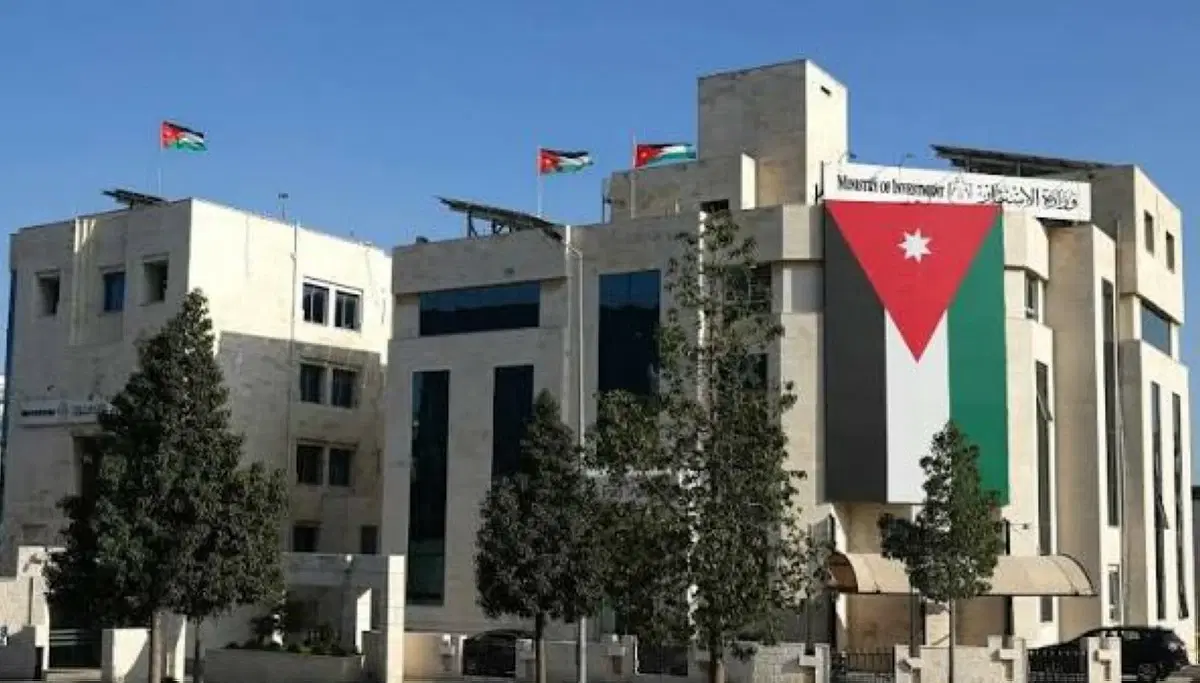
20 development zones map industrial investment.. 6.9 billion dinars and 123 thousand job opportunities
4 days instead of 15.. «Fast Track» accelerates project licensing in development zones
The Ministry of Investment leads an integrated system to enhance the attractiveness of development zones
120 investment opportunities on the «Invest in Jordan» platform
Development zones.. Investment expands and a business environment evolves
The Ministry of Investment continues to strengthen its role in building a more competitive and attractive investment environment, through an integrated system of directorates that work together to develop development zones, facilitate investment procedures, provide incentives and exemptions, promote investment opportunities, and serve investors, translating the state's direction towards accelerating investment and distributing the benefits of development across various governorates of the Kingdom.
The results of the Ministry's work are evident through its concerned directorates, primarily the Directorate of Regulation and Compliance, the Directorate of Urban Planning and Licensing, the Directorate of Incentives and Exemptions, the Directorate of Business Development, and the Directorate of Investment Services, in advanced indicators reflecting the expansion of investment activity and the development of regulatory, digital, and service tools provided to investors.
The Kingdom has 20 specialized development zones distributed across the governorates, attracting investments amounting to approximately 6.9 billion dinars, with 1676 companies operating in them, providing about 123 thousand job opportunities, reflecting the expansion of the economic and productive activity base within these zones and their role in supporting employment and stimulating the local economy.
As an indication of the growing attractiveness of the investment environment, the number of prepared and offered investment opportunities through the «Invest in Jordan» platform (Invest.Jo) increased from 44 opportunities during the first half of 2025 to 120 opportunities during the first half of 2026, distributed across various sectors and governorates of the Kingdom, facilitating investors' access to opportunities and related information.
The total expected investments for new projects registered in development zones increased from 60 million dinars during the first half of 2025 to 402 million dinars during the same period in 2026, while the total investment volume in development zones increased from about 5.8 billion dinars to nearly 6.9 billion dinars, with a growth rate of 18.79% during the first half of the current year.
These indicators reflect a growing trend towards enhancing the role of development zones as economic platforms capable of attracting new investments, enabling existing projects to expand, and providing a more flexible and rapid environment for investors, in parallel with digital transformation and streamlining procedures, which are results that integrate the roles of the Ministry of Investment's directorates concerned with regulation, licensing, incentives, promotion, business development, and investor services.
The Directorate of Regulation and Compliance at the Ministry of Investment oversees the organization of work in development and free zones, monitoring their sustainability, ensuring that major developers comply with their tasks and responsibilities according to current legislation and major development agreements, in addition to supervising construction, the environment, and economic activities to verify compliance with regulatory, health, and environmental requirements.
Director of the Directorate of Regulation and Compliance, Abdullah Al-Atawi, said that the Directorate is also responsible for registering institutions, granting occupancy permits, and licenses to practice economic activities to ensure public safety, enabling projects to benefit from incentives and operate within an attractive and sustainable investment environment.
He added that the Directorate contributed during the first half of 2026 to enabling investments within development and free zones, developing legislative and regulatory frameworks, establishing a compliance approach and subsequent monitoring, and enhancing the governance of developers' performance.
He pointed out that the Directorate registered 46 new investment projects with an expected investment volume of 402 million dinars, and these projects are expected to provide 1841 job opportunities.
It also issued and renewed 56 occupancy permits to enable investment projects in development zones to start their activities, with a total area of approximately 126 thousand square meters.
He pointed to the issuance of a Cabinet decision to expand the boundaries of existing free zones and establish a new free zone in the Petra region, based on a study and recommendation by the Committee for the Establishment of Development and Free Zones, contributing to expanding the scope of logistics and commercial services, enhancing the investment environment, and supporting economic development in various regions of the Kingdom.
In the context of digital transformation, the Directorate developed a smart data platform for development and free zones, providing updated data on projects, evaluating developers' performance and investor satisfaction, and employing artificial intelligence to answer inquiries and support decision-making.
Efforts to improve services were reflected in the investor satisfaction index with developers' performance, which increased from 75.1% to 77.1%, reflecting an improvement in the level of services provided.
Standardized disclosure and inspection models for developers were also prepared and circulated, enhancing governance of procedures and confirming inspection methodologies, regulatory and environmental requirements, in addition to conducting periodic inspection and environmental checks in development zones to reduce violations and ensure compliance with public safety and regulatory standards, activating the powers granted to the Directorate under the Investment Environment Law and its amendments.
The development of procedures also contributed to speeding up the issuance of occupancy permits, reducing the completion time from about two weeks to approximately 5 working days.
Al-Atawi confirmed that the Directorate is working on developing an investment calculator that enables investors to review expected incentives and investment costs, helping them make investment decisions based on clear criteria.
The calculator allows investors to simulate multiple investment scenarios within minutes, compare benefits between different locations and economic activities, and calculate major costs they face, including company establishment, project setup, labor, residence, electricity, water, and tax costs, culminating in a report summarizing costs and key investment incentives that the project can benefit from.
Work is also underway to establish a data platform for development zones to provide updated official data supporting decision-makers in building more accurate and effective investment policies, including data on investment projects within development zones and their continuous updates, quarterly performance evaluations of developers based on five criteria, investor satisfaction surveys, and an AI-powered assistant to answer inquiries immediately and provide improvement plans based on evaluation results and surveys.
The platform serves as a tool to support decision-makers, motivate investors, and a reference for data related to development and free zones, as the Directorate works on developing digital tools to evaluate the performance of major developers and measure investor satisfaction, and to include free zones in the electronic data platform and digitize inspection tools and field checks.
The Directorate also developed a system for licensing economic activities based on compliance, enabling investors to start their businesses and obtain related services, contributing to the transition from traditional inspection to the concept of self-compliance.
In terms of urban planning and licensing, the Directorate explained that its role is to develop comprehensive plans and the organizational and digital infrastructure of development zones to support project establishment and expansion, providing integrated and effective organizational and licensing services.
Director of the Urban Planning and Licensing Directorate, Engineer Minas Al-Atla, said that the Ministry, pursuant to Article 23 of the Investment Environment Law, exercises regulatory work as the regulatory authority for development and free zones, which include development zones and free zones, explaining that the Ministry issues construction permits, occupancy permits, and professional licenses, and works on preparing comprehensive plans, issuing site organization plans, and managing the entire real estate file within development zones.
She explained that the Ministry provides the service according to the «One Stop Shop» model, where the investor's procedures start and end entirely at the Ministry, noting that the procedures have become shorter, smoother, more flexible, and faster, reducing the time investors need to complete their transactions.
Al-Atla added that the Ministry continuously listens to feedback from investors and works to meet their needs, especially since some economic activities, particularly industrial ones, have special requirements related to space, good manufacturing practices (GMP), and some environmental requirements, among others, linked to other entities such as the Civil Defense.
She pointed out that the Ministry allows landowners or investors, according to their project design and production process needs, to submit requests for regulatory adjustments that suit the project's specificity, facilitating their investment of the land in a way that aligns with their project's nature and needs.
She noted that since the beginning of the year, regulatory decisions have been made for 56 projects with an expected attracted investment volume of 55.3 million dinars, including regulatory facilities that helped these projects make their investment decisions and invest within development and industrial zones.
In the framework of speeding up procedures, Al-Atla confirmed that the ministry was the first regulatory body to launch the fast track for issuing the construction license and granting the occupation permit for the investment project in the development areas, considering it a qualitative leap in the regulatory process within the efforts to zero bureaucracy and engineering procedures.
She explained that the traditional procedures that were based on mechanisms followed for many years no longer match the current speed of work, especially in light of digital transformation and artificial intelligence, indicating that issuing the license means the start of the project implementation, and therefore speeding up the licensing directly reflects on the speed of the project turning into a productive reality that provides job opportunities and contributes to stimulating the economy.
She pointed out that the ministry worked on creating a fast track within the licensing process for projects whose documents are complete and compliant with the provisions, so that they do not go through the same procedures that traditional transactions go through, and the process of reducing the service duration reached issuing the license within 72 hours.
The ministry also issued 55 construction licenses, including 36 licenses for the expansion of existing projects, which enhances reinvestment, production, and operation.
The Directorate of Urban Planning and Licenses confirmed that developing the organizational work and keeping pace with the integration of digital tools in service delivery represents one of the targets of its development plan, aiming to achieve an automatic service that serves the investor regardless of their geographical presence and eliminates traditional methods of issuing approvals.
In terms of incentives and exemptions, the Directorate of Incentives and Exemptions in the Ministry of Investment is responsible for granting, implementing, and following up on exemptions and incentives for new economic activities, expansion, and development within and outside the development areas, in addition to coordinating with the relevant regulatory and legislative authorities, with the aim of facilitating regulatory procedures and integrated information linking regarding the beneficiaries of incentives, including mechanisms for verifying exempted quantities and monitoring actual use, ensuring transparency, legal compliance, and achieving optimal use of investment incentives.
The Director of the Directorate of Incentives and Exemptions, Duaa Al-Saqqa, said that the directorate is also working to resolve outstanding issues for economic projects with partner entities, contributing to supporting and improving the business environment.
She pointed out that the directorate completed 3801 exemption transactions during the period, including 327 new projects, expansions, and developments, with an expected investment volume of 711.2 million dinars.
She pointed out the preparation of a unified guide for incentives and exemptions to unify procedures and provide an instructional reference for investors, in addition to creating codes and tariff items for all exempted categories and materials of local purchases to facilitate the application of exemptions granted to economic activities.
The directorate also began developing an electronic system for managing the inventory of fixed assets and exempted production inputs within the development areas, enhancing the efficiency of incentive management and increasing the level of monitoring and transparency.
In terms of developing investment opportunities, the Business Development Directorate in the Ministry of Investment works on economically and financially evaluating opportunities and projects, converting them from general ideas into clear projects that can be promoted and implemented, starting from the fact that an attractive investment opportunity begins with study and readiness.
The base of prepared investment opportunities displayed through the “Invest in Jordan” platform expanded from 44 opportunities in the first half of 2025 to 120 opportunities in the first half of 2026, distributed across various sectors and governorates of the Kingdom, enhancing the reach of investment to different regions and economic sectors of the Kingdom.
The platform, along with other digital services, provides accurate data on the locations and characteristics of opportunities through a geographic browser and electronic tools, helping the investor to make a decision based on clear criteria and shortening the journey of searching for and reaching the appropriate opportunity.
In parallel, the Investment Services Directorate in the Ministry of Investment continues to provide integrated services to investors, where 1690 investor cards were issued and renewed for investors and their families, including 536 new cards, in addition to completing more than 47 thousand transactions through government agency commissioners represented within the ministry. These results confirm that what has been achieved in the development areas and the investment environment does not come from a single measure, but from an integrated work led by the Ministry of Investment through its various directorates; starting from organizing areas and monitoring compliance, preparing and promoting investment opportunities, providing incentives and exemptions and investor services, up to planning, licensing, organization, and digital transformation.
This system is more clearly visible in the development areas that the Ministry of Investment organizes its work in various parts of the Kingdom, considering them areas designated for multiple fields of business and industries, aiming to distribute the benefits of economic development, create job opportunities, and provide an integrated system of services supporting investors.
With the continuous development of digital tools, expanding the base of investment opportunities, speeding up regulatory procedures, and increasing investor satisfaction, the Ministry of Investment, through its specialized directorates, continues to establish development areas as economic platforms whose effects extend to governorates and local markets, supporting employment and production, in line with the targets of the economic modernization vision and enhancing Jordan's competitiveness as a regional investment destination.
Know more about this story?Send us a tip
Ask about this report — answers stay grounded in its text.




