Intensive deployment of occupation forces in Jerusalem
Amman4 min read
Share
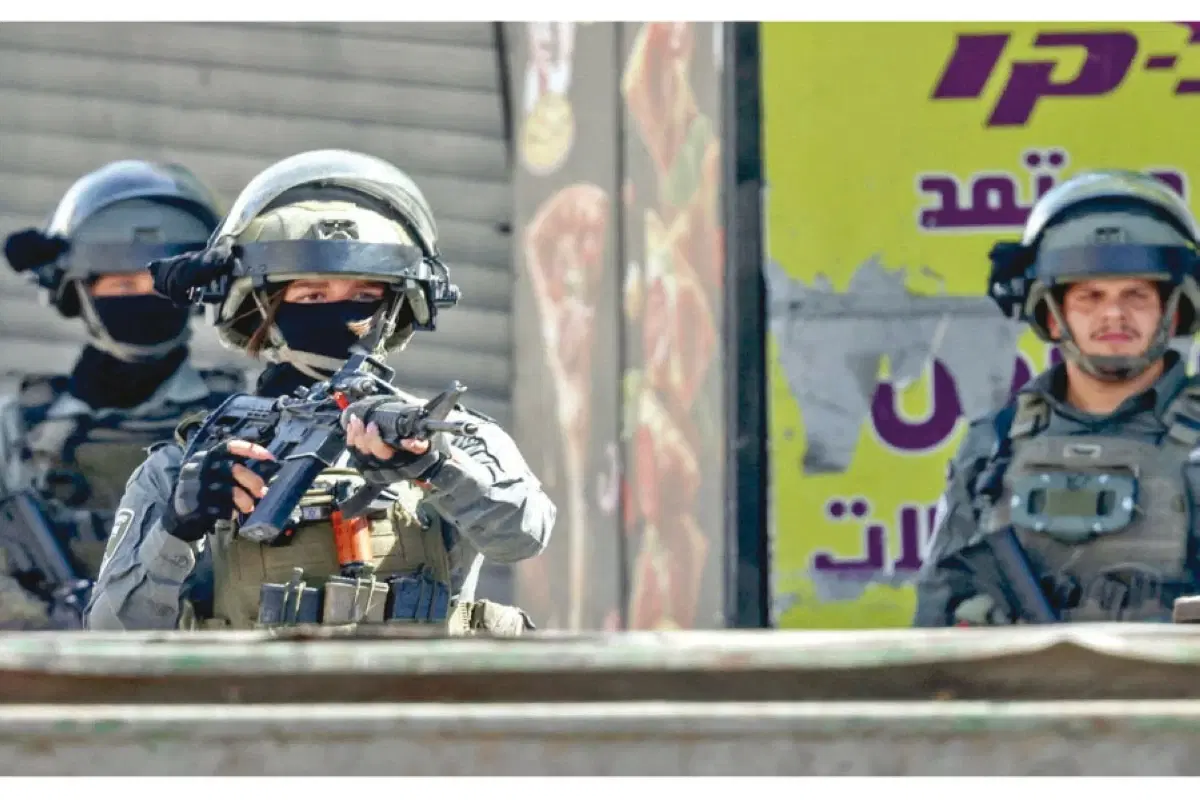
Approximately 60,000 worshipers performed Friday prayers at the blessed Al-Aqsa Mosque, despite the strict military measures imposed by the Israeli occupation forces on the city of Jerusalem, the Old City, and the entrances to the mosque since the early hours of dawn, amidst an intensive deployment of thousands of police and special forces, turning the city and the mosque's surroundings into something resembling a military barracks.
The occupation forces set up military checkpoints in various parts of the city and the alleys of the Old City, tightened their measures at the gates of Al-Aqsa Mosque, stopped dozens of young men and checked their IDs, while preventing a number of them from reaching the mosque and performing prayers there.
Despite the security restrictions and the tight siege, tens of thousands of worshipers flocked to the courtyards of Al-Aqsa Mosque, where they performed Friday prayers and the absentee funeral prayer for the souls of the martyrs.
The preacher of the blessed Al-Aqsa Mosque, Sheikh Dr. Mohammed Salim, addressed in his sermon, titled "The Covenant of Faith," the concept of faith as a pact that reflects on human behavior and stances, emphasizing the necessity of adhering to religious teachings and translating faith into action in public and private life.
Salim began his sermon by reciting the Almighty's saying: "And fulfill the covenant of Allah when you have made a covenant," pointing out that faith is based on a covenant between the servant and his Lord, which requires fulfilling religious obligations and submitting to the law of Allah, considering this a duty for Muslims, both rulers and the ruled.
The preacher questioned the extent of commitment to applying the law of Allah in real life, citing the Almighty's saying: "And whoever breaks it, only breaks it to the detriment of himself," explaining that fulfilling the covenant requires commitment to the duties that follow, just as in contracts that regulate the rights of parties and ensure the fulfillment of obligations.
Salim gave the example of a contract for the sale of a residential apartment, in which the seller commits to delivering it according to the agreed specifications, and the buyer commits to paying the full price, with the contract documented to preserve rights. He said that the covenant of faith resembles this contract in terms of commitment and fulfillment, explaining that the believer's goal is to attain Paradise and eternal bliss, and that fulfilling this covenant requires ascending in the ranks of religion, from Islam and faith to excellence (Ihsan), piety, and certainty.
The preacher called for self-reflection and accountability, asking whether the righteousness of the heart and the affirmation of the tongue are sufficient without faith being reflected in a person's actions and behavior. He cited the Hadith of the Prophet Muhammad, peace be upon him, regarding the branches of faith, calling on worshipers to contemplate the extent of their commitment to these branches and what they embody of them in their daily lives.
Salim touched upon manifestations he described as a return to the morals of the pre-Islamic era (Jahiliyyah), invoking in his speech the Mother of the Believers, Aisha, may Allah be pleased with her, and pointing to practices that contradict the teachings of Islam, including usury, consuming inheritance unjustly, the precursors to adultery, and violating the sanctities of Allah.
He also criticized loyalty to anyone other than Allah, His Messenger, and the believers, warning that a person's behavior and stances should not contradict the requirements of faith, and asking about those who expose themselves to punishment because of their loyalty that conflicts with religious values.
The Al-Aqsa Mosque preacher likened the "covenant of faith" to pure gold that has no flaws, emphasizing that it should be free from hypocrisy, showing off, innovation, and misguidance, in a metaphor that links the purity of faith to the necessity of sincere intention and upright action.
In the second sermon, Salim stressed that faith is not proven by mere claim, but is confirmed by stances and actions, citing the popular proverb "Water reveals the diver," indicating that practical practice reveals the truth of the convictions and stances a person declares.
He cited the Almighty's saying: "Allah would not leave the believers in that [state] you are in until He separates the evil from the good," calling for the renewal of faith and the consolidation of its meanings in the life of the individual and society.
Salim concluded his sermon by calling for the renewal of the "covenant of faith" in hearts, behavior, and public and private life, saying that it is "the covenant of salvation from every distress, hardship, and calamity," before the worshipers raised their hands in prayer.