Senate Palestine Committee discusses repercussions of Israeli measures against UNRWA
Amman6 min read
Share
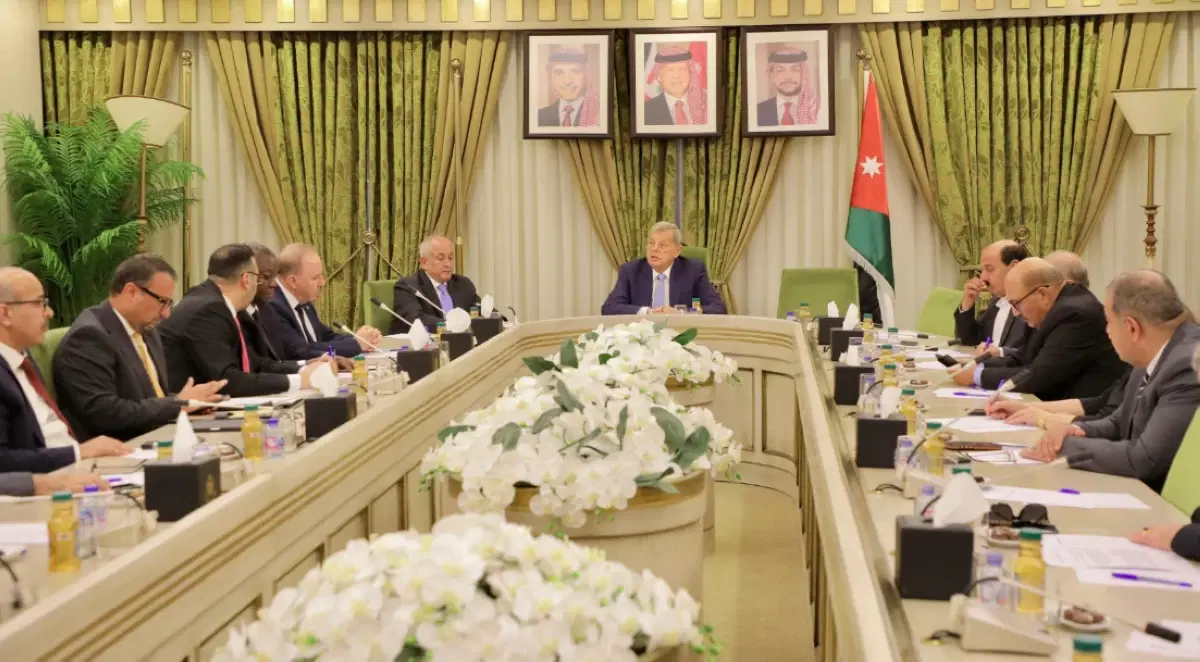
The Senate Palestine Committee, chaired by Senator Mazen Darwazeh, discussed on Thursday the repercussions of Israeli attacks and measures against the United Nations Relief and Works Agency for Palestine Refugees (UNRWA), and their impact on the agency's role and the services it provides to Palestinian refugees.
This came during the committee's meeting with the Director of UNRWA Affairs in Jordan, Oumaya Michael Ebeid, and the Director-General of the Department of Palestinian Affairs at the Ministry of Foreign Affairs and Expatriates, Rafiq Khirfan, where the reality of the agency's work and the most prominent challenges it faces were reviewed, in light of Israeli measures aimed at restricting its work and limiting its ability to provide its services.
Senator Darwazeh emphasized that UNRWA is not merely a relief body or an institution that provides humanitarian, educational, and health services, but rather a UN agency established by a resolution of the UN General Assembly. For more than 7 decades, it has constituted a fundamental pillar in the international response to the Palestinian refugee issue, and an international witness to their cause and legitimate rights, foremost among them their right to return and compensation in accordance with international resolutions and references.
He expressed his rejection of the systematic and unprecedented targeting that the agency is being subjected to, whether through laws and measures that target its mandate and restrict its activities, or attacks on its headquarters, facilities, and staff, pointing to the storming and forcible seizure of the UNRWA Kalandia Training Center, and what this represents as a violation of the sanctity of a UN facility and an infringement on the immunity of UN institutions.
Senator Darwazeh stressed that harming UNRWA or weakening its ability to carry out its mandate represents a direct infringement on international responsibility towards the Palestinian refugee issue, emphasizing the need to protect the agency and enable it to continue providing its educational, health, relief, and social services to refugees.
He affirmed that the firm and historical Jordanian position is that "there is no alternative to UNRWA except for a just and comprehensive political solution to the Palestinian refugee issue," in accordance with international references and international legitimacy resolutions, led by Resolution 194, warning that any attempts to transfer the agency's powers or end its role in the absence of a just political solution are attempts to liquidate the refugee file and marginalize their rights.
He praised the efforts of Jordanian diplomacy, led by His Majesty King Abdullah II, and in coordination with the Ministry of Foreign Affairs and Expatriates and the Department of Palestinian Affairs, to defend UNRWA's mandate and mobilize the necessary support and funding for it, stressing the importance of continued cooperation and coordination between Jordanian authorities and the agency to maintain the level of services provided to refugees in the camps.
Senator Darwazeh pointed out that the continuation of the humanitarian tragedy in the Gaza Strip, and the victims and destruction left by the war, in addition to Israeli attacks and measures in the West Bank and Jerusalem, including settlement activity, settler attacks, and forced displacement, increases the need for the continued humanitarian role of the United Nations and its agencies, foremost among them UNRWA.
He welcomed international positions rejecting the policies of occupation and settlement, and the measures taken by Britain and a number of European and friendly countries regarding trade with Israeli settlements in the occupied Palestinian territories, considering that these positions represent an important development towards taking practical steps to hold those who violate international law accountable.
Senator Darwazeh drew attention to the financial crisis facing UNRWA and the funding gaps that threaten basic programs, foremost among them education, health, relief, and protection, emphasizing that the education of Palestinian refugee children is a fundamental right, and the necessity of providing sustainable funding for the agency, ensuring effective protection for its facilities and staff, and enabling it to perform its responsibilities in full.
For his part, Khirfan said that UNRWA is facing severe financial crises, coinciding with Israeli attempts to end the agency's work, as it is an international witness to the issue of Palestinian asylum and refugee rights, noting that about 90 percent of UNRWA facilities in the Gaza Strip have been destroyed as a result of the Israeli aggression.
He emphasized that Jordan, led by His Majesty King Abdullah II, is considered one of the largest supporters of UNRWA, noting that the Kingdom hosts about two million Palestinian refugees, which makes the agency's continued performance of its tasks and provision of services of paramount importance, especially in the fields of education, health, relief, and social services.
Khirfan pointed out that Jordan, under the directives of His Majesty King Abdullah II and through the Ministry of Foreign Affairs and Expatriates, is working to mobilize support for UNRWA by holding conferences in cooperation with Jordan to support the agency and urging donor countries to provide the necessary funding for it, in addition to working to facilitate UNRWA's work in Jordan and enable it to continue providing its services to Palestinian refugees.
For his part, the Director of UNRWA Affairs in Jordan, Oumaya Michael Ebeid, expressed his appreciation for the efforts of His Majesty King Abdullah II in supporting the Palestinian cause and the rights of the Palestinian people, and supporting UNRWA and assisting Palestinian refugees, while simultaneously valuing the efforts of the Senate, represented by the Palestine Committee, and its interest in the agency's role and support for its work.
Ebeid noted that UNRWA manages 161 schools in Jordan, pointing to the opening of all agency schools with the start of the academic year, and its continued provision of educational services to Palestinian refugees, emphasizing the importance of continued cooperation and coordination with the relevant Jordanian authorities, which contributes to supporting the agency's work and enabling it to continue providing its services to Palestinian refugees.
At the conclusion of the meeting, the attending senators emphasized the necessity of supporting UNRWA and enabling it to continue performing its tasks, calling for effective international action and a unified Arab position to protect the agency, preserve its mandate, and ensure the provision of the necessary support and funding for it, so that it can continue to provide its services to Palestinian refugees.