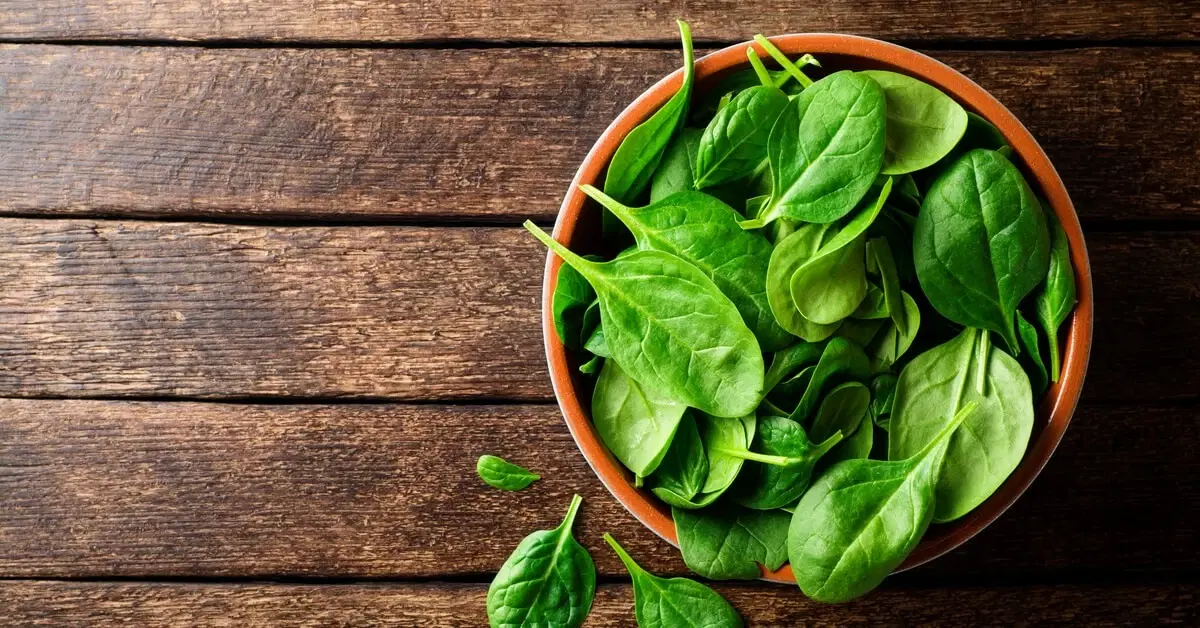
Raw or cooked spinach? How you eat it makes a difference
Amman3 min read
Share
Is it better to eat spinach raw or cooked? There is no one-size-fits-all answer, as the preparation method affects the amount of certain vitamins and minerals this vegetable retains, and choices vary depending on the body's needs and health status.
Raw spinach retains more of certain heat-sensitive vitamins, while boiling helps reduce soluble oxalates, and steaming may preserve some nutrients better than boiling in water.
Spinach contains vitamin C and folate, which are nutrients that may be affected by heat and cooking in water.
Eating the leaves raw helps limit the loss caused by heating, but this does not mean that cooked spinach is less beneficial in all aspects.
To eat it raw, it can be added to salads and sandwiches after washing it well under running water, while keeping food safety guidelines in mind.
If you prefer cooked spinach, steaming may be a suitable option, especially when you want to reduce the loss of water-soluble elements.
A study published in the "British Journal of Nutrition" showed that boiling led to a significant loss of folate in spinach, while no statistically significant decrease was recorded with steaming under the experimental conditions.
However, the result is affected by cooking time, temperature, and the amount of water, so it is preferable to avoid prolonged cooking unnecessarily.
Spinach can be eaten with a moderate amount of olive oil, as the fats in the meal help absorb carotenoids, such as beta-carotene and lutein.
This does not require frying or adding large amounts of oil; a little of it within a balanced meal may be enough.
Spinach contains oxalates, which are compounds that may contribute to the formation of calcium oxalate stones in susceptible individuals.
A study showed that boiling can reduce soluble oxalates in some vegetables more effectively than steaming. To reduce them in spinach, it is recommended to discard the boiling water instead of using it in food.
However, boiling does not remove oxalates completely, and those with kidney stones may need to adjust their spinach intake according to a doctor's instructions.
Spinach leaves shrink when cooked, so a cup of cooked spinach may contain a larger amount of leaves than a raw cup. This explains the higher concentration of some nutrients in a cooked serving, without meaning that cooking added new elements to it.
Conclusion: Eat spinach raw to benefit from some heat-sensitive vitamins, or steamed to reduce the loss of some nutrients, or boiled to help lower oxalates. The best approach is to vary the preparation to suit your health needs, without overcooking or excessive additives.