Petra promotes planting of "juniper" as the region's most important tree
Amman2 min read
Share
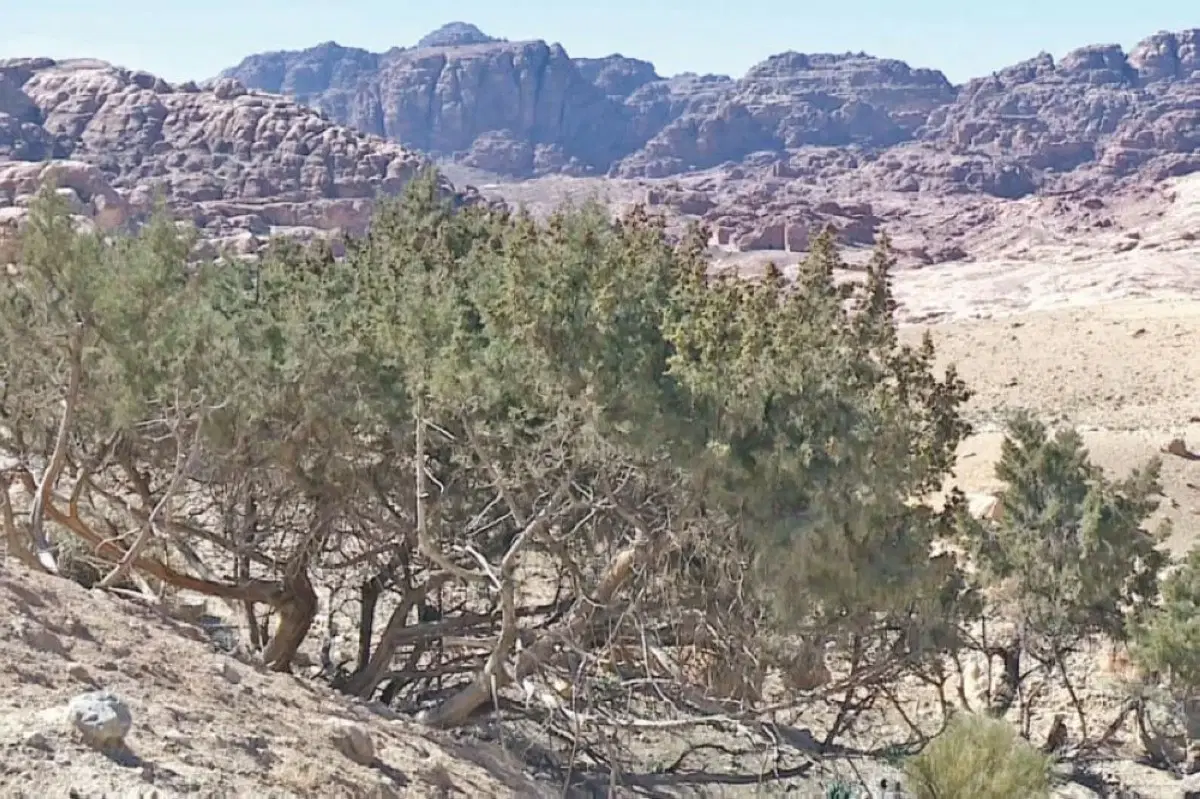
Juniper is considered the most important tree used by the Arab Nabataeans in their construction and to reinforce their historic buildings that still stand in Petra, as well as the most prominent native tree characteristic of the region. This has prompted the Petra Development and Tourism Region Authority to step up its focus on this tree.
In cooperation and partnership with local communities and official institutions in Petra, and with support from Mercy Corps, the Authority continues planting juniper trees in their native habitat and across the same areas where junipers have historically thrived.
Through this step, the Authority seeks to preserve the juniper tree, which has suffered over past years from the challenges of climate change and human encroachment.
Director of Natural and Bio-Resource Development in the Petra Region, Eng. Jaafar Al-Hilalat, stated that this approach comes within the framework of national efforts aimed at protecting biodiversity and enhancing the capacity of ecosystems to adapt to the impacts of climate change, in addition to supporting environmental sustainability and preserving the unique natural heritage characteristic of the Petra region.
According to Al-Hilalat, juniper trees are propagated in the Authority's nursery from the same native strains characteristic of Petra. Approximately 15 dunams of land overlooking the mountains of Petra were recently planted with juniper, following the earlier planting of around 60 dunams.
Al-Hilalat affirmed that these efforts stem from the Authority's keenness to restore the natural landscapes and ecological fabric of Petra's areas, thereby contributing to beautifying the city and adding further charm to one of the world's most prominent tourist destinations.