Petra and Philadelphia Church: King's Speech at the United Nations.. Jordanian Steadfastness in the Face of Double Standards and Defense of Right and Sanctities
Amman5 min read
Share
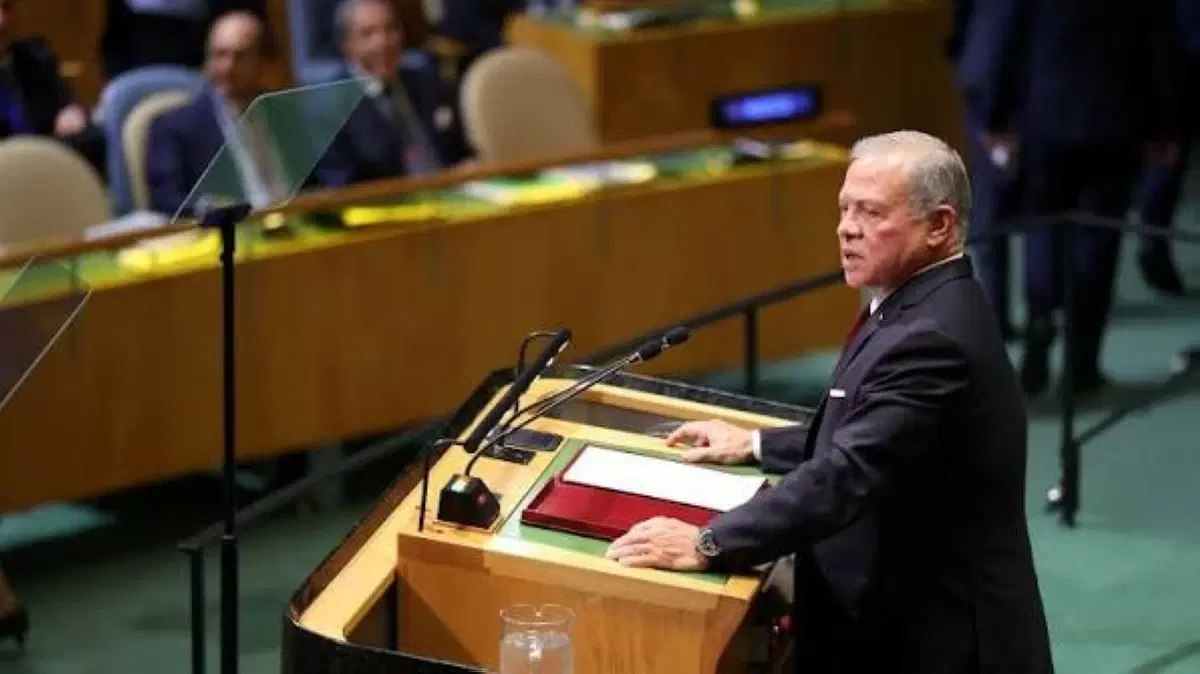
The Petra and Philadelphia Church of the Greek Catholic Melkites in Jordan confirmed, in a statement issued by it, that His Majesty King Abdullah II's speech before the eighty-first session of the United Nations General Assembly reflected the steadfastness of the Jordanian position towards the issues of the region, and placed the international community before its responsibilities in protecting human beings and upholding the rights of peoples and sanctities, away from double standards and selective positions.
The General Vicar of the Greek Catholic Patriarchate in Jordan, Father Nabil Haddad, said that His Majesty the King presented in his speech a Jordanian position based on a clear set of principles, the cornerstone of which is justice, human dignity, rejection of injustice, and defense of peace, affirming that Jordan, despite the successive transformations and crises in the region, has maintained a political discourse based on adherence to rights and not dealing with humanitarian issues with the logic of immediate interests.
He added that the importance of the royal speech lies in the fact that it did not separate the security and stability of the region from addressing the root causes of crises, and did not deal with the repercussions of conflicts as separate crises, but rather emphasized the need to address their causes and resort to justice and rights, thereby opening the way for real and sustainable peace.
He stressed that His Majesty the King's speech carried to the international community a clear moral and political message, namely that the defense of human beings and their dignity cannot be subject to duplicity or selectivity, and that justice and peace are not achieved by managing and postponing crises, but by addressing their roots and resorting to right and law.
Father Haddad added that the Jordanian position expressed by His Majesty the King before the United Nations embodies a steadfast commitment to humanitarian principles and values, and confirms that Jordan continues to play its role in defending peace, justice, and dialogue, and rejecting the transformation of humanitarian issues and sanctities into subjects subject to changing political calculations.
He pointed out that His Majesty the King's speech carried a clear position towards protecting the Christian presence in the East and its sanctities, in parallel with the defense of Islamic sanctities, in a message that confirms that the protection of sanctities and the protection of religious diversity are inseparable from the responsibility of protecting human beings and their right to practice their beliefs freely and with dignity.
He pointed out that this position embodies the established Hashemite approach to the care of Islamic and Christian sanctities in Jerusalem, and reflects Jordan's historical responsibility in preserving the identity of the Holy City and its sanctities, and promoting the values of coexistence, harmony, and dialogue between followers of religions.
He stressed that Jordan did not treat religious harmony as a seasonal speech or a diplomatic title, but rather established it as a national practice based on citizenship and mutual respect, where Muslims and Christians form a single fabric in Jordanian society, sharing the responsibility of preserving the homeland, its values, and its identity.
He said that His Majesty the King's speech also carried a clear message regarding the seriousness of double standards in dealing with the crises of the region, emphasizing that human values and international law should not change according to the identity of the victim or the geographical location, and that achieving peace requires consistent positions based on respect for human rights and dignity.
He appreciated Jordan's adherence to its positions towards the Palestinian issue and the rights of the Palestinian people, and its continuous defense of Islamic and Christian sanctities in Jerusalem, affirming that this approach reflects a Jordanian policy based on supporting just peace and rejecting solutions that ignore rights or postpone addressing the causes of conflict.
He added that His Majesty the King's speech before the United Nations was not just a presentation of the Jordanian position, but an expression of a national message based on moderation, dialogue, and respect for the other, affirming that religious difference should not turn into a cause of conflict, and that the protection of sanctities is a responsibility that transcends the limits of religious and geographical affiliations.
He pointed out that the strength of the Jordanian message, as expressed by the royal speech, stems from the combination of clarity of political position and commitment to humanitarian values, affirming that Jordan will remain committed to its role in defending peace, justice, and dialogue, and its positions towards the protection of sanctities and the promotion of religious harmony in the region.
He said that what His Majesty the King carried to the United Nations reflects a belief that peace is not built by ignoring pain or postponing rights, but by upholding human dignity and resorting to justice, and that fidelity to principles remains the basis for positions that withstand transformations.