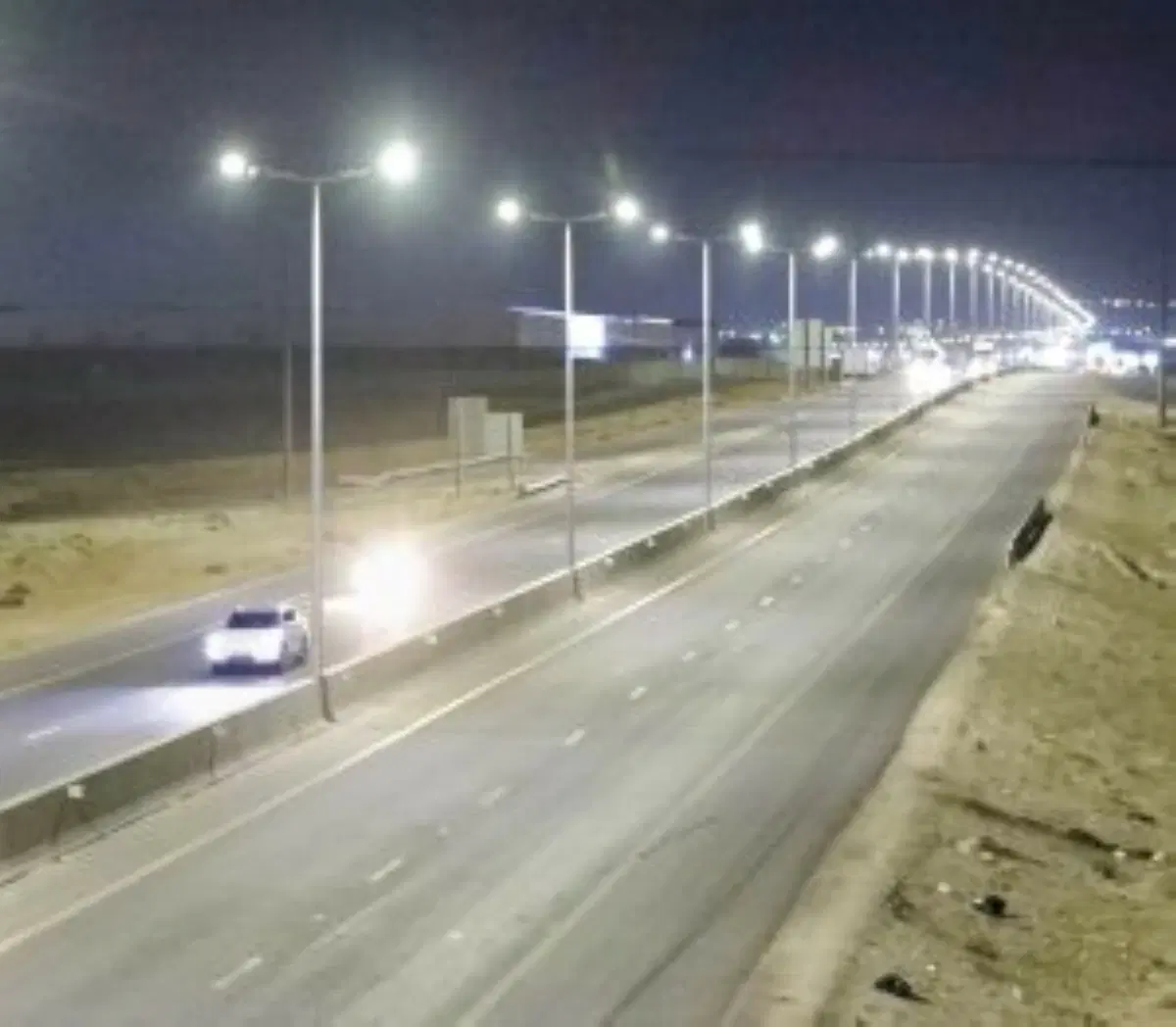
The statement explained that the project extends over a route with a length of about 42 kilometers, and relies on high-efficiency LED lighting units that operate entirely on solar energy, which gives the lighting system independence from the traditional electricity network and enhances the use of clean and renewable energy solutions in road projects.
During the tour, Abu al-Sumn reviewed the level of lighting on the road, the mechanism of operation of the smart control systems and cameras linked to the units, in addition to the remote monitoring systems that allow monitoring the performance of lighting units and batteries and detecting any faults or operational notes.
The installation of lighting units reached about 75 percent of the total units planned within the project, and it is expected to complete the installation of all units and finish the work within the next two weeks.
The project includes an automatic control system that regulates the intensity of lighting according to traffic density and nighttime hours, achieving optimal energy use, in addition to the possibility of remotely monitoring the performance of columns and batteries and improving the efficiency of operation and maintenance processes.
The Ministry focused on implementing the project at vital intersections, entrances and exits, and sections that witness high traffic density, which contributes to improving the level of visibility and increasing the level of road safety for road users during nighttime hours.
The project is one of the green projects that rely on renewable energy, as it provides a reduction in energy consumption and operational costs, in addition to the positive environmental impacts resulting from reducing dependence on traditional energy sources.
The project also contributes to addressing one of the most prominent challenges faced by the lighting system on the Amman Development Corridor over the past years, which is the exposure of traditional lighting components to vandalism and theft, especially copper cables, electrical panels, and transformers, and the resulting repeated financial costs for rehabilitation and maintenance.
The use of independent lighting units powered by solar energy, without the need for extended copper cables or traditional transformers and electrical panels, reduces the risks of theft and vandalism of lighting components and saves the Ministry a large part of the costs it used to bear to repair and replace damaged or stolen components.
The project comes within the Ministry's approach to expanding the use of modern technology and renewable energy solutions in infrastructure and road projects, which contributes to enhancing the sustainability of services, increasing the level of road safety, and reducing operational and maintenance costs in the long term.